Restaurant Technology · Uncategorized
How to Build Sustainable Kitchen Operations That Boost Profit (Without the Expensive Retainers)
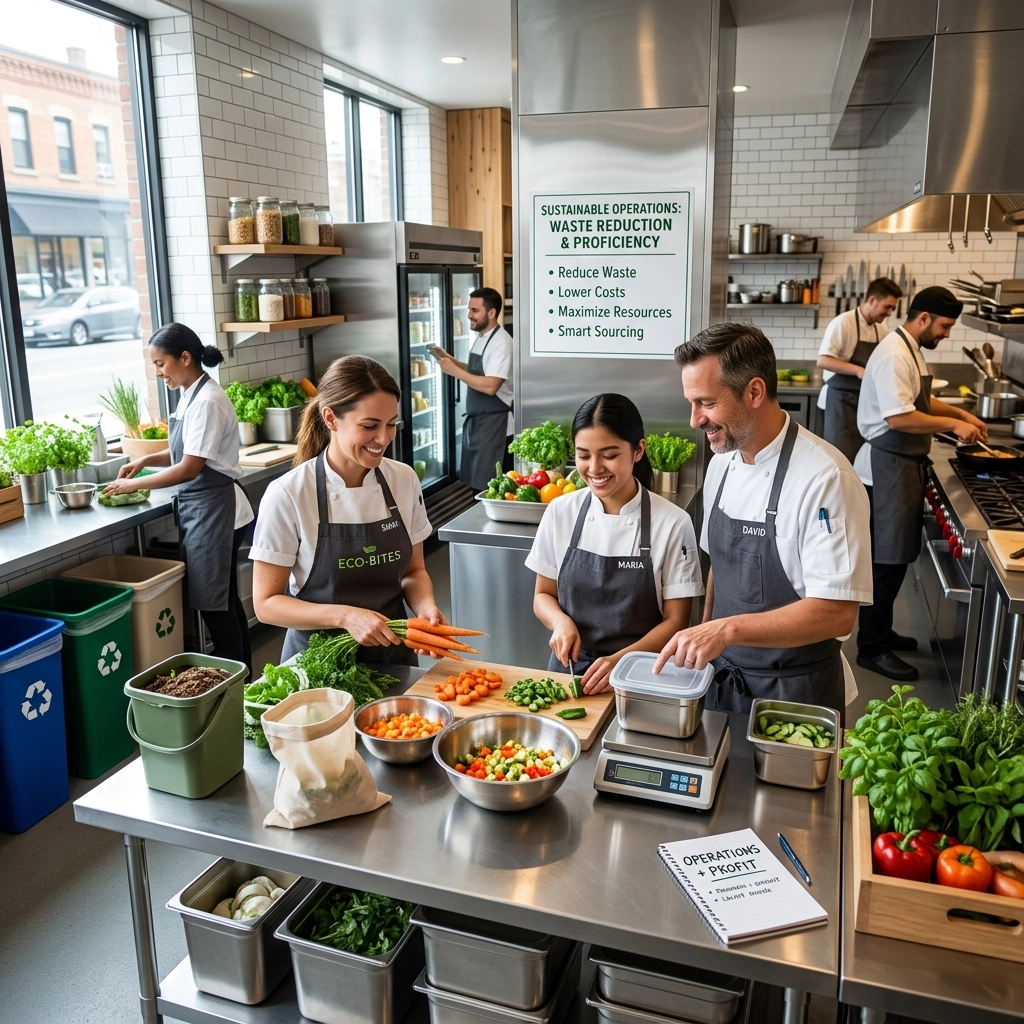
Let’s be honest: for a long time, the word "sustainability" in the restaurant industry felt like a luxury. It conjured up images of $40 organic radishes, expensive composting systems that look like space pods, and consultants in slim-fit suits charging $500 an hour to tell you that plastic straws are bad.
If you’re running a kitchen with margins thinner than a carpaccio, "going green" probably sounds like "going broke."
But here’s the reality check: Sustainability isn’t about being trendy; it’s about being efficient. In 2026, the greenest thing about your restaurant should be the stacks of cash you’re saving by not throwing your inventory into the dumpster. At Restaurant Revenue Incubator, we look at sustainability through the lens of the Triple Bottom Line: People, Planet, and Profit. If a "green initiative" doesn't eventually lead to a black bottom line, it’s not sustainable for your business.
The best part? You don't need a massive capital investment or a predatory consulting retainer to get there. You just need a better system.
The Myth of the "Expensive" Green Kitchen
Most operators think sustainability costs money. They think they need to buy a fleet of electric delivery bikes or install a hydroponic wall in the dining room.
In reality, the most effective sustainable practices are about reduction.
- Reducing food waste.
- Reducing energy consumption.
- Reducing water usage.
- Reducing staff turnover.
When you reduce these things, your overhead drops. It’s basic math, yet so many kitchens are literally "burning" money because their equipment is poorly maintained or their prep lists are based on "gut feelings" rather than data.

1. Food Waste: The Silent Profit Killer
If I walked into your walk-in and took $200 out of your wallet every day, you’d call the police. But in many kitchens, that’s exactly what’s happening: it’s just tucked inside a trash bag full of wilted cilantro and over-prepped demi-glace.
Data shows that restaurants can reduce food costs by 15-20% simply by tightening up waste management. That is a massive swing for your EBITDA. Here is how to build a sustainable waste system without spending a dime on new tech:
- The "Trash Audit": For one week, have your team scrape all food waste into clear bins instead of opaque bags. Seeing the volume of wasted product is a visceral wake-up call for the line.
- Creative Scraps: Vegetable ends become stocks. Day-old bread becomes croutons or bread pudding. Over-ripe fruit becomes shrubs for the bar. This isn't just "being eco-friendly": it’s manufacturing inventory out of thin air.
- Batching & FIFO: It sounds elementary, but the "First In, First Out" rule is ignored in 50% of independent kitchens during a rush. Strict labeling and smaller prep batches ensure you aren’t tossing half a cambro of sauce every Sunday night.
If this sounds like a lot of management overhead, that’s where we come in. Our revenue optimization strategies focus on these exact leaks.
2. The Utility Vampire: Energy and Water
Commercial kitchens are energy hogs. Between the walk-ins, the hoods, and the dish machines, you’re likely paying way more than you need to.
Quick Wins for Your P&L:
- The "Startup/Shutdown" Schedule: Does your fry station need to be at 350 degrees at 10:00 AM if you don't open until noon? Probably not. Creating a staggered equipment startup schedule can save hundreds of dollars a month.
- HVAC & Refrigerator Maintenance: A dusty coil on a low-boy makes the compressor work twice as hard. A $100 cleaning service (or 20 minutes with a vacuum) can prevent a $3,000 compressor failure and lower your monthly electric bill.
- Low-Flow Fixtures: Swapping out your pre-rinse spray valve for a high-efficiency model is one of the highest ROI moves you can make. It costs about $60 and pays for itself in water heating costs in less than a month.
3. The "People" Part of the Triple Bottom Line
Sustainability isn't just about compost; it's about your humans. High staff turnover is the ultimate "unsustainable" practice. Every time a line cook leaves, it costs you roughly $3,000–$5,000 in recruiting, training, and lost productivity.
A sustainable kitchen operation involves:
- Standardized Training: Clear expectations reduce stress. Stress-free cooks stay longer.
- Technology That Helps, Not Hinders: Implementing a full tech stack that actually works (and doesn't crash during Friday night service) makes your team feel supported.
- Ownership Culture: When you show the team how waste reduction helps the restaurant stay open and potentially leads to better pay or bonuses, they stop seeing "green initiatives" as extra work and start seeing them as job security.

4. Leveraging Tech (Without the Headaches)
We live in the era of AI and automation. While we love a good spreadsheet, manual tracking only goes so far. To truly scale, you need a tech stack that monitors your cost reduction efforts in real-time.
Modern inventory systems can now predict your ordering needs based on historical weather patterns, local events, and previous sales. Imagine a world where you never over-order avocados again because the AI knew it was going to rain on Tuesday. That’s not science fiction; that’s just smart operations.
However, we know the "sticker shock" of new tech is real. Many operators are stuck with legacy systems because the "upfront cost" of switching feels like a mountain they can't climb.
The Restaurant Revenue Incubator Difference: No Upfront Costs
This is where we get to the "how" of making this happen for your business. Most consultants want a $10,000 retainer before they even look at your walk-in. They’ll give you a 50-page PDF of "recommendations" and then wish you good luck.
We don’t do that.
At Restaurant Revenue Incubator, we believe in skin in the game. We provide front-to-back operations support and turnaround services with no upfront costs.
We don't get paid until you see the results. If we come in and slash your food waste by 10% and optimize your labor spend through better tech, we grow alongside you. It’s a sustainable business model for us, and a risk-free profit boost for you.
Whether you are looking for restaurant franchise consulting to scale your sustainable concept or you're a single-unit owner trying to stop the bleeding, we handle the heavy lifting.

Actionable Steps to Start Today
You don't need to overhaul everything by tomorrow morning. Start with these three steps:
- Check Your Gaskets: Go to your walk-in and your reach-ins. If the gaskets are torn, you’re cooling the whole kitchen. Replace them. It’s cheap and immediate.
- The 1% Rule: Try to reduce your food waste by just 1% this week. Just 1%. Once you hit that, go for another 1%. Those incremental gains are what build long-term revenue optimization.
- Audit Your Tech: Are you paying for a POS or inventory system that nobody knows how to use? If your tech isn't saving you time or money, it's just an expensive paperweight.
Conclusion: Profit is the Ultimate Green Initiative
Building a sustainable kitchen isn't about winning an environmental award (though that’s a nice perk for your marketing). It’s about building a business that can survive the ups and downs of the economy.
When you focus on the Triple Bottom Line, you create a restaurant that is more efficient, a team that is more loyal, and a bank account that is significantly healthier.
If you’re ready to modernize your operations, cut your costs, and scale your brand without the "consultant tax," we should talk. We’ve helped operators across the country: from Akron, OH to Albuquerque, NM: turn their kitchens into profit machines.
Don't let your profits end up in the dumpster. Let's build something that lasts.
Ready to see how much you could be saving? Contact us today for a free assessment of your operations. Remember: No upfront costs. No retainers. Just results.