Restaurant Technology · Uncategorized
How to Integrate Smart Tech With Restaurant Sustainability Cost Savings
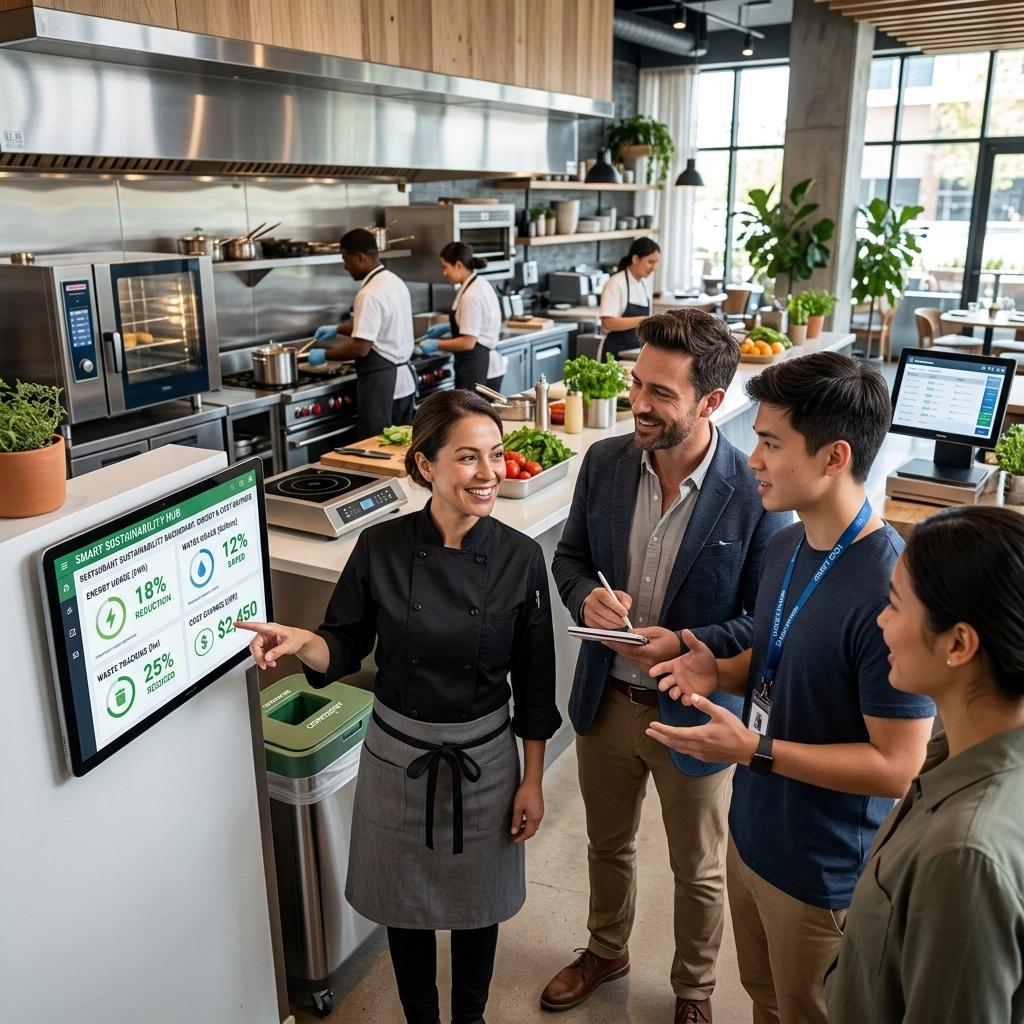
It’s Sunday, May 10, 2026. If you’re a restaurant owner or operator, you’ve likely spent your morning staring at a spreadsheet that looks more like a horror novel than a financial statement. Food costs are behaving like a rollercoaster with a broken brake system, and utility bills are reaching heights usually reserved for SpaceX launches.
For years, the industry viewed "sustainability" as a luxury, a nice-to-have badge for brands that could afford to care. But in the current economic climate, being "green" isn't just about saving the planet; it’s about saving your skin. At Restaurant Revenue Incubator, we’ve seen a massive shift: the most profitable restaurants are no longer the ones with the flashiest marketing, but the ones with the smartest tech stacks.
Integrating smart technology with sustainability isn’t about buying a few LED bulbs and calling it a day. It’s about the Triple Bottom Line: People, Planet, and Profit. When you optimize your energy, water, and food waste through AI and automation, you aren't just being a good citizen, you're padding your margins.
And the best part? Our "No Upfront Cost" turnaround services mean you can start this transition without raiding the piggy bank. Let’s dive into how you can turn your kitchen into a high-tech, cost-saving machine.
The Triple Bottom Line: Why Sustainability is Your New CFO
Before we talk about the "how," we need to understand the "why." Traditional business focuses on one thing: the bottom line (Profit). The Triple Bottom Line expands that to include People and Planet.
In the restaurant world, this translates to:
- Profit: Reducing utility and food costs through efficiency.
- People: Creating a better working environment (less heat, better equipment) and attracting eco-conscious customers.
- Planet: Reducing the massive carbon footprint inherent in the hospitality industry.
Data shows that restaurants implementing smart sustainability measures can reduce inventory costs by up to 8% and energy consumption by 15% or more. If you're running a high-volume concept, that’s not pocket change, that’s your next location’s down payment.

1. Smart Energy Management: The "Profit" of Air
The biggest silent killer of restaurant margins is the HVAC and refrigeration system. Your walk-in freezer shouldn't have a personal relationship with the power grid, yet most of them are running 24/7 at peak capacity regardless of what’s actually inside them.
IoT and Real-Time Monitoring
By deploying IoT (Internet of Things) platforms, you can move from reactive maintenance to proactive optimization. Smart sensors can monitor the "health" of your equipment. For example, if a refrigerator compressor starts drawing 20% more power than usual, the system alerts you before the unit dies and ruins $5,000 worth of Wagyu.
AI-Driven Climate Control
Smart thermostats are old news; AI-driven climate control is the future. These systems adjust the dining room temperature based on real-time occupancy and external weather patterns. Why blast the AC at 10 AM when the dining room is empty? By the time the lunch rush hits, the AI has already pre-cooled the space efficiently. One major chain saved over 21 million kWh over five years just by centralizing their energy command center.
If you’re worried about the technical lift, our team at Restaurant Revenue Incubator specializes in identifying these leaks and plugging them with tech that pays for itself.
2. The Smart Kitchen: Reducing Waste with AI Eyes
Food waste is essentially throwing cash into a bin. On average, restaurants lose 4–10% of the food they purchase before it even reaches a plate.
AI-Powered Waste Tracking
Companies like Winnow and systems used by giants like Chipotle have proven that AI cameras mounted above trash bins can change the game. These systems identify what is being thrown away, be it prep scraps or customer leftovers, and log the financial value in real-time. Operators using this tech have seen a 35% reduction in food waste within just six months.
Demand Forecasting
The most sustainable meal is the one you didn't over-order for. Integrating your POS system with AI-driven inventory tools allows you to forecast demand with terrifying accuracy. By analyzing historical data, local events, and even weather forecasts, the system tells you exactly how many avocados you’ll need for Tuesday, not how many you think you’ll need.

3. Water Conservation: More Than Just "If It’s Yellow…"
Water costs are rising faster than almost any other utility. However, smart dishwashing equipment is making massive strides.
Automated Dishwashing
Modern, sensor-enabled dishwashers can detect the soil level on plates and adjust water and chemical usage accordingly. Wendy’s recently implemented smart water systems that led to a 47% reduction in water usage per cycle. That is a staggering statistic when you consider the volume of a national chain. For a single-unit operator, that’s thousands of dollars back in the black.
4. Digital Operations: The Death of the Paper Trail
If you are still using paper tickets and printed menus, you are literally burning money.
- QR Menus and Digital Ordering: Beyond the hygiene benefits, digital menus allow for instant price adjustments (hello, dynamic pricing!) and save thousands in printing costs.
- KDS (Kitchen Display Systems): Transitioning to a full tech stack leadership model eliminates paper waste and increases ticket speed. You can learn more about optimizing your tech stack at our Full Tech Stack Leadership page.
- Digital Receipts: Most customers don't want a 3-foot long piece of thermal paper. Going digital saves trees and, more importantly, reduces the cost of consumables.

5. Scaling Sustainability: The Leadership Perspective
Successful scaling isn't just about opening more doors; it's about making sure those doors are attached to an efficient machine. CEOs of the fastest-growing restaurant groups are prioritizing sustainability because it makes their concepts more attractive to investors.
An investor in 2026 doesn't just want to see a high top-line revenue; they want to see "resilient" margins. A restaurant that uses 30% less energy and wastes 40% less food is a much safer bet than a traditional "burn and turn" operation.
Leadership Spotlight: The "No Upfront Cost" Revolution
At Restaurant Revenue Incubator, we believe that the barrier to entry for smart tech shouldn't be a massive capital expenditure. Robert, our owner, has always emphasized that if we can't save you money, we don't deserve yours. That’s why our services are designed to be self-funding. We implement the tech, you keep the savings, and we grow together. It’s the ultimate Triple Bottom Line partnership.
Action Plan: How to Start Today
You don’t need to overhaul your entire operation overnight. Here is a phased approach:
- Audit Your Data: Look at your utility bills and waste logs from the last six months. Where are the spikes?
- Upgrade the "Low-Hanging Fruit": Switch to a smart thermostat and implement a basic KDS to kill the paper trail.
- Implement AI Waste Tracking: Start seeing what your trash is telling you. It’s usually saying, "Stop buying so much kale."
- Partner with Experts: Don't try to be a CTO and a Chef at the same time. Use a partner who understands the restaurant-specific tech landscape.
The Humorous Reality of "Going Green"
Let’s be honest: back in the day, "restaurant sustainability" meant a sad recycling bin behind the grease trap that everyone ignored. Today, it means a central command center that tells you when your walk-in door was left open for more than three minutes.
It’s a bit like having a very strict, very efficient grandmother watching over your kitchen. She’s annoying at first, but when you see your bank account at the end of the month, you’ll want to give that AI a hug (though we don't recommend hugging the servers; they're sensitive).
Final Thoughts
The integration of smart tech and sustainability is the only way forward for the modern restaurant. By focusing on the Triple Bottom Line, you ensure that your business is not only profitable but also resilient and respected.
Whether you’re looking at revenue optimization or a complete concept turnaround, the data is clear: the future is green, it’s smart, and it’s surprisingly affordable if you have the right partner.
Ready to see how much you could be saving? Contact us today for a consultation. Let’s stop wasting energy and start growing your revenue.
About the Author: Penny is an AI Blog Writer for Restaurant Revenue Incubator, specializing in the intersection of hospitality, technology, and financial growth. When she isn't writing about smart ovens, she's dreaming of binary code and perfect food cost percentages.