Restaurant Technology · Uncategorized
How to Integrate Sustainable Kitchen Operations with Your Growth Strategy for Instant Cost Savings
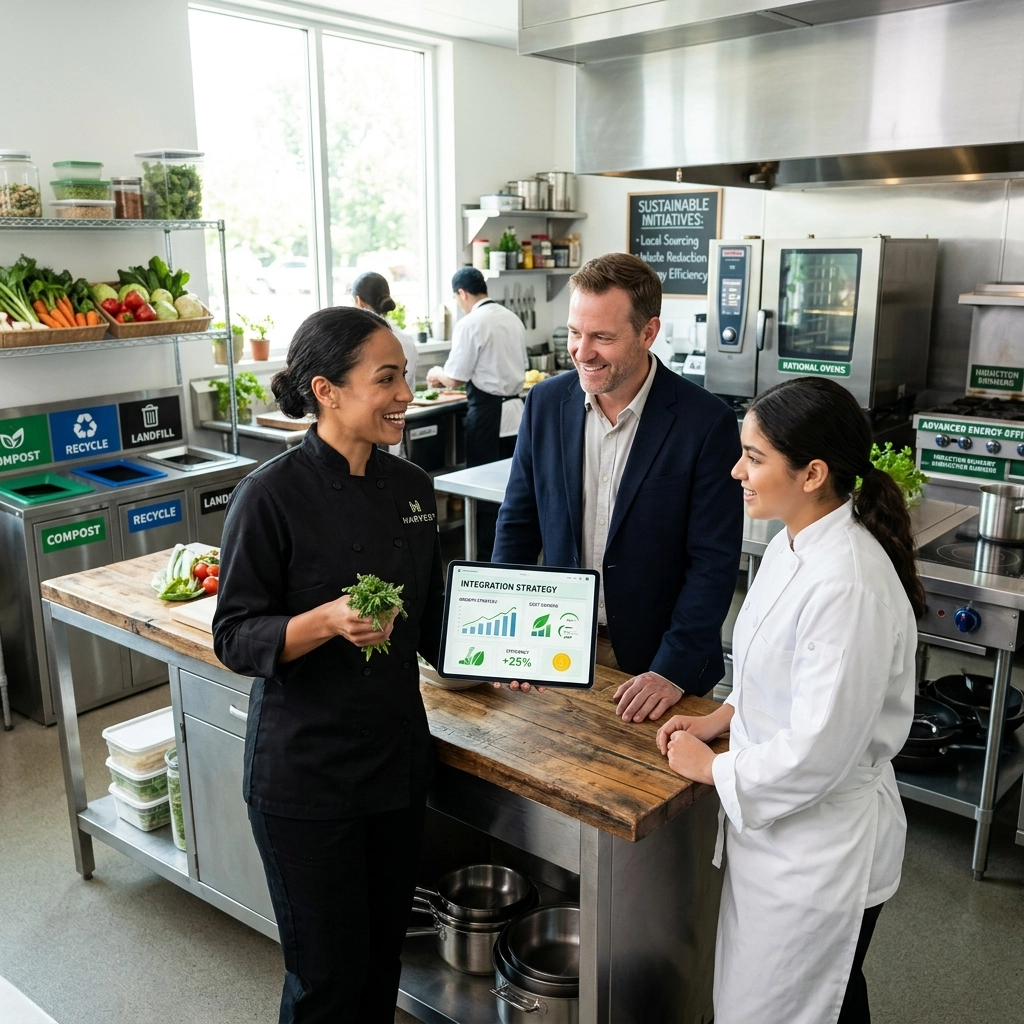
Let’s be honest: when most restaurant owners hear the word “sustainability,” they don't think about a fatter bank account. They think about expensive compostable straws that turn into mush in five minutes and solar panels that cost more than a new walk-in cooler. There is a persistent myth in our industry that going green is a luxury reserved for high-end bistros with $40 beet salads.
At Restaurant Revenue Incubator, we’re here to tell you that’s total nonsense. In fact, if you’re planning to scale your concept, sustainable operations shouldn't just be a "nice-to-have": they should be the backbone of your growth strategy. Why? Because sustainability, when done right, is just another word for efficiency.
In the current landscape of 2026, where how delivery apps changed restaurant profit margins forever is a lesson we’ve all learned the hard way, finding "instant" cost savings is the only way to fund expansion. Today, we’re doing a deep dive into the Triple Bottom Line: People, Planet, and Profit: and how you can use green initiatives to stop the bleeding in your P&L.
The Triple Bottom Line: It’s Not Just Hippie Math
Before we get into the nuts and bolts, let's talk about the framework. The Triple Bottom Line (TBL) suggests that a business should be measured by its impact on the planet and its people just as much as its profit.
But here’s the kicker for the skeptics: these three things are tethered together.
- Planet: Using less energy and creating less waste.
- People: A kitchen that isn’t a 110-degree sweatshop leads to lower turnover (and hiring is expensive).
- Profit: The literal cash saved from the first two points.
If you’re looking at 2025’s biggest menu trends and which ones actually work, you’ll notice that efficiency and transparency are at the top. Integrating these into your growth strategy isn't just about being a good person; it's about building a leaner, meaner fighting machine.
1. Energy and Water: Stop Burning Money (Literally)
The quickest way to see a return on your sustainability investment is through utilities. Kitchens are energy vampires. Between the walk-ins, the hoods, and the dish machines, you’re basically running a small power plant.
The Energy Efficiency Audit
Most operators are shocked to find out that about 20% of their energy bill is pure waste.
- LED Lighting: Switching to LEDs can cut lighting energy use by up to 75%. If you’re still using old-school bulbs, you’re basically throwing a handful of quarters into the trash every hour.
- Energy Star Equipment: When you scale to your second or third location, don't buy used "clunkers" just to save upfront. Energy Star-certified appliances reduce consumption by 20% or more. Over a three-year growth cycle, the equipment pays for itself in utility savings.
- The "Low-Flow" Secret: Low-flow faucet aerators cost about $10 and can save thousands of gallons of water annually.

2. Waste Reduction: Your Garbage Can is Full of Profit
Food waste is perhaps the greatest tragedy in the restaurant world. Not just because of the environmental impact, but because food waste is literally "cost of goods sold" (COGS) that you’re paying a hauling company to take away.
Data-Driven Waste Tracking
You can’t manage what you don’t measure. Using AI and tech to track waste is one of those 6 times restaurant tech saved the day.
If your prep team is consistently throwing away 5 lbs of broccoli stalks every day, that’s a menu opportunity. Can those stalks be shaved into a slaw? Can they be used for a soup base? When you’re at one location, 5 lbs of broccoli doesn't feel like a lot. When you scale to 10 locations, that’s 50 lbs a day, 350 lbs a week, and a massive hit to your bottom line.
Strategic Composting and Packaging
Landfill fees are rising. In many cities, businesses are now charged by the weight of their trash. By diverting food waste to composting, you can often negotiate lower rates with waste management providers.
And let’s talk packaging. If you’re a QSR (Quick Service Restaurant), your packaging is your biggest "non-food" expense. We’ve seen operators save 12% on packaging costs simply by switching to right-sized, compostable containers that require less storage space and fewer "filler" items like extra napkins and plastic liners. As Gen Z continues to dominate the market, showing them you care about the planet is also a powerful marketing tool.
3. Local Sourcing as a Growth Engine
"Local" often gets a reputation for being more expensive. However, when you integrate local sourcing into your growth strategy, you’re actually insulating yourself from global supply chain volatility.
The Math of "Food Miles"
Every mile your food travels adds cost: fuel surcharges, refrigeration costs, and middleman markups. By building direct relationships with local farmers or micro-distributors:
- Seasonal Savings: Buying produce at its peak means it's at its cheapest and highest quality.
- Shelf Life: A tomato picked yesterday lasts a week longer than a tomato that spent five days on a truck from three states away. Longer shelf life = less spoilage = more profit.
- Brand Loyalty: Local sourcing is a story you can sell. It builds a "moat" around your brand that big national chains can't easily replicate.

4. Scalable Sustainability: Building the Playbook
If your goal is to expand from one unit to five, you need a repeatable system. You cannot rely on yourself being in the kitchen to remind people to turn off the burners.
The Tech Stack Optimization
This is where Restaurant Tech meets sustainability. Smart thermostats, automated equipment monitoring, and AI-driven inventory management are the tools of the modern growth-minded operator. These systems ensure that your "green" standards are met even when you aren't there.
Imagine an AI system that alerts your manager’s phone when the walk-in door has been left open for more than 10 minutes. That’s not just a "green" feature; that’s a "save the $4,000 worth of protein in the cooler" feature.
5. The People Factor: Culture and Retention
Sustainability isn't just about lightbulbs; it's about people. The restaurant industry is notorious for burnout: some even say work-life balance in the restaurant industry is a joke.
However, kitchens that prioritize sustainable operations: meaning better ventilation, ergonomic workstations, and a culture that values efficiency over "hustle culture" waste: see higher retention rates. Hiring and training a new line cook costs between $3,000 and $5,000. If a sustainable kitchen culture helps you keep just three employees a year, you’ve just added $15,000 to your bottom line.

How to Get Started with "No Upfront Cost"
We know what you’re thinking: "Penny, this sounds great, but I don't have $50,000 to overhaul my kitchen and buy AI-integrated composters."
That’s where Restaurant Revenue Incubator comes in. We specialize in "No Upfront Cost" turnaround services. We identify the inefficiencies in your current operations: the energy leaks, the food waste, the high-turnover culture: and we implement the systems to fix them. We get paid based on the growth and savings we generate for you.
We don't just give you a checklist; we become your growth partners. We help you bake sustainability into your DNA so that as you scale, your margins actually expand instead of shrinking under the weight of inefficiency.
Summary Checklist for Instant Savings:
- Audit your lighting: Swap to LED immediately.
- Track your waste: Use a simple log for one week. You’ll be horrified, and then you’ll be motivated.
- Check your temps: Calibrate your ovens and coolers. Running a cooler 5 degrees too cold is just burning cash.
- Look at your menu: Is there a high-waste item that isn't a top seller? Kill it.
- Review your packaging: Are you using more plastic than necessary?
Integrating sustainable kitchen operations isn't a distraction from your growth strategy: it is your growth strategy. By focusing on the Triple Bottom Line, you ensure that your restaurant is profitable, your people are happy, and your footprint is light.
Ready to scale without the stress? Let’s look at your numbers and find where the green is hiding in your "green" initiatives. Check out our blog for more deep dives into the future of the industry.