Restaurant Technology · Uncategorized
6 Times Restaurant Tech Saved the Day (or Absolutely Didn't)
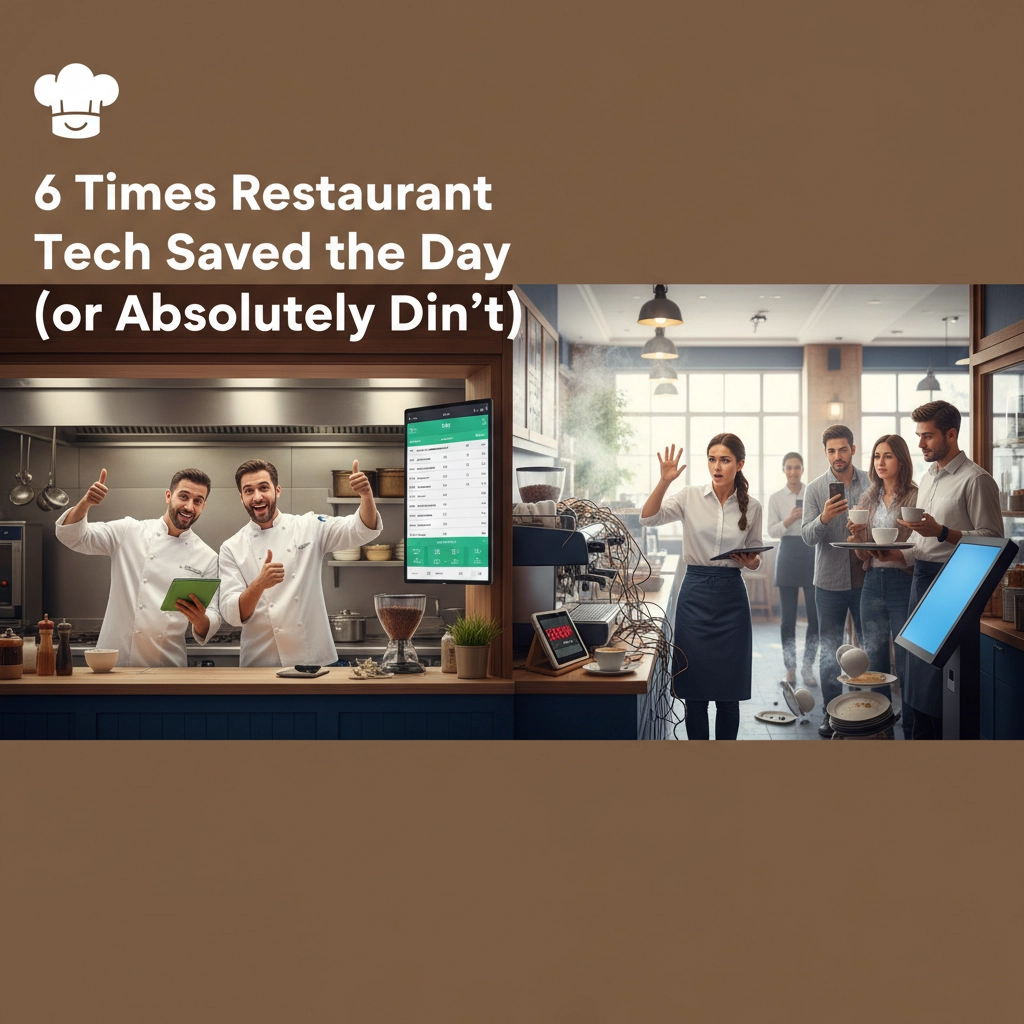
Restaurant technology is a lot like dating, sometimes you find your perfect match, and sometimes you end up with a disaster that costs you way more money than you anticipated. As someone who's seen countless restaurant owners get starry-eyed over the latest "game-changing" tech solution, I've witnessed some spectacular wins and some face-palm-worthy failures.
Let's dive into six real stories that'll make you laugh, cringe, and hopefully think twice before jumping on the next tech bandwagon.
The Winners: When Tech Actually Delivered
1. McDonald's Kiosks: The Billion-Dollar Gamble That Paid Off
Remember when McDonald's announced they were rolling out self-service kiosks nationwide? The internet went wild with predictions of mass unemployment and confused customers. Fast-forward to today, and those kiosks are processing millions of orders daily with remarkable success.

The numbers don't lie: McDonald's reported a 5-6% increase in average ticket size at locations with kiosks. Why? Customers browse more options, add extras without feeling rushed, and there's no awkward upselling pressure from a tired cashier at 2 PM.
But here's the kicker, they didn't fire their staff. Instead, they redeployed workers to food preparation and customer service roles, actually improving the overall experience. Sometimes the simplest tech solutions create the biggest wins.
2. Domino's Pizza Tracker: Turning Anxiety into Anticipation
Before Domino's launched their pizza tracker in 2008, ordering pizza was an exercise in blind faith. You'd place your order and spend the next 30-45 minutes wondering if your driver got lost, if the pizza was burned, or if they simply forgot about you entirely.
The pizza tracker changed everything. Suddenly, customers could see exactly where their order stood: "Sarah is making your pizza," "Your pizza is in the oven," "Mike is on his way with your order." This simple transparency tool reduced customer service calls by 30% and turned the wait time into an engaging experience.
CEO Russell Weiner recently noted that their digital innovations, starting with the tracker, now account for over 75% of their sales. Not bad for a "gimmick" that critics initially dismissed.
3. Toast POS: The System That Actually Works When You Need It
Ask any restaurant owner about their biggest tech nightmare, and they'll probably mention their POS system crashing during the dinner rush. Toast changed the game by building a cloud-based system specifically for restaurants, not retrofitted retail software.

What makes Toast special isn't just uptime (though 99.99% availability is nice). It's the integration. Inventory management, payroll, scheduling, and analytics all flow seamlessly together. Restaurant owner Maria Santos from Brooklyn told me, "Before Toast, I felt like I was running three different businesses. Now everything talks to each other, and I actually have time to cook again."
The Disasters: When Innovation Goes Wrong
4. McDonald's AI Drive-Thru: "I'm Sorry, Did You Say 100 Nuggets?"
McDonald's partnered with IBM to test AI-powered drive-thru ordering at select locations. The idea was brilliant: reduce wait times, improve order accuracy, and free up staff for other tasks. The execution? Well, let's just say the internet had a field day with compilation videos of AI mishaps.
Customers reported orders for ice cream with extra bacon, 100 chicken nuggets when they asked for 10, and one memorable incident where the AI kept adding butter to everything, including drinks. The technology struggled with accents, background noise, and apparently had a very liberal interpretation of customer requests.
After several months of viral TikTok fails and customer complaints, McDonald's quietly discontinued the test. Sometimes being first to market means being first to fail publicly.
5. Eatsa's Fully Automated Restaurant: The Future That Wasn't
Eatsa burst onto the San Francisco food scene in 2015 with a radical concept: completely automated ordering and pickup. Customers ordered via app or kiosk, and meals appeared in individual cubbies like some sci-fi vending machine. No human interaction required.

The concept attracted $50 million in funding and massive media attention. Tech bros loved it. Instagram loved it. Customers? Not so much. The novelty wore off quickly when people realized they missed the human connection that makes dining out special.
By 2019, most Eatsa locations had closed. The company pivoted to selling technology to other restaurants instead of operating their own. Turns out, completely removing humans from hospitality isn't actually hospitable.
6. Zume Pizza's Robotic Revolution Gone Wrong
Zume Pizza raised $445 million to revolutionize pizza delivery with robots, AI, and mobile kitchens. Their vision: trucks with ovens that would cook pizzas en route to customers, guided by predictive algorithms. Robots would prep ingredients and assemble pizzas with perfect consistency.
The reality was messier. The robots were temperamental and required constant human oversight. The predictive algorithms often guessed wrong about demand, leading to food waste. The mobile kitchen concept proved logistically nightmarish and incredibly expensive to scale.
By 2020, Zume had laid off hundreds of employees and shut down their pizza operations entirely. They burned through nearly half a billion dollars trying to solve problems that honestly didn't need solving. Sometimes a regular pizza oven in a stationary building is just fine.
The Real Lessons Behind the Tech Wins and Fails
Looking at these stories, a pattern emerges. The successful tech implementations solved real, painful problems that both customers and operators actually experienced. They enhanced human capabilities rather than replacing them entirely.
The failures? They often prioritized novelty over utility, complexity over simplicity, or tried to eliminate the human elements that customers actually value. The restaurant business is fundamentally about hospitality, and technology works best when it amplifies that human connection rather than replacing it.
The most successful restaurant tech doesn't announce itself loudly, it just makes everything work better. Like Toast's seamless integration or McDonald's kiosks that reduce wait times without eliminating jobs.
As we look toward 2025, remember that every shiny new tech solution promises to be the next game-changer. But the real winners will be the tools that solve genuine problems, integrate smoothly with existing operations, and make your staff's lives easier rather than harder.
The restaurant industry has survived and thrived for centuries by adapting to change while maintaining its essential humanity. The best technology honors that tradition rather than trying to disrupt it.
If you're considering new technology for your restaurant, ask yourself: "Does this solve a real problem my customers or staff actually have?" If the answer is yes, you might have found your next success story. If you're not sure, well… maybe wait for version 2.0.
For more insights on optimizing your restaurant's operations and revenue streams, check out our revenue optimization strategies that focus on practical, proven solutions rather than the latest tech fad.