Restaurant Technology · Uncategorized
Why Sustainable Kitchen Operations Will Change the Way You Scale Your Restaurant Group
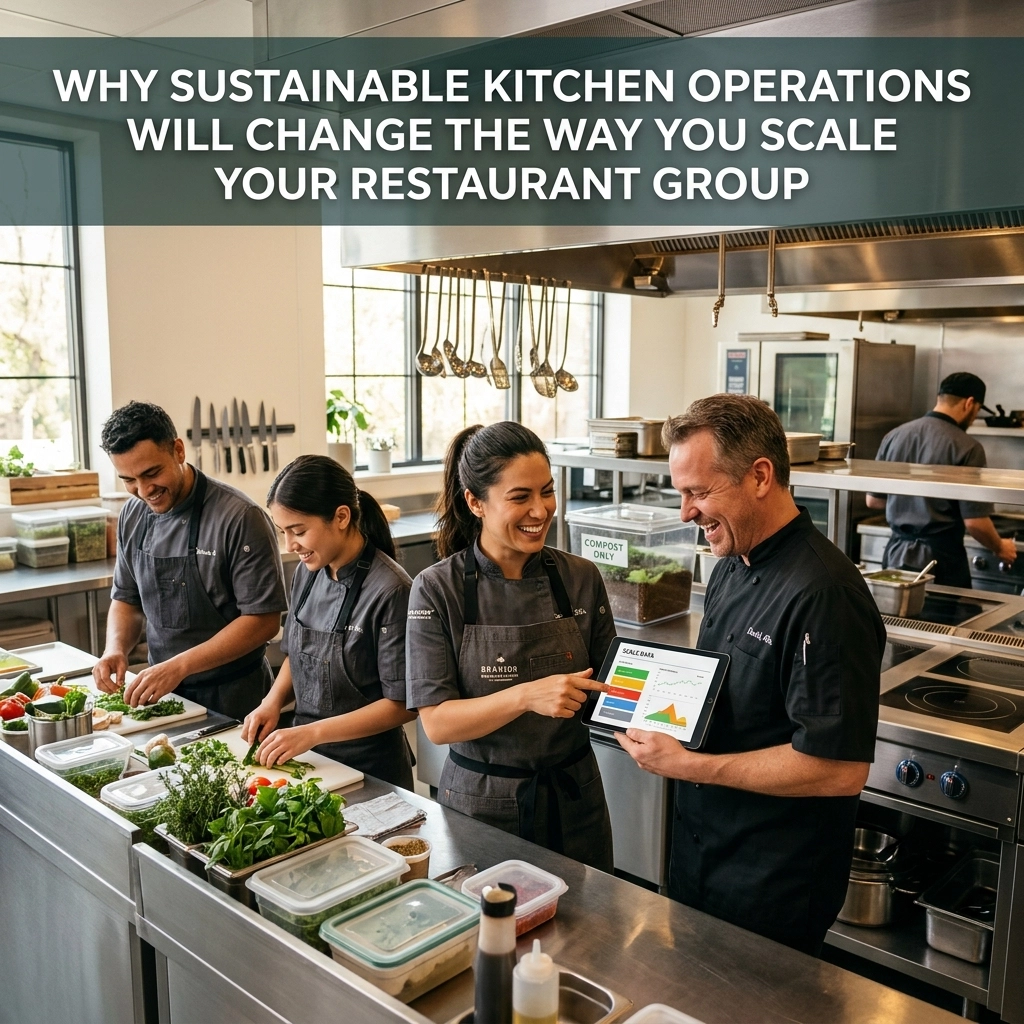
Scaling a restaurant group used to be a simple, albeit expensive, formula: find a location, replicate the menu, hire a crew, and pray the margins didn't evaporate before the grand opening. But in 2026, the "burn-and-churn" model of expansion is officially dead. If you’re looking to grow from three units to thirty, the traditional path is littered with the corpses of brands that ignored their utility bills and trash cans.
At Restaurant Revenue Incubator, we’ve seen it all. We’ve seen operators try to outrun their inefficiencies by opening more stores, only to find that scaling a leak just leads to a bigger flood. The secret to sustainable growth: both financial and environmental: lies in the Triple Bottom Line: People, Planet, and Profit.
If you think "sustainability" is just about paper straws and composting, you're missing the biggest margin-booster of the decade. Sustainable kitchen operations aren't just "nice to have"; they are the structural foundation that allows you to scale without collapsing under the weight of your own waste.
The Financial Reality: Why Green is the New Gold
Let’s talk numbers, because at the end of the day, we’re in the business of revenue. Data shows that restaurants consume five to seven times more energy per square foot than other commercial buildings. If you’re running a quick-service restaurant (QSR), that consumption can be ten times higher.
When you have one location, a 20% spike in the power bill is annoying. When you have twenty locations, it’s a direct hit to your EBITDA that can stall your expansion plans for a year.
By implementing ENERGY STAR-rated appliances and smart HVAC systems, you aren't just helping the polar bears: you are clawing back thousands of dollars per month per unit. This is "Profit" in the Triple Bottom Line in its purest form. Every dollar saved on the line is a dollar that can be reinvested into your next lease or a new polo for your expanding management team.

Scaling Waste Reduction with Tech and AI
One of the hardest parts of scaling is maintaining consistency. In a single-unit independent shop, the owner can see the prep cook throwing out half a case of wilted kale. In a restaurant group, that waste becomes invisible.
This is where Restaurant Tech and AI come into play. We are seeing a revolution in smart inventory management. These systems don't just count boxes; they use predictive analytics to tell you exactly how much prep you need based on weather patterns, local events, and historical sales data.
Sustainable operations utilize tech to:
- Standardize Prep: AI-driven recipe scaling ensures that whether you are in New York or Nashville, the food waste remains at a minimum.
- Monitor Equipment: IoT sensors can alert a regional manager if a walk-in freezer at Location #5 is drawing too much power, indicating a failing seal before the $4,000 worth of protein spoils.
- Automate Waste Tracking: Knowing what you throw away is the first step to not buying it in the first place.
When your operations are this tight, scaling isn't scary. It’s a mathematical certainty. You’re no longer guessing how much capital you need to float a new opening; you’re deploying a proven, efficient "green machine."
Leadership: Scaling the Sustainable Mindset
Growth isn't just about spreadsheets; it’s about people. In our work as an "Affiliate Booster" (shoutout to Robert for keeping the engine greased), we’ve noticed that the most successful CEOs of scaling groups are those who lead with a sustainability-first mindset.
Modern labor markets are tough. Gen Z and Millennial workers: who make up the backbone of the hospitality workforce: want to work for companies that actually stand for something. If your "Sustainability" plan is just a logo on a t-shirt with logo, they’ll see right through it.
But when you involve your team in the mission: giving them the tools to reduce waste and rewarding them for hitting energy-saving targets: you reduce turnover. High turnover is one of the biggest "hidden" costs in scaling. Every time a manager quits, it costs you roughly $15,000 to $25,000 to replace them. By focusing on the "People" part of the Triple Bottom Line, you create a culture of retention that acts as a catalyst for growth.

The "No Upfront Cost" Revolution
We get it. Reading about smart sensors and high-efficiency combi-ovens sounds expensive. You’re trying to scale, not spend your entire CapEx budget on fancy lightbulbs.
This is where Restaurant Revenue Incubator changes the game. We specialize in "No Upfront Cost" turnaround services. We believe that you shouldn't have to go into debt to become efficient. We look at your current operations, identify the "revenue leaks": from food waste to energy spikes: and implement the tech and training to fix them. We grow when you grow.
Think of it as a partnership where we provide the roadmap and the gear (yes, including the hoodie with logo for your top performers) and you provide the vision.
The Triple Bottom Line in Action: A Case Study
Imagine a mid-sized burger group with 5 locations. They were struggling with 8% food waste and skyrocketing utility costs.
- Planet: We implemented a zero-waste prep protocol and switched to smart LED lighting and automated HVAC controls.
- People: We trained the staff on the why behind these changes, leading to a 12% increase in employee engagement scores.
- Profit: Within six months, the group saved $14,000 per month across all locations.
That $168,000 in annual savings didn't just sit in a bank account. It served as the down payment for their 6th and 7th locations. That is the power of sustainable scaling. It creates a self-funding loop of expansion.

Future-Proofing for Regulatory Changes
Scaling across state lines? You better be sustainable. Regulatory environments are shifting fast. From plastic bans to mandatory organic waste recycling, the "Green Wave" is hitting the legislative floor.
If you scale using old-school, wasteful methods, you are building a house of cards. One new city ordinance on grease trap management or energy usage can wipe out your margins overnight. By baking sustainability into your SOPs (Standard Operating Procedures) now, you are future-proofing your business. You’ll be the operator who is already compliant while your competitors are scrambling to pay fines and retrofit their kitchens.
Conclusion: Start Small, Scale Big
You don't need to change everything overnight. Scaling is about incremental gains. Maybe you start by auditing your waste or upgrading your team's uniforms to high-quality, long-lasting long-sleeve tees rather than cheap disposables.
The transition to sustainable kitchen operations is the ultimate "work smarter, not harder" move. It optimizes your current cash flow, stabilizes your workforce, and prepares your infrastructure for the demands of a multi-unit empire.
Ready to stop throwing money into the dumpster? Let's talk about how our turnaround services can help you scale without the upfront financial burden. Visit our shop to see how we brand the leaders of the future, or contact us today to start your growth journey.
Scaling is hard. Scaling sustainably is smart. Let’s build something that lasts.