Restaurant Technology · Uncategorized
Triple Bottom Line Secrets Revealed: How We Find 20% Cost Savings in Your “Green” Kitchen Operations
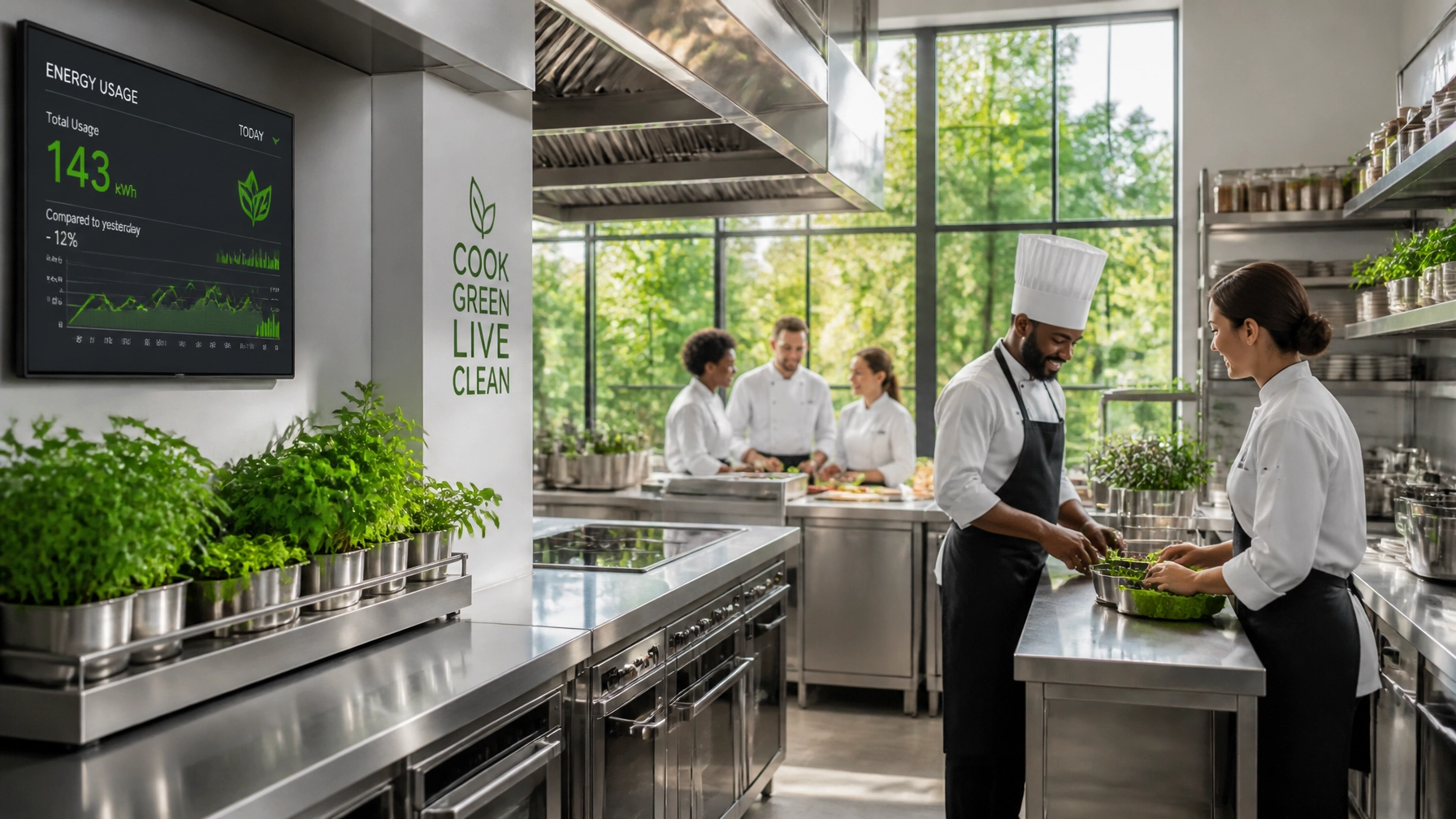
Let’s be honest: in the restaurant world, "going green" usually sounds like an expensive luxury. It’s the kind of thing you do when you’ve finally conquered your delivery app margins and have a spare $50k lying around for artisan bamboo straws and solar-powered pizza ovens.
But here’s the secret the big chains don't want you to know: Sustainability isn't a cost center. It’s a profit center.
At Restaurant Revenue Incubator, we don’t look at "green" initiatives through a fuzzy lens of good vibes. We look at them through the Triple Bottom Line (TBL): People, Planet, and: most importantly for your survival: Profit.
When we step into a turnaround project, we’re often able to find upwards of 20% in operational cost savings by simply fixing the leaks in your "green" kitchen operations. And the best part? We do it with no upfront cost. We only take a share of the results we create.
Buckle up. We’re about to pull back the curtain on how "doing good" translates directly into "doing well."
The TBL Framework: Why Your Accountant Will Love This
If you’ve ever wondered if sustainability certifications are worth it, you’re asking the right question, but maybe for the wrong reason. The real value isn't just the sticker on the window; it's the operational discipline behind it.

The Triple Bottom Line is a simple way of measuring success beyond just the net income line:
- Planet: Reducing waste, energy, and water usage. (Translation: Lowering your utility and COGS bills.)
- People: Creating a better work environment. (Translation: Lowering turnover and hiring costs.)
- Profit: The result of doing the first two correctly. (Translation: More cash for you to scale.)
Secret #1: The 7:1 ROI in Your Trash Can
If I told you I had a stock that guaranteed a 700% return, you’d call the SEC on me. But in the restaurant industry, that’s the median ROI for food waste reduction programs.
Research across 114 restaurant sites in 12 countries found that for every $1 invested in reducing food waste, restaurants saved an average of $7. This isn't just theory; it’s cold, hard data.
How we find that 20%:
Most kitchens are "bleeding" money through over-prepping, poor inventory rotation, and oversized portions. We implement "Root-to-Tip" cooking strategies and tech-driven inventory tracking.
- The Special of the Day: That’s not just a creative outlet for your chef; it’s a strategic tool to move surplus inventory before it becomes a tax write-off in the dumpster.
- Portion Control: Trimming just 0.5 ounces of protein off a plate might not seem like much, but over 10,000 covers a year? That’s the down payment on your next location.
Secret #2: Stop Heating the Neighborhood
Your HVAC and refrigeration systems are probably the most expensive "employees" you have, and they never take a day off. Most commercial kitchens are incredibly energy-inefficient, with heat-spewing equipment fighting against high-powered AC units.

We’ve seen restaurant tech save the day by simply automating the "start-up and shut-down" schedules.
- LED Everything: Switching to LED lighting can cut electricity bills by up to 30%. It’s a low-hanging fruit that pays for itself in months, not years.
- The "On-Request" Policy: Stop filling water glasses automatically. You save on the water itself, the energy to pump it, and the labor/chemicals to wash the glass. Some operators save over $18,000 a year just by asking, "Would you like some water?"
Secret #3: The "People" Pillar (The Hidden Cost of Burnout)
We’ve all heard the joke that work-life balance in the restaurant industry is a myth. But high turnover is a profit killer. It costs roughly $5,000 to $7,000 to replace a single line cook when you factor in job postings, training, and lost productivity.
A "Green" kitchen is almost always a more pleasant kitchen. Better lighting, more efficient (and less heat-emitting) equipment, and a culture of mindfulness reduce the "chaotic" vibe that leads to burnout.
When your team feels like they are part of a mission: reducing waste, supporting local farmers, being efficient: they stay longer. If we can reduce your turnover by just 15%, that’s thousands of dollars back in your pocket every quarter.
How We Find 20% Savings in Under 2 Weeks
You’re busy. You’re running a floor, managing a schedule, and trying to figure out why the walk-in is making that weird clicking sound. You don’t have time to audit your P&L for "green" efficiencies.
That’s where we come in.

At Restaurant Revenue Incubator, we perform a deep-dive audit of your tech stack and P&L at zero cost to you.
- The Audit: We look at your utility bills, waste hauling fees, and COGS.
- The Strategy: We identify the "Big Leaks": the specific areas where sustainability meets profitability.
- The Execution: We help you implement the changes, from renegotiating vendor contracts to optimizing your kitchen flow.
Our Risk-Free Guarantee: We don’t ask for upfront retainers. We aren't here to sell you a 200-page PDF and wish you good luck. We only take a share of the actual, measurable results we create. If we don’t save you money, you don’t pay us. It’s that simple.
Stop Leaving Money on the Table (And in the Trash)
The era of "growth at all costs" is over. In today’s market, with tight margins and rising labor costs, the winners are the operators who understand the Triple Bottom Line.
A green kitchen isn't just a marketing gimmick for Gen Z; it's a lean, mean, profit-generating machine.
Are you ready to see where your hidden 20% is hiding? Let’s take a look at your P&L. No risk, no upfront fees: just 50+ years of combined experience dedicated to scaling your concept.
[Contact Restaurant Revenue Incubator Today for a Free P&L Review]