Restaurant Technology · Uncategorized
The Tech-Stack Trap: Why 73% of Restaurants Are Investing in AI (But Only 9% See Results)
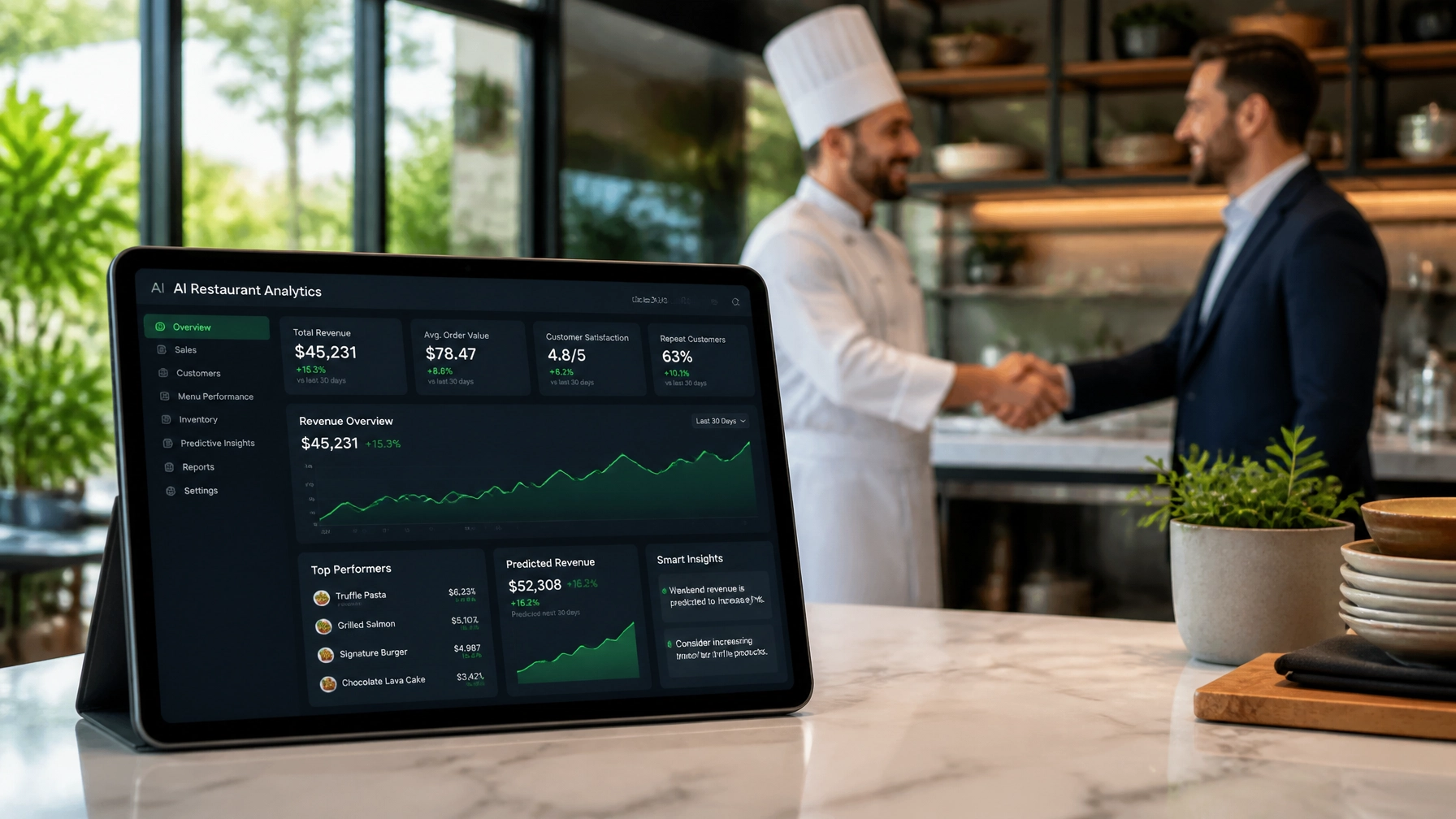
Walking into a restaurant kitchen in 2026 feels a bit like stepping onto the bridge of the Starship Enterprise. There are tablets for delivery, screens for the kitchen, handhelds for the servers, and somewhere in the back, a manager is trying to figure out why the AI-generated schedule just assigned the dishwasher to a three-hour shift on a Tuesday morning.
We are currently in the middle of a massive technological gold rush. According to recent industry data, 73% of restaurant operators are actively investing in AI, and 69% are already using AI for reporting and analytics. Everyone wants a piece of the "automation" pie.
But here’s the kicker that should keep every owner awake at night: Only 9% of those restaurants are actually seeing transformational results.
The rest? They’re stuck in the "Tech-Stack Trap." They are spending more money on software than they are saving on labor. At Restaurant Revenue Incubator, we see this every day. Operators aren't failing because they lack technology; they’re failing because they have too much of the wrong technology.
The "Franken-Stack" Tax: Is Your Tech Costing You 34% More?
Most restaurant tech stacks aren't designed; they’re accumulated. You add a POS. Then a delivery aggregator. Then a loyalty program. Then a specialized inventory tool. Pretty soon, you have a "Franken-Stack", a monster made of stitched-together software that doesn't talk to each other.

Research shows that fragmented tech stacks increase license costs by an average of 34%. You’re paying for redundant features across three different platforms, and your managers are spending five hours a week just trying to reconcile data between them. This is the opposite of restaurant tech stack optimization.
If your "automated" system requires a human to spend half their day copy-pasting numbers into an Excel sheet, you don't have automation, you have an expensive hobby.
AI: From Buzzword to Bottom Line
The reason only 9% of restaurants see results is that most restaurant AI automation is applied like a band-aid rather than a surgical tool.
To see "transformational" results, the technology has to solve the two biggest killers of restaurant margins: Labor and Food Cost.
1. The Labor Puzzle (3-5% Cost Reduction)
In 2026, the most effective restaurant growth strategies aren't just about getting more people through the door; they’re about managing the people already in the building. When labor scheduling is tied directly to real-time demand forecasting, operators typically see a 3-5% reduction in total labor costs.
This isn't about cutting staff; it’s about having the right people on the floor when the rush hits and not paying three servers to stare at their phones during a rainstorm.
2. Compressing Food Cost Variance (1.4-2.8% Recovery)
Food cost is often treated as an "it is what it is" expense. But through "variance compression", using AI to track exactly what was purchased versus what was actually sold, operators can recover 1.4 to 2.8 percentage points of their margin. In a $2M-a-year restaurant, that’s $56,000 in pure profit recovered from the trash can and "missing" inventory.
The Triple Bottom Line: Profit, People, and Planet
At Restaurant Revenue Incubator, we believe restaurant operations support should follow the Triple Bottom Line:
- Profit: Recovering that 1.4-2.8% food cost variance.
- People: Reducing manager burnout by automating the "busy work" of reporting.
- Planet: Using predictive analytics to cut food waste by up to 35%.
Sustainability isn't just a PR move anymore; it’s a cost-savings strategy. Every pound of food you don't throw away is a pound of food you don't have to buy next week. When you optimize for the planet, you accidentally optimize for your bank account, too.

The 45-90 Day Payback: Why Wait Years for ROI?
One of the biggest myths in restaurant technology trends 2026 is that you need to wait eighteen months to see a return on investment.
If you are implementing high-ROI automation correctly, the payback period should be between 45 and 90 days. If a salesperson tells you it will take two years to "see the data mature," they are likely selling you a lighthouse in the middle of a desert.

Real restaurant turnaround services should pay for themselves almost immediately. This is why we operate the way we do.
Stop Paying for Potential. Start Paying for Results.
Most consultants want a $10,000 retainer before they’ve even looked at your walk-in cooler. We think that’s backwards.
At Restaurant Revenue Incubator, we provide comprehensive growth solutions with a fundamentally different philosophy: Risk-Free Growth.
- Free Tech & P&L Reviews: We review your tech stack and your P&L at absolutely no cost. We find the "Franken-Stack" leaks and the food-cost variances for you.
- No Upfront Retainers: We don't ask for a check on day one. We only take a share of the results we create. If we don't grow your profit, you don't pay us.
- 2-Week Turnaround: We don't believe in six-month "discovery phases." We can turn a business around in under 2 weeks, often just by cleaning up the tech stack and tightening operations.
- Alternative Funding: Need capital to scale? Our partners provide funding in exchange for food & beverage credits. No interest, no equity, no dilution of your hard-earned business.

Don't Get Trapped
The difference between the 73% of restaurants investing in tech and the 9% seeing results is execution. Don't let your restaurant become a case study in "over-automation."
Whether you’re a single-unit operator looking to expand or a growing group ready to franchise, you need a partner who understands that the "Stack" is only as good as the "Service."
Ready to see if your tech is working for you: or if you’re working for it?
Click here to book your FREE P&L and Tech-Stack Review. Let us show you where your missing 2.8% is hiding.