Restaurant Technology · Uncategorized
Eco-Friendly Restaurant Profit: The Proven Framework to Boost Margins 40% Through Sustainable Kitchen Operations
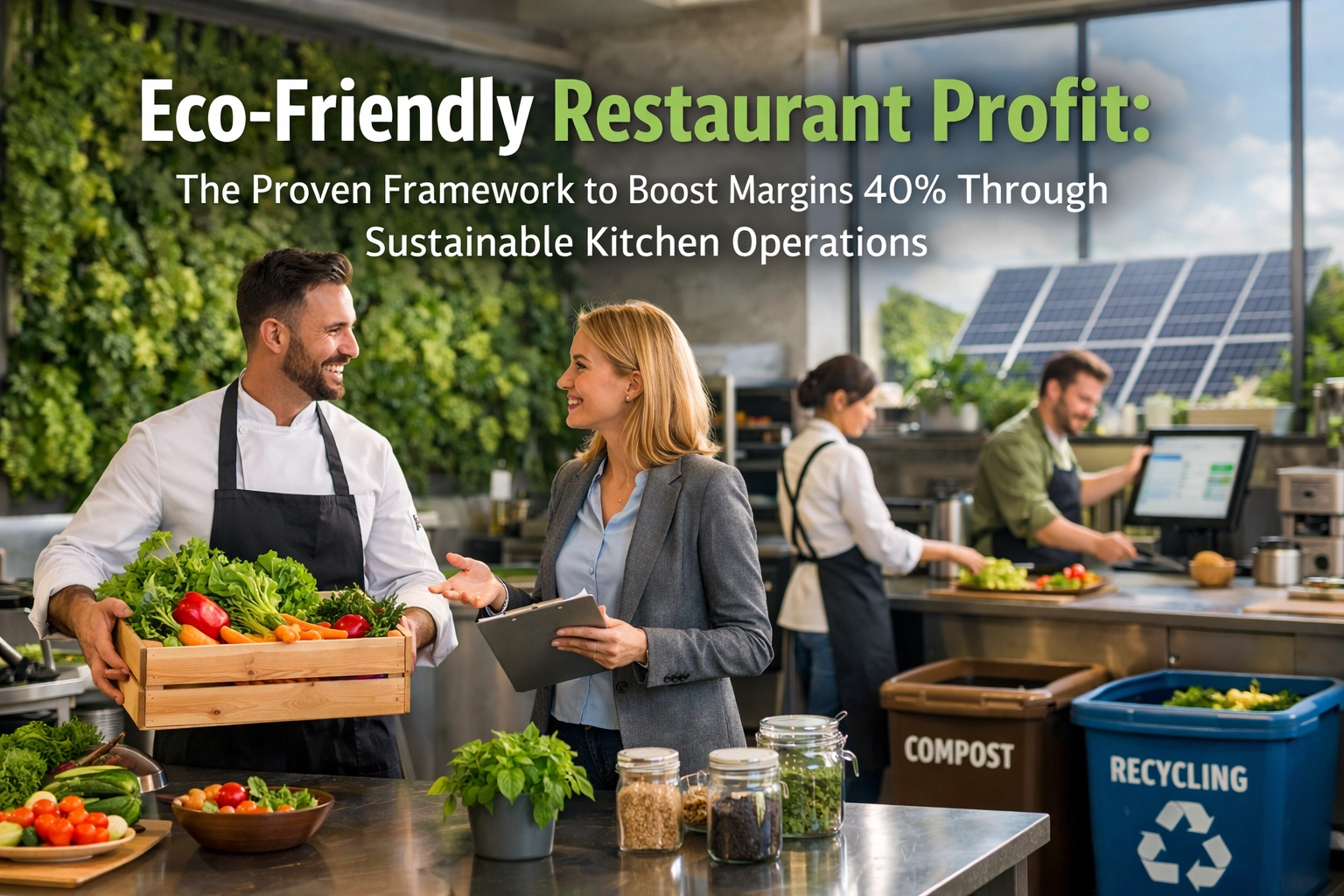
Let's get real for a second: when someone drops a "40% margin boost" claim, your BS detector should be firing on all cylinders. And you'd be right to be skeptical. But here's where it gets interesting, while the average margin improvement from sustainable kitchen operations hovers around 3-5%, the specific ROI on waste reduction initiatives can hit that 40% mark and beyond.
The World Resources Institute found that for every dollar invested in reducing food waste, restaurants save an average of $6. That's a 500% return. So while we're not talking about a blanket 40% margin increase across your entire P&L, we are talking about serious money when you target the right inefficiencies.
For an industry operating on razor-thin margins (typically 3-5% for full-service restaurants), even a 3.3% margin improvement is the difference between thriving and barely surviving. And honestly? In 2026, with labor costs climbing and customers demanding both value and values, you can't afford to ignore this anymore.
The Triple Bottom Line Isn't Hippie Talk, It's Smart Business

The triple bottom line framework measures success across three dimensions: People, Planet, and Profit. Here's the kicker, they're not competing priorities. They're interconnected levers that, when pulled together, create a compounding effect on your bottom line.
Restaurants that actively reduce food waste and their environmental footprint see margins that are 3.3% higher than those that don't. But more importantly, they're building brands that resonate with the 73% of diners who say they'd pay more for sustainable options.
The math is simple: sustainability initiatives reduce costs while simultaneously increasing customer loyalty and pricing power. That's not a trade-off. That's a competitive advantage.
The Food Waste Crisis Is Your Hidden Profit Center
Food waste costs the US restaurant industry over $162 billion annually. Read that again. $162 billion. That's not just an environmental disaster, it's a financial one.
Since approximately one-third of restaurant revenue goes to cost of goods sold, wasted food is literally throwing money in the dumpster. Most operators know this intellectually, but few have actually quantified their specific waste or built systems to attack it.
Here's your action plan:
Track everything for 30 days. You can't manage what you don't measure. Implement waste logs at every station. Yes, it's tedious. Yes, your team will groan. Do it anyway. You'll be shocked at what you find.
Streamline your menu. Every additional SKU increases your waste exponentially. That 87-item menu isn't impressive, it's expensive. Focus on fewer dishes executed brilliantly, with ingredients that work across multiple applications.
Master ingredient cross-utilization. If you're buying fennel for one dish, find three more ways to use it. Trim becomes stock. Stems get pickled. Nothing goes to waste. This is where culinary creativity meets margin expansion.

Implement portion control religiously. Your line cooks aren't "being generous", they're destroying your margins. Standardize portions with actual measuring tools, not eyeballs and vibes.
Embrace variable pricing and sizing. Not every customer wants a massive portion. Offer smaller plates at lower prices. You'll reduce waste, attract price-sensitive diners, and often see customers order additional items anyway.
Energy Efficiency: The Silent Margin Killer
Restaurants consume 5-7 times more energy per square foot than other commercial buildings. Your utility bills can account for up to 33% of sales. That's insane when you consider that most operators just accept these costs as "the price of doing business."
Here's the reality: cooking equipment accounts for 67% of gas usage, and refrigeration eats up 43% of electricity. These two categories alone offer massive optimization opportunities.
The energy efficiency playbook:
Audit your equipment. That 15-year-old convection oven might seem fine, but it's probably costing you thousands annually in excess energy costs. ENERGY STAR certified equipment uses 10-50% less energy than standard models. The payback period is typically 2-3 years.
Fix the lighting. LED retrofits are low-hanging fruit. The upfront cost is minimal, the energy savings are immediate, and the improved ambiance often leads to better customer experience. Win-win-win.

Maintain your HVAC systems. Dirty filters and poorly maintained systems can increase energy consumption by 30%. Schedule quarterly maintenance. Clean those coils. Replace those filters. Your electric bill will thank you.
Optimize your walk-ins and reach-ins. Make sure door seals are intact, set temperatures correctly (refrigerators should be at 38°F, freezers at 0°F), and organize inventory so staff aren't standing there with doors open searching for items.
Install programmable thermostats. There's no reason your dining room needs to be climate-controlled at 2 AM when you're closed. Smart thermostats pay for themselves in months.
Operational Efficiency: Where Systems Meet Sustainability
The restaurants that actually capture these margin improvements aren't just installing LED bulbs and hoping for the best. They're building comprehensive systems that make sustainability the default, not an afterthought.
Implement FIFO ruthlessly. First-in, first-out inventory management isn't optional. Label everything with receive dates. Train your team to pull older stock first. Build it into your opening and closing checklists.
Leverage technology for inventory tracking. Manual inventory counts are prone to error and take forever. Modern inventory management software integrates with your POS, tracks usage patterns, identifies waste hotspots, and automatically adjusts par levels. The ROI is measured in weeks, not years.

Train your team on the "why." Your staff won't care about sustainability because it's good for the planet. They will care when you show them how reduced waste means more stable hours, better raises, and higher tips from a busier restaurant. Connect the dots between operational efficiency and their personal success.
Build supplier relationships strategically. Work with vendors who can deliver smaller, more frequent orders to reduce spoilage. Negotiate credit for overripe produce that you can still use for stocks and sauces. Find local suppliers who can provide fresher product with shorter lead times.
The Restaurant Revenue Incubator Advantage
Here's where most sustainability consultants lose the plot. They'll charge you $15,000 upfront for an audit, hand you a 47-page PDF full of recommendations, and disappear. You're left holding a report you don't have time to read, let alone implement.
We do things differently at Restaurant Revenue Incubator.
Our cost reduction services are built on a performance-based model, no upfront costs, no equity stakes, no interest. We only win when you win. We'll come in, identify your specific waste and efficiency opportunities, help you implement the systems, and take a percentage of the verified savings.

This means we're incentivized to find the big wins fast, not pad a consulting invoice with theoretical recommendations you'll never execute. We focus on three core areas:
Waste reduction systems that typically save restaurants $4,000-$12,000 monthly within the first 90 days.
Energy optimization programs that reduce utility bills by 15-30% through equipment upgrades, operational changes, and vendor negotiations (yes, you can negotiate with utility companies).
Supply chain restructuring that leverages our network and buying power to reduce your COGS by 2-5% while actually improving ingredient quality.
The beauty of the triple bottom line approach is that these improvements don't just boost profit: they also reduce environmental impact and create better working conditions for your team. You're not choosing between doing good and doing well. You're doing both.
The 2026 Reality Check
The restaurant industry is at an inflection point. Labor costs aren't coming down. Rent isn't decreasing. Customer expectations for both value and values continue to rise. The operators who win over the next five years won't be the ones with the biggest ad budgets: they'll be the ones with the tightest operations and the clearest purpose.
Sustainability isn't a marketing gimmick or a compliance checkbox anymore. It's a operational imperative that directly impacts your ability to remain profitable in an increasingly competitive market.
The data is clear: restaurants that embrace sustainable operations see measurable margin improvements, stronger customer loyalty, and better team retention. The question isn't whether you should pursue these initiatives: it's whether you can afford not to.
Ready to turn your kitchen into a profit center instead of a cost center? Let's talk. We'll start with a free operational assessment to identify your biggest opportunities, and you don't pay us a dime until you're seeing verified savings.
Because at the end of the day, the most sustainable thing you can do is build a restaurant that's actually profitable.