Restaurant Technology · Uncategorized
Does the Triple Bottom Line Really Matter in 2026? (The Truth About Eco-Friendly Profit)
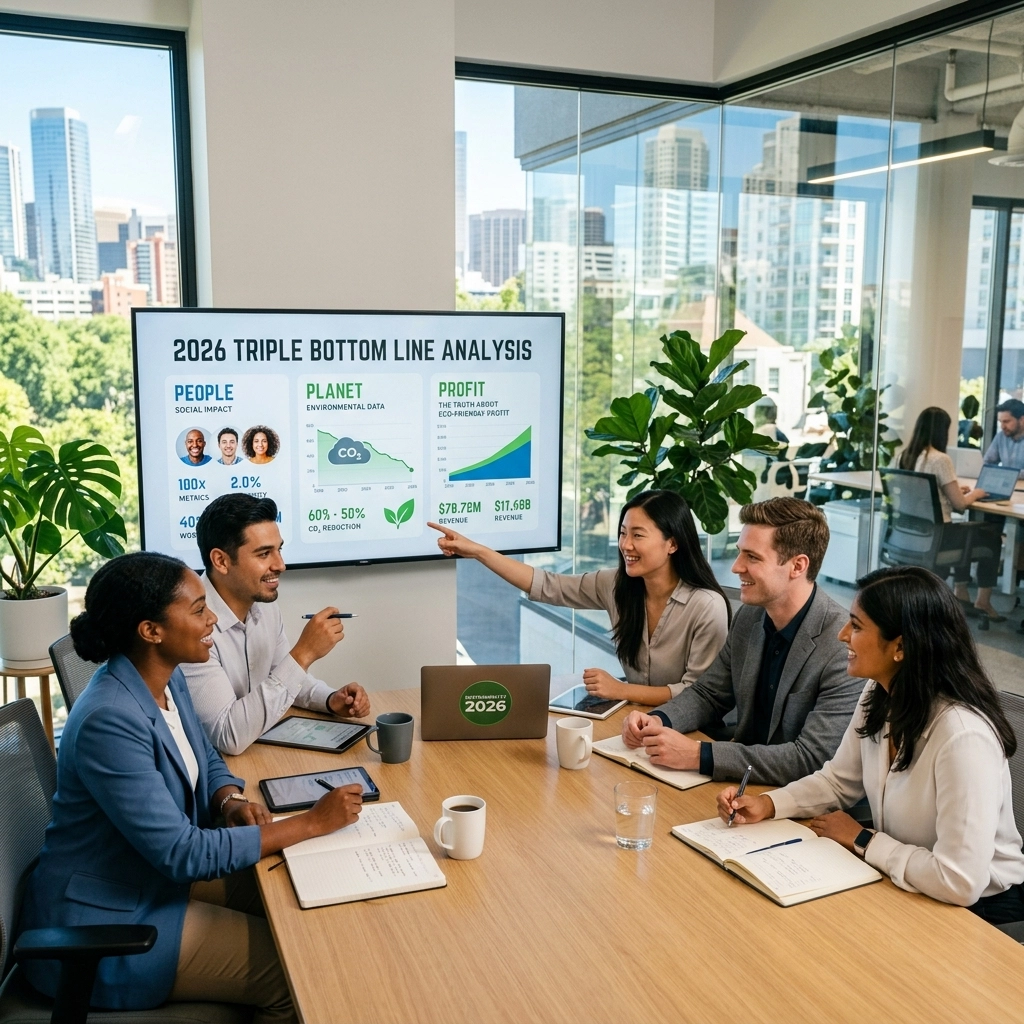
Look, we get it. It’s April 2026. You’ve survived the Great Delivery Wars, navigated the AI-ordering revolution, and managed to keep your kitchen staff from quitting to become full-time VR headset reviewers. You’re busy. When someone mentions the "Triple Bottom Line" (TBL): People, Planet, and Profit: your first instinct might be to roll your eyes so hard you see the back of your skull.
"I’m just trying to make payroll, Robert," you might say. "I don’t have time to hug a tree unless that tree is made of cash."
But here’s the cold, hard, data-driven truth: In 2026, the tree is made of cash. Sustainability is no longer a PR stunt or a "nice-to-have" sticker for your window. It is the most effective revenue optimization strategy available to the modern operator.
At Restaurant Revenue Incubator, we’ve seen the numbers. The restaurants that are scaling the fastest aren't just the ones with the best TikTok filters; they’re the ones that have integrated the Triple Bottom Line into their DNA.
Let’s dive into why TBL isn't just a buzzword: it’s your roadmap to a more profitable 2026.
The "Profit" Pillar: Why Being Green is Actually "Being Lean"
For decades, the myth persisted that "going green" meant "going broke." In 2026, the inverse is true. Waste is a luxury you can no longer afford.
Think about your trash cans. Every scrap of food that goes into the bin is a direct hit to your COGS (Cost of Goods Sold). Every kilowatt of wasted electricity is a dollar that isn't going into your expansion fund.
Data shows that 62% of consumers are now willing to change their purchasing habits to reduce environmental impact. But more importantly for your bank account, internal efficiency pays immediate dividends. By implementing cost reduction strategies focused on sustainability: like AI-driven inventory management and energy-efficient appliances: operators are seeing margin improvements of 3% to 7%.
In a world where 5% can be the difference between "Open" and "Available for Lease," those numbers are massive.

The "Planet" Pillar: It’s Not Just About Turtles (Though They’re Cool)
In 2026, the "Planet" part of the TBL is really about supply chain resilience. Climate-related disruptions to agriculture have made food prices more volatile than a crypto-token launched by a teenager.
Successful operators are pivoting to:
- Hyper-Local Sourcing: Reducing the "food miles" doesn't just lower your carbon footprint; it protects you from interstate shipping delays and fuel surcharges.
- Waste Diversion: Composting and anaerobic digestion aren't just for hippies anymore. In many cities, landfill taxes have skyrocketed. Turning your waste into something useful (or at least less expensive to get rid of) is a high-level business move.
- Smart Tech: This is where restaurant tech comes in. IoT sensors in walk-ins that alert you to a 2-degree temperature shift can save $10,000 worth of protein in a single night.
If you’re looking to scale your concept, investors in 2026 are looking at your ESG (Environmental, Social, and Governance) scores. They want to see a business that can survive a resource-scarce future. If you want alternative funding for restaurants, you need to show you’re not wasting the resources you already have.
The "People" Pillar: Solving the Labor Crisis with Purpose
Let’s talk about the hardest part of 2026: People. Finding a line cook who actually shows up for their shift is like finding a four-leaf clover in a hurricane.
The TBL framework argues that your "People" (your staff and your community) are just as important as your profit. Research indicates that organizations adopting TBL frameworks report significantly improved employee retention.
Why? Because Gen Z and Gen Alpha (who are now entering the workforce) don't just want a paycheck. They want to work for a company that isn't actively making the world worse. When your team feels like they are part of a mission: whether that’s a zero-waste kitchen or a program that supports local farmers: they stick around.
Reduced turnover = reduced training costs = higher profit. It’s a closed loop.

Scaling with Purpose: How to Expand Without Exploding
If your goal is restaurant franchise consulting or just opening your second and third locations, the TBL gives you a repeatable blueprint.
When you scale a "traditional" restaurant, you’re often scaling its inefficiencies. If Location A wastes 10% of its produce, Location B will likely do the same. By the time you’re at Location 10, you’re essentially running a garbage disposal company that happens to serve pasta.
By building a TBL-focused model, you’re scaling a lean, mean, green machine. You’re building a brand that attracts driving new customers who are looking for values-aligned dining. Remember: 68% of Americans are now willing to pay more for sustainable products. That’s a "Green Premium" you can take straight to the bank.
The 2026 Tech Stack: The Silent Green Partner
You can’t manage what you don’t measure. In 2026, the "Triple Bottom Line" is powered by the "Triple Tech Stack."
- AI Inventory: Predicts exactly how many avocados you’ll need for a Tuesday lunch, so you aren't tossing brown mush on Wednesday.
- Energy Management Systems: Automatically dims lights and adjusts HVAC based on occupancy.
- Transparent Analytics: Tools that show your customers exactly where their meal came from.
If your current tech feels like it belongs in 2016, you’re leaving money on the table. You need front-to-back operations support that integrates these sustainable metrics into your daily reporting.

The "No Upfront Cost" Reality Check
We know what you’re thinking. "Robert, this sounds great, but I don't have $50,000 to overhaul my HVAC and buy an AI-powered composting robot."
And that’s the beauty of how we work at Restaurant Revenue Incubator. We specialize in "No Upfront Cost" turnaround services. We don't ask you to write a massive check to become sustainable. Instead, we look at your existing operation, find the leaks (literal and figurative), and implement the systems for you.
We win when you win. By reducing your waste and optimizing your revenue, we create the capital needed to fund these "green" initiatives. It’s not about spending more; it’s about wasting less.

Is TBL the Truth or a Trend?
As we look at the landscape in late April 2026, the verdict is in. The Triple Bottom Line isn't a trend; it's the new baseline for excellence.
Consumers are smarter. Energy is more expensive. Talent is harder to find. The restaurants that ignore these three pillars are the ones we see hitting our "turnaround" desk when it’s almost too late. The ones that embrace them? They’re the ones we’re helping open in Akron, Albuquerque, and beyond.
The truth about eco-friendly profit is that it’s simply good business. It’s about building a restaurant that lasts: not just until the next food trend, but for the next decade.
Ready to see how the Triple Bottom Line can transform your P&L?
Don’t let your margins go out with the morning trash. Whether you’re looking for a total brand overhaul or just want to tighten up your operations, we’re here to help.
Visit our service-single-page to see how we can implement these changes with no upfront cost to you. Or, if you’re ready to stop reading and start growing, contact us today.
Let’s make 2026 the year your restaurant becomes as sustainable as it is profitable.
