Restaurant Technology · Uncategorized
Boost Your Margins Instantly with These 5 Sustainable Kitchen Operations Tips
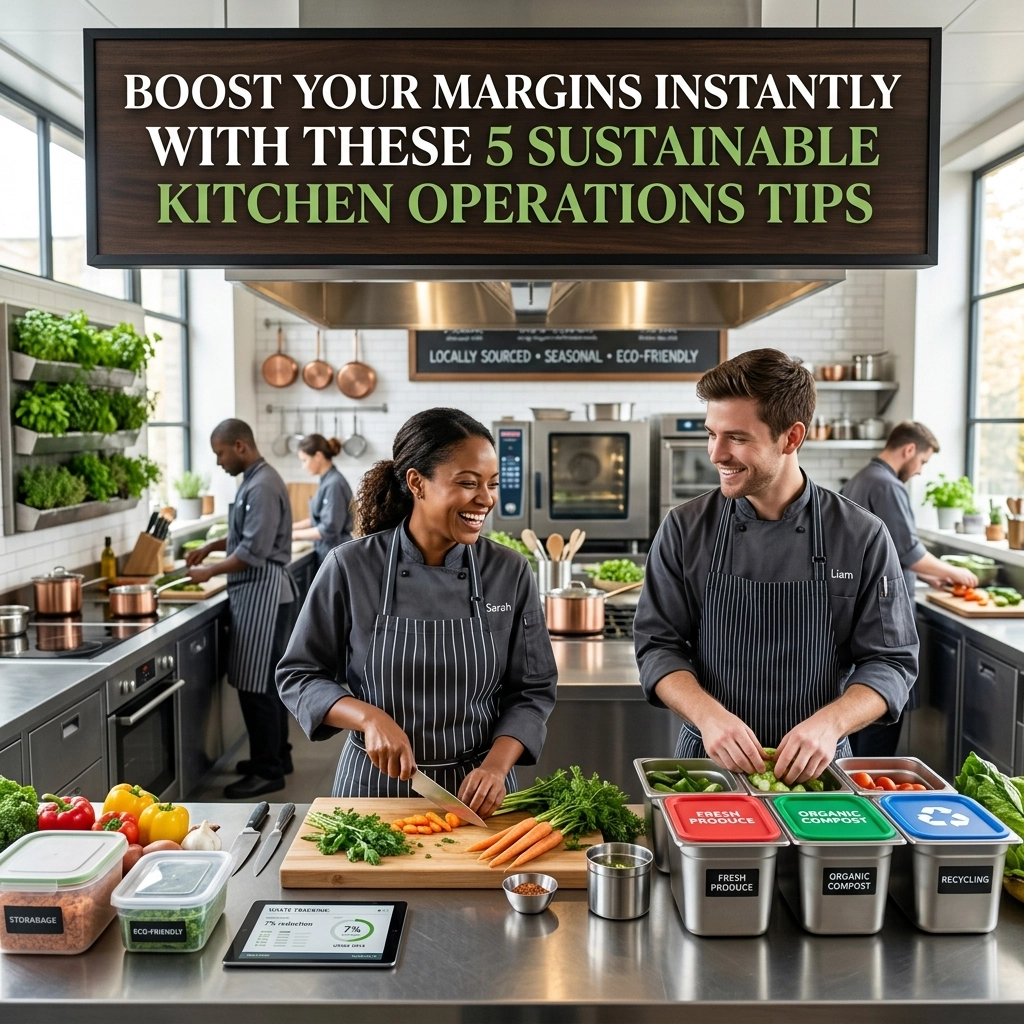
In the restaurant industry, we often talk about "razor-thin margins" as if it’s a localized weather pattern we just have to endure. We’ve all seen the numbers: the average restaurant survives on a 3% to 5% profit margin. When your survival depends on a handful of pennies for every dollar earned, every single gram of waste isn’t just an environmental tragedy: it’s a direct hit to your bank account.
At Restaurant Revenue Incubator, we specialize in the "No Upfront Cost" turnaround. We don’t think you should have to spend a fortune to save a fortune. This brings us to the holy grail of modern hospitality: The Triple Bottom Line. This framework focuses on People, Planet, and Profit.
The secret that the most successful chains know: and what we implement for our clients: is that sustainability isn't just about feeling good or getting a "green" sticker for your window. It’s about operational efficiency. If you reduce what you throw away and what you burn through, your margins naturally expand.
Here are five data-driven, sustainable kitchen operations tips that will boost your margins instantly.
1. Optimize Product Yield with Bulk Dispensers
Let’s talk about the hidden "packaging tax." Every time you buy individual portion packs of ketchup, mustard, or salad dressing, you are paying for the plastic, the labor to pack it, and the shipping of all that extra weight. Even worse, those little packets are notoriously difficult to empty completely.
By switching to bulk containers with high-efficiency pumps or food dispensers, you can achieve up to a 98% product yield. Standard squeeze bottles or small containers often leave 10% to 15% of the product stuck to the sides. In a high-volume kitchen, that’s thousands of dollars a year literally scraped into the trash.

Beyond the yield, bulk dispensers reduce the sheer volume of waste your staff has to manage. Less time taking out the trash means more time focused on prep or service. If you're looking to kit out your staff as they transition to these more efficient systems, check out our logo collection to keep the team looking sharp and professional while they save you money.
2. The "Carrot Root" Philosophy: Systematic Waste Reduction
Food waste is the silent killer of restaurant P&Ls. Most operators look at their trash cans and see garbage; we look at them and see a leak in the fuel tank.
Data shows that small operational changes have outsized impacts. For example, if you train your prep team to slice a carrot just a quarter-inch closer to the root, or to use a more precise technique when trimming a ribeye, you increase your usable product. Over a year, that quarter-inch of carrot adds up to dozens of cases of "free" produce.
When you apply this logic to high-cost ingredients like Parmesan cheese, black truffles, or premium proteins, the savings are staggering.
How to implement this:
- Inventory Audits: Don’t just count what’s on the shelf; track what’s going into the bin.
- Portion Control Tech: Use digital scales for everything. Eyeballing a portion is the fastest way to lose 2% of your margin.
- Predictive Ordering: Use AI-driven inventory management to ensure you aren't over-ordering perishables based on "gut feeling" rather than actual historical data.
Reducing waste by even 5% can often double your net profit. It’s the easiest raise you’ll ever give yourself.

3. Switch to Energy-Efficient Equipment (The Tech Play)
Your kitchen is essentially a giant machine designed to move heat around. You’re paying to heat things up (ovens, ranges) and paying to cool things down (walk-ins, low-boys). If your equipment is outdated, you are essentially burning money to keep the lights on.
Energy-efficient appliances, particularly those with ENERGY STAR ratings, consume significantly less power. A modern energy-efficient dishwasher can save a restaurant hundreds of dollars a month in water and heating costs alone.
Quick Tech Wins:
- LED Lighting: It’s 2026: if you still have incandescent bulbs, you’re basically heating your dining room with expensive, inefficient wire filaments.
- Motion Sensors: Install these in restrooms, walk-ins, and corridors. There is no reason to light an empty storage closet 24/7.
- Smart Thermostats: Use automation to drop the AC or heat during non-operational hours.
At Restaurant Revenue Incubator, we often look at a client's tech stack first. Automation isn't just for ordering kiosks; it's for monitoring the health of your refrigeration and the efficiency of your HVAC. While you're optimizing your tech, you might as well look the part of a modern operator. Grab a hoodie with a pocket for those chilly morning inventory checks in the walk-in.
4. Source Locally and Adapt Your Menu Seasonally
The "Farm-to-Table" movement was originally about flavor, but for the modern operator, it’s about resilience and logistics.
When you source locally, you aren't paying for a head of lettuce to be trucked 2,000 miles across the country. You are reducing "food miles," which lowers your carbon footprint, but more importantly, it lowers your supply chain risk. Regional suppliers are often more flexible, and seasonal produce is almost always cheaper because it’s at the peak of its supply.

The Seasonal Edge:
By rotating your menu to match what is naturally available, you avoid the "out-of-season" price spikes. If a drought in another part of the world doubles the price of tomatoes in February, the restaurant with the seasonal menu has already pivoted to hearty root vegetables or preserves. This keeps your food cost percentage stable year-round.
Scaling a concept becomes much easier when you aren't reliant on a fragile, global supply chain. Local sourcing allows you to build a community-centric brand: a key pillar of the "People" part of the Triple Bottom Line.
5. Build a Sustainability-Focused Leadership Culture
You can have the best tech and the most efficient ovens in the world, but if your line cooks don’t care, your margins will still bleed out. Leadership is the glue that holds sustainable operations together.
Engage your team by explaining the "why" behind the "what." When they understand that reducing waste is what keeps the business profitable: and therefore keeps their jobs secure and their raises possible: they become stakeholders in the process.
Engagement Tactics:
- Incentivize Savings: Create a "Waste-Reduction Bonus." If the kitchen hits a specific food-cost target through waste reduction, share a portion of those savings with the team.
- Open Feedback Loops: Your dishwashers and prep cooks see the waste before anyone else does. Ask them for ideas on how to optimize.
- Professionalism through Branded Gear: Nothing builds a "team" feel like a shared identity. Whether it's a polo for the front of house or a beanie for the prep crew, a unified look fosters a culture of ownership.

The Bottom Line: Profit Through Purpose
Sustainability in 2026 isn't a luxury; it’s a survival strategy. By focusing on the Triple Bottom Line, you aren't just doing "the right thing": you’re building a leaner, meaner, more profitable machine.
At Restaurant Revenue Incubator, we believe that every restaurant has "hidden" profit buried in its operations. Our mission is to help you dig it out. Our unique No Upfront Cost model means we only succeed when you do. We take the risk, optimize your operations, and share in the growth.
Whether it’s through tech stack optimization, leadership training, or scaling your concept to new heights, we’re here to turn your restaurant into a high-margin powerhouse.
Ready to see how much you could be saving? Visit our shop for more resources or contact us today to learn more about our turnaround services. Let’s stop leaving money on the table: or in the trash can.