Restaurant Technology · Uncategorized
How to Integrate AI Sustainability Tech With Your Kitchen Operations for Immediate Savings
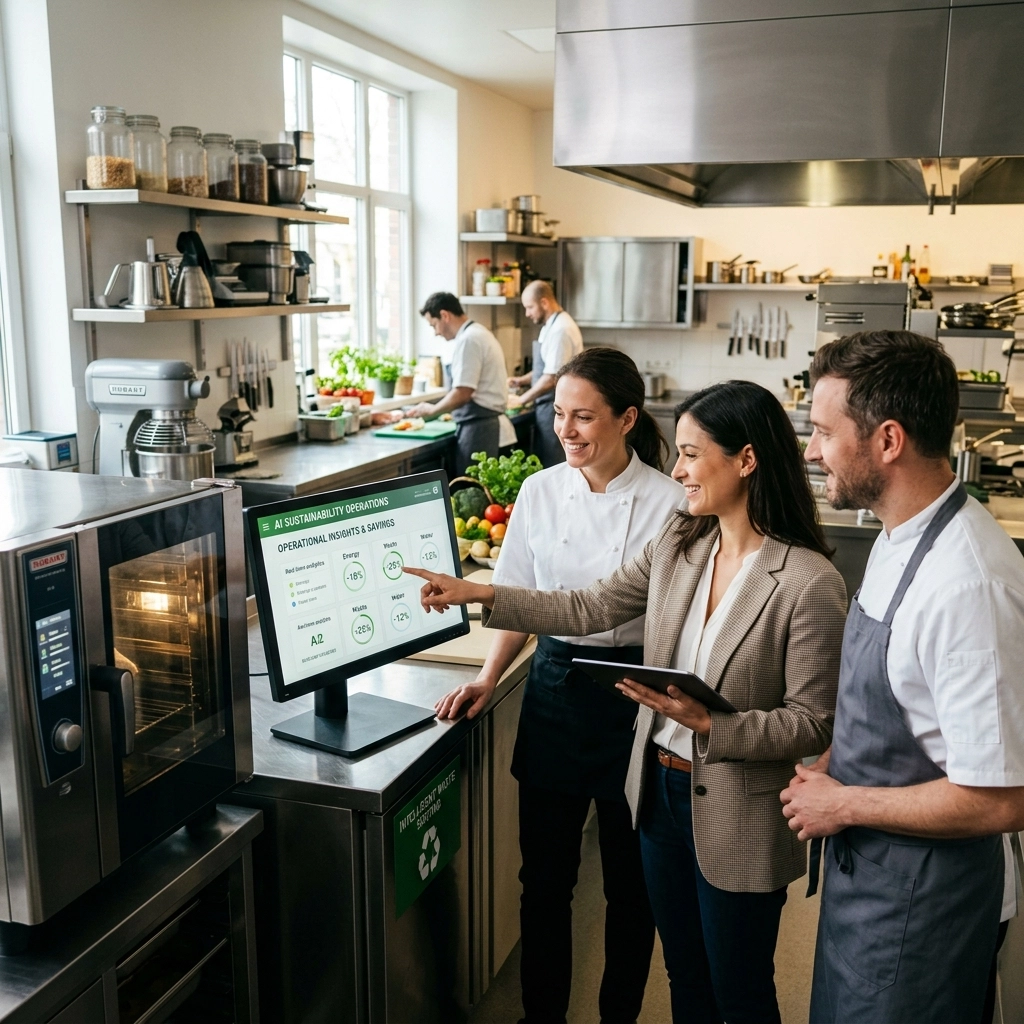
If your walk-in cooler had a voice, it would probably spend half its time screaming about the wilting cilantro you forgot about and the other half complaining that the door has been left ajar for forty-five minutes. In the high-stakes world of professional kitchens, waste isn't just an environmental bummer; it is a literal bonfire of your hard-earned cash.
For years, "sustainability" was seen as a luxury: a buzzword for high-end bistros that have the time to compost their own napkins. But in 2026, the narrative has shifted. Sustainability is no longer about just "being green"; it’s about the Triple Bottom Line: People, Planet, and most importantly for your survival, Profit.
Integrating AI sustainability tech into your kitchen is the fastest way to plug the leaks in your revenue. We aren't talking about a decade-long ROI. We’re talking about immediate savings that can be felt in your food cost percentages within the first month. At Restaurant Revenue Incubator, we specialize in these types of high-impact shifts through our revenue optimization strategies.
The Sous Chef in the Machine: Why AI?
Traditional kitchen management relies on gut feelings and "the way we've always done it." But humans are notoriously bad at predicting exactly how many salmon fillets will sell on a rainy Tuesday when there’s a local high school football game. AI, however, thrives on that data.
By integrating AI tech, you aren’t replacing your chef; you’re giving them a data-driven superpower. You’re moving from a reactive "clean up the mess" culture to a proactive "prevent the waste" strategy.

The 6-Step Blueprint for AI Integration
Ready to stop throwing money in the trash? Here is the roadmap to transforming your kitchen into a lean, green, profit-generating machine.
Step 1: Deploy a Digital Inventory System
The foundation of any smart kitchen is knowing exactly what you have. Forget the clipboard and the half-faded Sharpie marks. AI-powered inventory tools like MarketMan or FreshBytes AI use predictive analytics to eliminate over-ordering. These systems don't just count boxes; they analyze weather patterns, local events, and seasonal trends. If a blizzard is coming, the AI suggests you hold off on that massive produce order.
This foundational step prevents spoilage before the food even enters your building. It’s the first line of defense in cost reduction.
Step 2: Implement AI-Enhanced Prep Sheets
Over-prepping is the silent killer of margins. If your prep team is cutting enough onions for a busy Friday on a slow Monday, you are losing money on labor and product.
AI systems generate daily prep recommendations based on historical demand. If the data shows Mondays are 30% slower than average, the prep sheet reflects that automatically. This ensures your team is working on what will actually sell, keeping the "People" part of the Triple Bottom Line happy by reducing pointless, soul-crushing labor.
Step 3: Upgrade to Smart Cooking Appliances
Your appliances should be as smart as your smartphone. Modern kitchens are adopting AI-integrated smart ovens and self-regulating induction cooktops.

These devices do more than just cook; they optimize. An AI fryer can automatically adjust heat based on the moisture content of the fries, extending the life of your oil (one of the most expensive consumables in a kitchen). Smart refrigerators with eco-modes can sense peak usage times and adjust cooling cycles, slashing your energy bills: the silent drain on your bank account.
Step 4: Enable Automated Expiration Alerts
"First In, First Out" (FIFO) is easy to say but hard to execute perfectly in the heat of a dinner rush. AI optimization systems deliver real-time alerts to tablets or wearable tech when ingredients are nearing their expiration.
More impressively, these systems can suggest dynamic recipe adjustments. If you have an excess of tomatoes nearing their end, the AI can prompt your chef to run a gazpacho special or a marinara base for the next day, ensuring that every cent of ingredient cost is converted into revenue.
Step 5: Integrate AI Ingredient Substitution
Supply chain volatility is the new normal. When the price of eggs triples or your avocado supplier ghosts you, AI can save the day. Advanced AI tools can recommend optimal substitute ingredients based on flavor profiles and nutritional density, ensuring your menu stays consistent and your margins stay protected even when the market goes haywire.
Step 6: Track Sustainability Metrics Monthly
You cannot manage what you do not measure. Your AI dashboard should be your most-visited site. Monitor your waste percentage, energy consumption, and prep efficiency religiously. These metrics aren't just for a "green" report; they are the scoreboard for your business's health.

The Data: Why Your Accountant Will Love This
Let's talk numbers, because at the end of the day, that's what keeps the lights on. The research is clear: kitchens that implement AI sustainability tech see a 20–40% reduction in food waste. In some aggressive implementations, waste has been slashed by up to 70%.
When you consider that food waste often accounts for 4-10% of total food purchased, these savings are staggering. Real-world data shows that AI-powered systems are currently saving operators over $100 million annually across the hospitality sector. For a single-unit operator, this translates to thousands: sometimes tens of thousands: of dollars added back to the bottom line annually.
Labor Efficiency: The Hidden Win
Beyond the cost of the ingredients, there is the cost of the hands that touch them. Every pound of food wasted represents wasted labor in:
- Ordering and receiving
- Storage and rotation
- Prep and cooking
- Cleaning and disposal
By producing only what you need, you decrease the total workload, allowing your staff to focus on quality and guest experience rather than managing a mountain of trash. This is how you win the war on talent: by making the work more meaningful and less wasteful.
The Environmental Impact (The "Planet" Part)
While we focus on profit, we can't ignore the impact on our world. Every pound of prevented food waste saves approximately 3.3 pounds of CO₂ emissions. At scale, the AI revolution in kitchens is preventing 28,000 tonnes of food waste annually. That’s equivalent to saving two meals every single second. Being a hero for the planet actually pays quite well.

How to Get Started with No Upfront Cost
We know what you’re thinking: "This sounds expensive. I can’t afford a fleet of AI fryers right now."
That’s where Restaurant Revenue Incubator comes in. We understand that restaurant margins are thinner than a properly sliced carpaccio. That is why we offer No Upfront Cost turnaround services.
We don't just give you a list of things to buy; we partner with you to implement these technologies and strategies. We find the waste, we optimize the revenue, and we share in the success. Our goal is to transform your operations so that the technology pays for itself through the savings it generates.
Whether you are looking to scale your concept through growth and scaling or simply want to stop the bleeding in your current kitchen, AI sustainability tech is the bridge to your future.
Final Thoughts: The Future is Automated
The "old school" way of running a kitchen: one where 30% of your prep ends up in the bin: is dying. The operators who survive the next decade will be the ones who embrace the Triple Bottom Line. They will use AI to empower their people, protect the planet, and maximize their profit.
Don't wait until your competitors are using these tools to underprice you. The savings are available right now, sitting in your walk-in, waiting to be claimed.
Ready to see how much you could be saving? Check out our services or contact us today for a deep dive into your kitchen’s potential. Let's turn that wilting cilantro into a winning margin.