Restaurant Technology · Uncategorized
AI in Restaurants 2026: The Data-Backed Guide to Smarter Tech Stacks, Lower Costs, and Real ROI
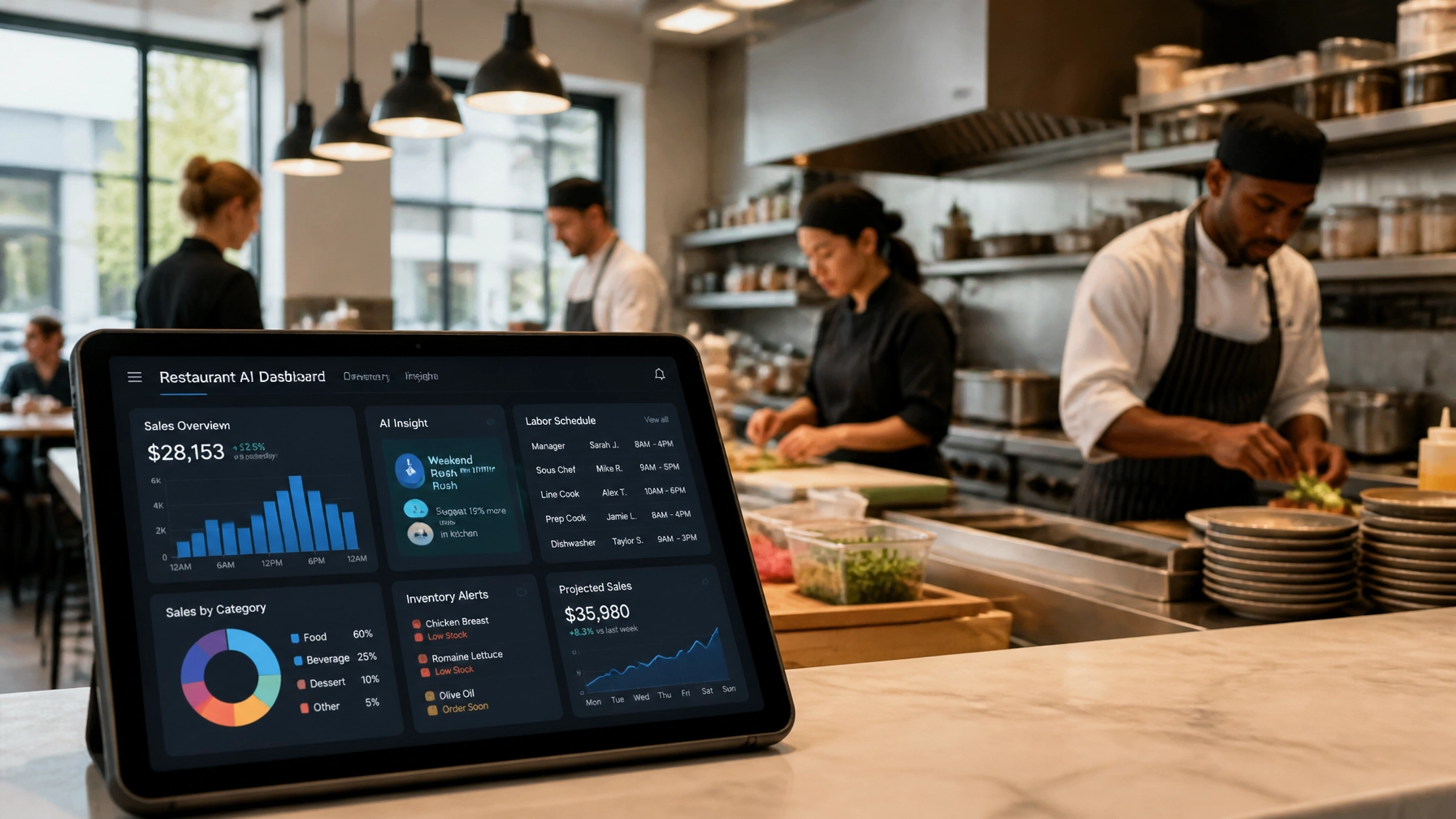
If you walked into a restaurant boardroom five years ago and mentioned "AI agents," you’d likely be met with blank stares or jokes about the Terminator taking over the fry station. Fast forward to mid-2026, and the joke has evolved into a trillion-dollar reality.
The 2026 restaurant landscape is no longer about whether you should adopt technology, but how quickly you can integrate it to protect your margins. According to the NRA State of the Restaurant Industry 2026, 26% of restaurant operators are now actively using AI tools in their daily operations. Even more telling? A staggering 80% of operators plan to increase their AI investments over the next twelve months, per the Modern Restaurant Management Mid-Year Outlook.
But here’s the rub: while everyone is buying tech, not everyone is seeing a return. At Restaurant Revenue Incubator, we see operators daily who have a "Frankenstein" tech stack: tools that don't talk to each other, data silos that hide leaks, and monthly SaaS fees that eat into the very profits they were supposed to save.
The Shift to Integrated Ecosystems
The era of "best-of-breed" impulse buys is fading. In 2026, we are seeing a definitive shift toward integrated, end-to-end solutions. Operators are tired of logging into twelve different dashboards to see how their Tuesday night shift performed.
Data from NRN shows that 53% of operators are currently prioritizing their POS tech, while 32% are heavily investing in data management and security. Why? Because a POS is no longer just a cash register; it’s the heartbeat of your data ecosystem. Modern full tech stack leadership involves connecting your POS to labor, inventory, and even customer reviews to create a single source of truth.

ROI: Where the Rubber Meets the Road (and the Drive-Thru)
AI isn't just a buzzword; it’s a performance enhancer. Let’s look at the numbers. AI-enabled drive-thru lanes are now averaging a service time of 3:53, compared to the 4:15 average of human-only lanes (2025 study). Those 22 seconds might seem small, but across 500 cars a day, that’s an extra 30+ minutes of throughput.
Beyond speed, there’s the intelligence of the menu itself. 86% of data-savvy operators now use AI for their menu and pricing strategies, compared to only 46% of the general operator population. If you aren't using dynamic data to engineer your menu, you’re essentially guessing while your competitors are calculating.
Our front-to-back operations support focuses on turning these insights into action. Whether it’s adjusting prices in real-time based on commodity costs or automating upsells based on the weather, AI is the silent partner that never sleeps and never forgets to ask, "Would you like to add an avocado to that?"
The Consumer Connection: Gen Z and Beyond
If you’re worried that guests will find AI "cold" or "impersonal," the data suggests otherwise. 60% of Millennials and Gen Z report they would happily order via an AI bot if it meant accuracy and speed. For these digital natives, a seamless, frictionless transaction is the ultimate form of hospitality.

Labor Efficiency and the Triple Bottom Line
Labor remains the industry’s greatest challenge, but AI is providing a buffer. 40% of operators cite labor efficiency, training, and scheduling as the top benefits of their AI implementations. Modern AI agents can now connect directly to your labor and inventory data, providing actionable insights that used to take a manager hours to compile.
At Restaurant Revenue Incubator, we look at tech through the lens of the Triple Bottom Line: People, Planet, and Profit.
- People: AI-driven scheduling reduces burnout by ensuring the right number of staff are on the floor during peak times without overworking them during lulls.
- Planet: Smart inventory systems reduce food waste by up to 15%, keeping perfectly good food out of landfills and dollars in your pocket.
- Profit: By optimizing cost reduction through tech, you’re not just saving money; you’re building a sustainable business model that can weather the 2026 economic climate.
Remarkably, 73% of operators remain positive about the rest of 2026, despite persistent cost pressures. This optimism is fueled by the realization that while costs are rising, the tools to combat them have never been more powerful.

The Risk-Free Path to Scaling
The biggest barrier to tech adoption has always been the "upfront" problem. High retainers, expensive hardware, and the fear of a 6-month implementation period that might fail.
That’s where we do things differently. At Restaurant Revenue Incubator, we believe you shouldn't pay for potential: only for results. Our USP is simple: we take a risk-free approach. We don't ask for upfront retainers. Instead, we ask for a share of the results we create.
We can turn a business around in under two weeks. How? By starting with a zero-cost review of your tech stack and P&L. We identify the leaks, suggest the alternative funding options (like our partner who provides capital in exchange for food & beverage credits: no interest, no equity, no dilution), and implement the tech leadership you need to scale.
Conclusion: Don't Just Buy Tech, Build a Strategy
As we move through 2026, the gap between the "data-savvy" and the "legacy" operators will only widen. You don't need a massive IT department to compete; you just need a partner who understands the unique, messy, high-speed world of hospitality.
Stop guessing and start growing. Let us review your tech stack and P&L for free. If we can’t find a way to make your operation more efficient and profitable within 14 days, you’ve lost nothing but a few minutes of your time.