Restaurant Technology · Uncategorized
Craft Soda & 30% Delivery Taxes: The Tech-Stack Pivot of H2 2026
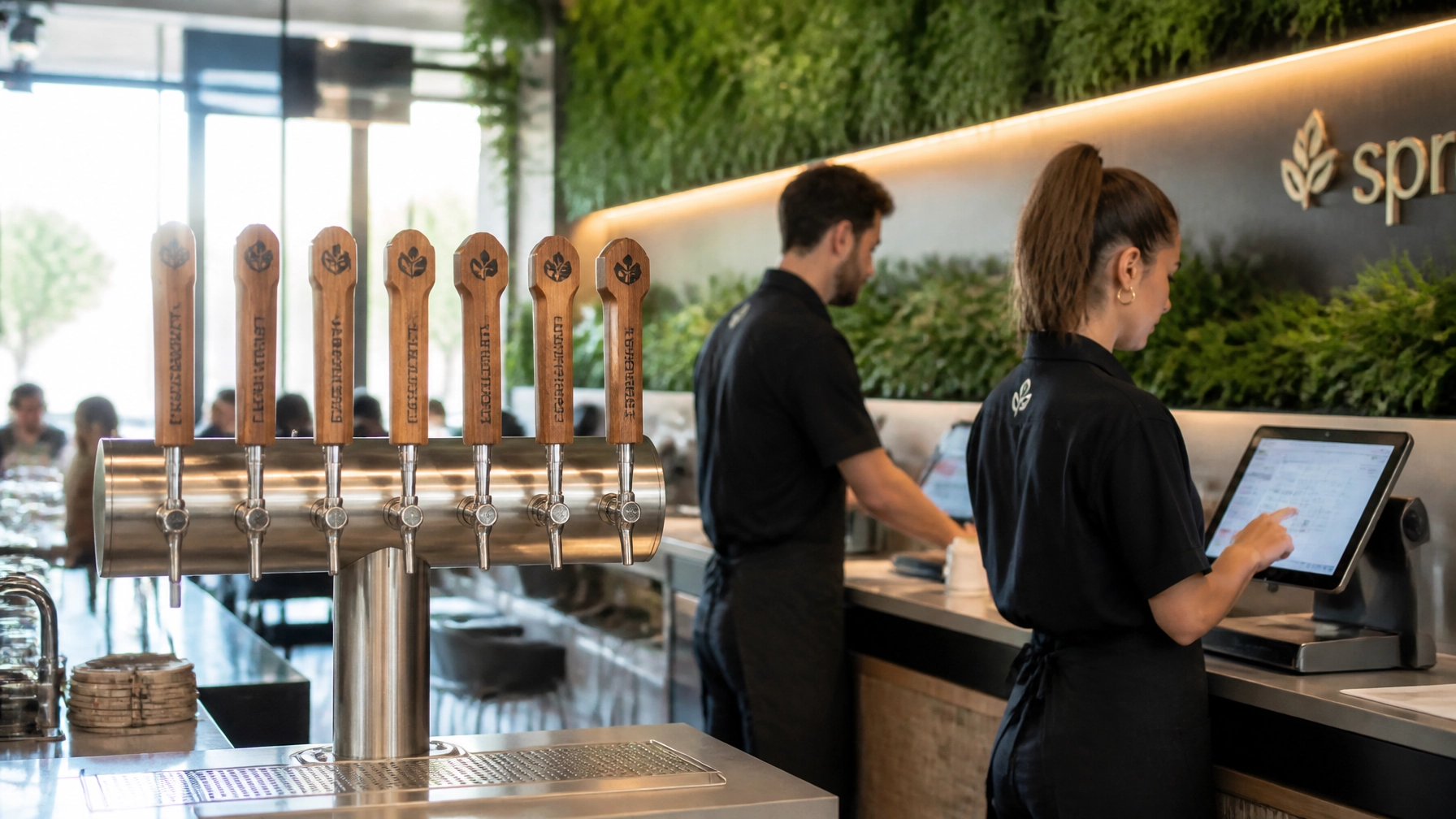
Welcome to the second half of 2026, where the "new normal" is starting to feel a lot like a high-stakes game of Tetris. You’re trying to fit rising labor costs, fluctuating ingredient prices, and the ever-looming specter of third-party delivery fees into a P&L that’s already stretched thinner than a piece of budget carpaccio.
If you feel like you’re running a marathon in lead boots, you aren't alone. But here’s the kicker: while some operators are folding, others are thriving by pulling off a strategic "Tech-Stack Pivot." We’re seeing a massive shift in how the industry handles delivery, drinks, and data. At Restaurant Revenue Incubator, we’ve spent the last 50+ years combined watching these cycles, and H2 2026 is looking like the most transformative half-year yet.
The 30% Delivery Tax: A Margin's Worst Nightmare
Let's talk about the elephant in the kitchen. For years, we’ve been warning about how delivery apps changed restaurant profit margins forever. Fast forward to today, and the "delivery tax" has reached a boiling point.
In H2 2026, we aren't just talking about the 20-30% commissions charged by the big apps. We’re talking about a cumulative "tax" that includes state-level delivery fees (like Colorado and Minnesota’s per-transaction charges), mandatory transparency itemization, and the rising cost of digital marketing just to stay visible. In some jurisdictions, if you aren't careful, nearly 35% of a check can vanish before it even hits your POS.
Cities like NYC and Philadelphia have fought back with fee caps, but the platforms have countered with "service fees" and "priority fees" that customers hate. The result? A guest who pays $40 for a $20 burger and a restaurant that only sees $14 of that. It’s unsustainable math.
The Pivot: Operators are finally saying "enough." The H2 2026 pivot is moving away from marketplace dependency and toward first-party tech stacks. By owning the customer data and the ordering interface, restaurants are reclaiming 15-20% of their margins.
The Tech Stack Pivot: AI as Your New Sous Chef
If your tech stack is just a glorified cash register and a tablet that dings whenever a driver is lost, you’re essentially fighting a laser battle with a wooden spoon. The winners of 2026 are using tech to solve the "Triple Bottom Line": People, Planet, and Profit.

We’ve seen 6 times restaurant tech saved the day, and in 2026, it's all about AI-driven automation.
- Dynamic Inventory Management: Imagine a system that predicts your avocado needs based on local weather patterns and TikTok trends. It sounds like sci-fi, but it’s how savvy groups are cutting food waste by 12%: a massive win for both the Planet and the Profit margin.
- Labor Optimization: Instead of scheduling based on "vibes," operators are using AI to predict peak rushes down to the 15-minute interval. This protects your People (by preventing burnout) and your Profit (by cutting unnecessary clock-ins).
- The "Invisible" Front-of-House: Voice AI for phone orders and drive-thrus is no longer a gimmick. It’s a necessity for QSRs, which is a big reason why QSRs are winning Gen Z right now.
At Restaurant Revenue Incubator, we review these tech stacks for our partners at no cost. We’re looking for the bloat: the subscriptions you don’t use and the integrations that aren't talking to each other. Usually, we can find 2-3% in pure margin savings just by cleaning up the digital plumbing.
Liquid Gold: Craft Soda & The Sustainability Play
If you’re still selling canned sodas or generic fountain drinks, you’re leaving money on the table: and probably cluttering up a landfill while you’re at it. One of the most interesting 2025 menu trends that actually stuck was the explosion of craft, house-made beverages.

Why craft soda? It’s the ultimate Triple Bottom Line play:
- Planet: By switching to house-made syrups and on-tap carbonation, you eliminate thousands of aluminum cans and plastic bottles from your supply chain.
- People: Guests (especially Gen Z and Millennials) are looking for "functional" beverages: think botanical sodas with hibiscus, yuzu, or ginger. It offers a premium non-alcoholic experience that feels like an event, not an afterthought.
- Profit: A can of soda costs you X and you sell it for Y. A house-made craft soda costs you pennies in CO2 and syrup, but can be priced at $5 or $6 as a "signature beverage." The margin is astronomical compared to the Big Soda incumbents.
In H2 2026, the pivot is clear: stop being a middleman for beverage giants and start being a creator. It’s better for your brand, better for the Earth, and much, much better for your bank account.
Leadership & Scaling: The "No Upfront Cost" Revolution
Scaling a restaurant brand in this environment requires more than just a good recipe; it requires a partner who understands that cash is king and risk is the enemy. Most consultants want a $10k/month retainer before they’ve even looked at your walk-in. We think that’s insane.
The leadership trend of 2026 is moving toward performance-based partnerships. At Restaurant Revenue Incubator, we’ve pioneered a model where we only win if you win.

Whether you’re a single-unit concept looking to franchise or a growing group trying to optimize, our approach is built on three pillars:
- Alternative Funding: We provide capital in exchange for food & beverage credits. No interest, no equity, no dilution. It’s the cleanest way to fund a tech-stack pivot or a kitchen renovation.
- Operational Turnarounds: We review your P&L and tech stack for free. If we can't find ways to improve your business in under two weeks, we’ll tell you.
- Growth Support: From franchise development to creative branding optimization, we act as an extension of your leadership team.
The H2 2026 Roadmap
So, what should you do on Monday morning?
First, look at your delivery data. If you’re paying more than 20% in total fees (including all those hidden surcharges), it’s time to look at a first-party ordering solution.
Second, look at your beverage program. Is it a profit center or a convenience? If it’s the latter, consider a craft soda pivot.
Third, stop trying to do it all yourself. The most successful CEOs we work with aren't the ones working 80 hours a week in the kitchen; they’re the ones building systems that work for them.
The restaurant industry in H2 2026 is complex, sure. But for those willing to pivot their tech, prioritize sustainability, and embrace new funding models, the opportunities for growth have never been bigger.
Ready to see what your P&L is actually capable of? Let’s chat. We’ll review your tech stack and operations for free: no retainers, no risk, just results. Because in 2026, the only thing that should be "upfront" is your commitment to excellence.