Restaurant Technology · Uncategorized
Sustainable Kitchen Operations: 7 Ways to Save the Planet and Your P&L Without Upfront Costs
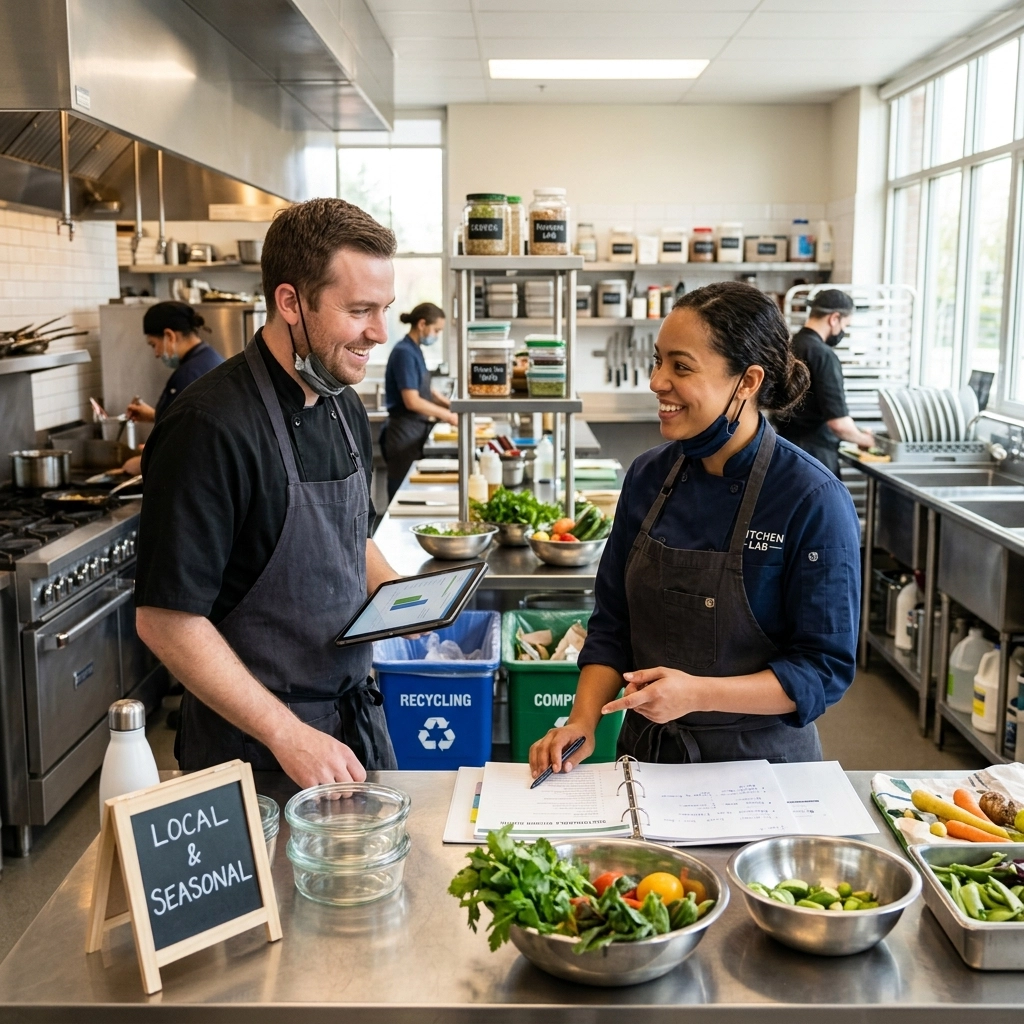
Let’s be honest: in the restaurant world, the word "sustainability" usually sounds like an expensive line item your consultant tries to sell you right before you look at your shrinking margins and cry. We’ve been conditioned to think that "going green" requires a $50,000 solar array on the roof or a fleet of electric delivery bikes that cost more than a small franchise.
But here’s the reality in 2026: sustainability isn’t a luxury. It’s a survival strategy.
At Restaurant Revenue Incubator, we look at sustainability through the lens of the Triple Bottom Line: People, Planet, and Profit. If a "green" initiative doesn’t eventually put green back into your bank account, it’s not sustainable for your business. We specialize in "No Upfront Cost" turnarounds because we know you’d rather spend your capital on expansion than on fancy gadgets.
Here are seven ways to overhaul your kitchen operations, slash your environmental footprint, and pad your P&L: all without spending a dime today.
1. Weaponize Your Waste Log
Food waste is essentially a pile of cash you’ve decided to set on fire. Statistics show that roughly 30% to 40% of the food supply in the United States is wasted. In a restaurant, that’s money lost on purchasing, labor, and disposal fees.
You don't need a high-tech AI sensor (though they are cool) to start. You need a bucket, a scale, and a clipboard. Implementing a "pre-consumer waste log" where staff must record every burnt pizza, every dropped prep container, and every expired tomato creates immediate accountability. When the team sees that they threw away $400 worth of ribeye trim in a week, habits change fast.
Reducing food waste is the fastest way to improve your COGS (Cost of Goods Sold). It’s not just about the planet; it’s about making sure your profit margins aren't being eaten by delivery apps and poor prep habits simultaneously.

2. Kill the "Vampire Power" and Fix the Firing Schedule
Walk into any kitchen at 7:00 AM, and what do you see? The prep cook arrives, flips on every light, starts the convection ovens, fires up the charbroiler, and cranks the burners: even if the first order isn't due until 11:30 AM.
This is "Vampire Power" in its most literal form, sucking the life out of your utility budget. A massive chunk of your P&L goes toward heating and cooling air that nobody is using.
The No-Cost Fix: Create a staggered equipment startup schedule. Label every piece of equipment with a "Fire Time."
- Ovens: 10:00 AM
- Fryers: 10:30 AM
- Salamander: 11:00 AM
By shaving just two hours of "on time" off your heavy equipment daily, you can reduce your energy bill by 10-15%. That is pure profit falling straight to your bottom line.
3. The "Scrap to Gold" Menu Engineering
Sustainable cooking used to mean "everything is organic." In 2026, it means "nothing goes in the bin." If you’re peeling carrots and throwing the skins away, you’re throwing away flavor and margin.
Modern menu engineering: something we dive deep into when looking at 2025’s biggest menu trends: focuses on "root-to-stem" or "nose-to-tail" cooking.
- Carrot tops become pesto.
- Onion skins and celery butts become the base for a rich, house-made demi-glace.
- Day-old bread becomes croutons or bread pudding.
When you use 100% of the product you paid for, your plate cost plummets. This is the Triple Bottom Line in action: less trash for the landfill, more creative dishes for the people, and more profit for you.

4. Water: Stop Paying for What You Leak
A single leaky faucet dripping once per second can waste over 3,000 gallons of water a year. That’s not just a water bill issue; if it’s a hot water leak, you’re also paying to heat water that’s going straight down the drain.
The fix? It’s usually a $2 washer and five minutes of labor. But beyond leaks, look at your habits. Are your dishwashers running half-empty? Is your staff thawing frozen protein under a running tap of cold water? (Aside from being a health code nightmare, it’s a waste of thousands of gallons).
Switching to "full loads only" in the dish pit requires zero capital investment but significantly lowers your utility overhead. If you're wondering how the big guys do it, check out our piece on what big chains can teach independents regarding operational efficiency.
5. Staff Buy-In: The "People" Pillar
Sustainability fails when it’s a top-down mandate. It succeeds when it’s a culture. If your line cooks feel like they’re part of a mission to save the planet (and maybe earn a bonus from the savings), they will be your greatest asset.
We’ve seen successful operators implement a "Savings Share" program. If the utility bill and food waste costs drop by a certain percentage, a portion of those savings is redistributed to the staff. Suddenly, nobody leaves the walk-in door open, and everyone is mindful of portion control.
This improves work-life balance and morale because the team feels empowered rather than policed. A happy, engaged team stays longer, reducing your turnover and training costs: another win for the P&L.

6. Procurement: The Power of Bulk and Local
Every time a delivery truck pulls up to your back dock, there is a carbon cost and a delivery fee. By consolidating orders and moving toward bulk purchasing for non-perishables, you reduce packaging waste and lower your per-unit cost.
Furthermore, sourcing locally isn't just a marketing gimmick for your menu; it’s a hedge against supply chain volatility. In 2026, the closer your food is grown to your kitchen, the less you’re affected by fuel surcharges and interstate logistics hiccups. Plus, "local" is a major selling point for Gen Z, who are increasingly driving the success of QSRs and casual dining through their value-based spending.
7. The Operational Audit (The "No Upfront Cost" Secret)
The biggest barrier to sustainability is often just not knowing where to start. You’re busy handling customer complaints or wondering if Ghost Kitchens are still a "hot mess". You don't have time to audit your BTU usage.
This is where Restaurant Revenue Incubator comes in. Our "No Upfront Cost" model means we come in, identify these inefficiencies, and implement the systems to fix them. We get paid from the found money: the savings we generate for you. It’s a literal zero-risk way to move your restaurant into a more sustainable, more profitable future.

The Bottom Line
Sustainability doesn't have to be a headache. It doesn't have to be a PR stunt involving useless certifications. At its core, sustainability is just extreme efficiency.
By focusing on food waste, energy timing, water usage, and staff culture, you aren't just "saving the planet." You’re building a leaner, meaner, more resilient business that can withstand the crazy fluctuations of the 2026 economy.
Ready to stop leaking cash and start growing? Let’s look at your P&L together. No upfront costs, just results. Because at the end of the day, the most sustainable thing your restaurant can be is profitable.