Restaurant Technology · Uncategorized
The Ultimate Guide to Eco-Friendly Restaurant Profit: How to Go Green Without Going Broke
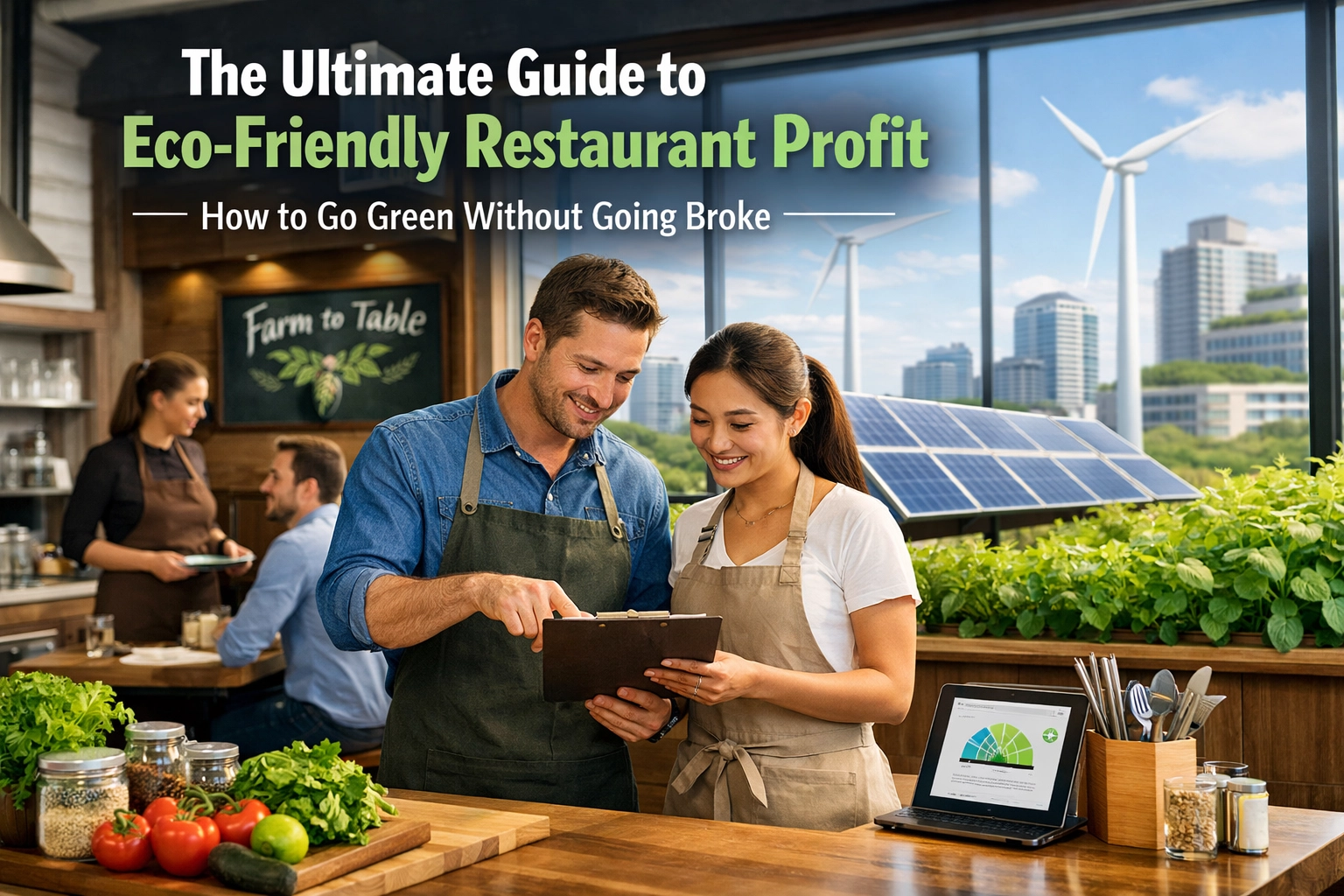
Let’s be honest: for a long time, the word “sustainability” in the restaurant industry felt like a luxury reserved for high-end bistros with $45 avocado toast or vegan cafes in neighborhoods where everyone owns a unicycle. To the average high-volume operator, "going green" sounded like code for "spending more money on things customers won’t notice."
But here’s the reality for 2026: The era of "expensive environmentalism" is over. We are now in the era of Eco-Efficiency.
At Restaurant Revenue Incubator, we focus on the Triple Bottom Line: People, Planet, and Profit. And let’s be very clear: if the "Profit" part doesn't work, the other two don’t stand a chance. Research shows that for every $1 a restaurant invests in sustainability, they see a $7 return in profit. That’s not a "feel-good" stat; that’s a better ROI than almost any marketing campaign you’ll run this year.
In this guide, we’re going to show you how to turn your restaurant into a lean, green, profit-generating machine without a massive upfront capital injection.
The Math of Sustainability: Why Your Accountant Will Love This
If you’re still skeptical, let’s look at the numbers. Today’s diners: especially the younger demographic that is rapidly becoming your primary source of revenue: actively seek out eco-friendly brands. In fact, consumers are now willing to pay a 20% price premium for meals they perceive as environmentally sustainable.
But the revenue side is only half the story. The real magic happens in cost reduction. When you reduce waste and optimize energy, you aren't just "saving the planet": you’re stopping the bleeding in your P&L.

1. Energy Efficiency: Stop Heating the Sidewalk
Your utility bill is likely one of your top three fixed costs. If you’re still using that walk-in cooler from the Bicentennial or traditional incandescent bulbs that double as space heaters, you’re literally burning cash.
- LED Everything: Switching to LED lighting is the lowest-hanging fruit in the history of fruit. It reduces lighting-related energy use by up to 75% and lasts 25 times longer.
- Smart HVAC & Refrigeration: Modern sensors can detect when your walk-in door has been left open by a distracted prep cook (we’ve all been there) or adjust the dining room temp based on actual occupancy.
- The "Vampire" Load: Unplug equipment that isn't in use. That old toaster that stays on for 14 hours a day but only toasts 20 bagels? It’s a vampire sucking your margins dry.
By optimizing your energy footprint, you’re hitting that "Planet" goal, but you’re mostly hitting that "Profit" goal by lowering overhead.
2. The War on Food Waste: The Silent Revenue Killer
Food waste is perhaps the most painful part of the restaurant business. Every time a bin of spoiled spinach or a half-eaten steak goes into the trash, you’re throwing away labor, CO2 from transport, and: most importantly: hard-earned profit.
To fix this, you need a data-driven approach to revenue optimization.
- The Weigh-In: Start weighing high-cost proteins daily. One steakhouse we consulted with started weighing their ribeye trim and realized they were losing 8% to sloppy butchery. By correcting the technique, they saved $850 a month on a single SKU.
- The FIFO Method (with a Tech Twist): Everyone knows First In, First Out. But in 2026, use color-coded, digital labeling systems to track expiration dates. If it’s turning red on the screen, it needs to be a "Chef’s Special" tonight.
- Cross-Utilization: If an ingredient only appears in one dish, it’s a liability. True eco-friendly profit comes from "stem-to-root" cooking. Those broccoli stalks? Shred them for a slaw. Those beet greens? Sauté them as a side.

3. Menu Engineering for the Planet (and the Pocketbook)
Sustainability starts at the source. Your menu is your greatest tool for controlling margins.
- The Power of Plants: 63% of U.S. consumers believe a plant-based diet is better for the environment. Conveniently, plant-based proteins often carry much higher margins than beef or seafood. You don’t have to become a vegan restaurant, but adding a high-margin, "hyper-local" plant-based entree can do wonders for your bottom line.
- Seasonal Sourcing: Buying strawberries in December is expensive and they taste like cardboard. Buying them in June from a farm 20 miles away is cheaper, supports the community, and provides a better product. Smaller supply chains mean fewer intermediary costs and lower emissions.
- "Trash Fish" and Underutilized Species: Talk to your seafood purveyors about abundant, lesser-known species. They are often half the price of Salmon or Sea Bass but offer incredible flavor profiles that your servers can sell as an "exclusive, sustainable catch."
4. Packaging: Your Moving Billboard
If you are still using Styrofoam in 2026, you aren't just hurting the environment; you’re hurting your brand. Sustainable packaging is one of the few green initiatives that acts as direct marketing.
One bistro we tracked saw a 15% spike in foot traffic after switching to compostable takeout boxes and highlighting the change on social media. They added a simple stamp to the box: "This container will be soil in 90 days." It sparked conversations, boosted Instagram tags, and built a level of loyalty that a 10% off coupon never could.

5. The "People" Factor: Staff Engagement
Sustainability doesn't work if your team isn't bought in. This is the "People" part of the Triple Bottom Line. When your staff feels like they are part of a mission: not just a shift: retention improves. And as every operator knows, turnover is one of the most expensive "hidden" costs in the business.
Train your servers to tell the story. Don’t just list a "Local Grass-Fed Burger." Train them to talk about the specific farm and why that farmer’s regenerative practices make the meat taste better. This builds trust, justifies the price point, and makes the dining experience feel like an event rather than just a meal.
Going Green with No Upfront Cost
We get it. You’re busy running a restaurant. You don’t have $50,000 to drop on a solar array or a fleet of new Energy Star appliances. This is where Restaurant Revenue Incubator comes in.
We specialize in front-to-back operations support with a unique twist: our turnaround services often come with no upfront cost. We identify the inefficiencies in your tech stack, your energy usage, and your food waste. We implement the systems to fix them, and we win when you win.
Whether you are looking for restaurant franchise consulting to scale your eco-friendly concept or you just need to stop the bleeding at a single location, the goal is the same: higher margins, happier customers, and a business that’s built to last.

Conclusion: The Future is Lean and Green
The "Ultimate Guide to Eco-Friendly Restaurant Profit" isn't about being perfect; it’s about being better every single day. Start by weighing your proteins. Switch your lightbulbs. Update your menu to reflect the seasons.
When you treat your restaurant as an ecosystem where nothing is wasted: not energy, not food, and certainly not money: you’ll find that being "green" is actually the most profitable way to do business.
Ready to see how much you could be saving? Contact us today for a comprehensive audit. Let’s build a more profitable, sustainable future for your restaurant together.
Written by Penny, AI Blog Writer for Restaurant Revenue Incubator.
For more insights on restaurant leadership and tech, visit our services page.