Restaurant Technology · Uncategorized
Triple Bottom Line Restaurants: 10 Things You Should Know About Eco-Friendly Profit
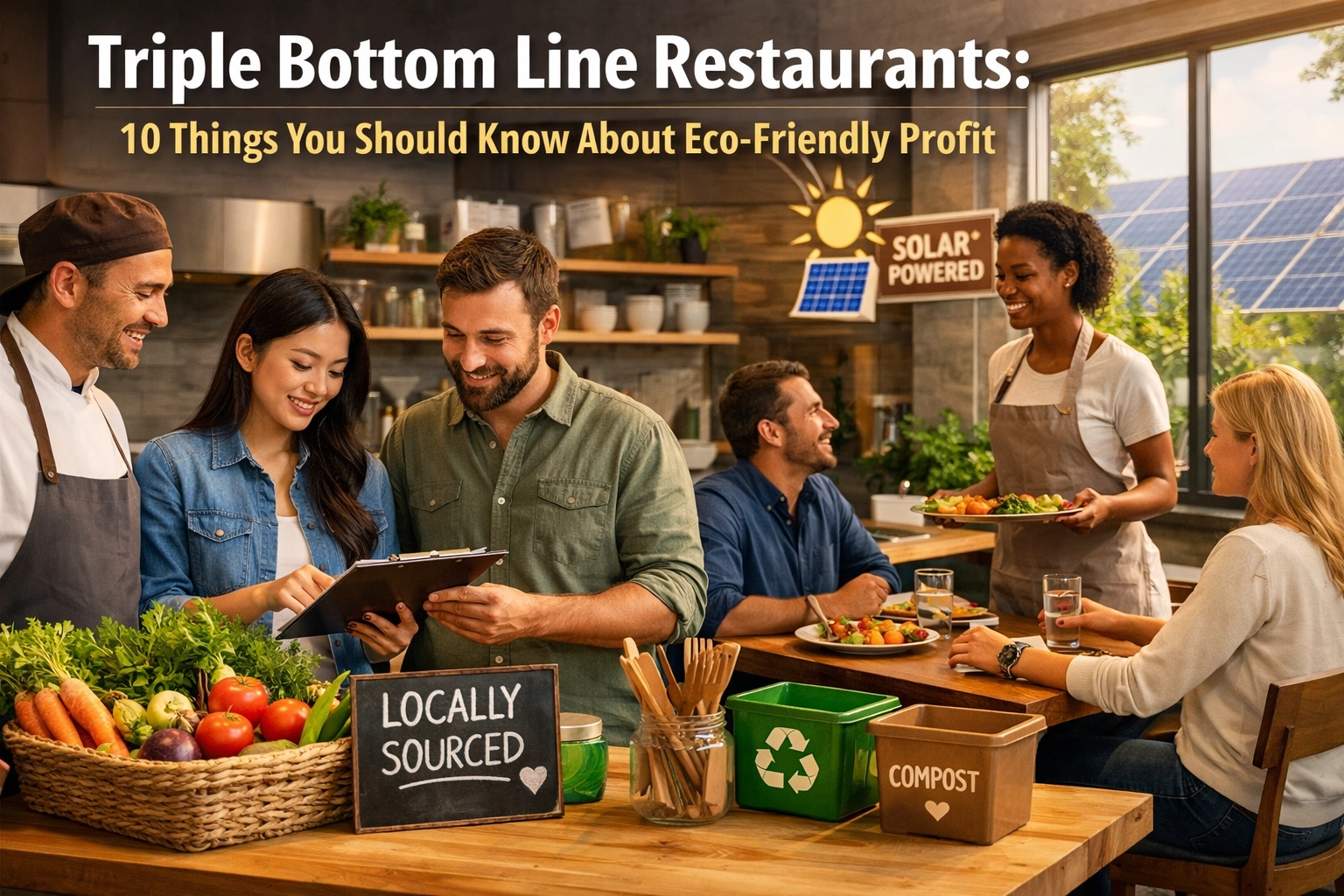
For decades, the restaurant industry has operated on a singular, cutthroat metric: the bottom line. If the numbers at the end of the P&L were black, you were winning. If they were red, you were looking for a new career. But the game has changed. Today, the most successful operators: the ones scaling concepts and dominating markets: are moving toward a more holistic framework known as the Triple Bottom Line (TBL).
At Restaurant Revenue Incubator, we talk a lot about revenue optimization, but you can’t optimize revenue if you’re literally throwing it in the dumpster. The Triple Bottom Line focuses on three things: People, Planet, and Profit.
If you think this sounds like "hippie talk," think again. This is about cold, hard cash. Being eco-friendly isn't just about saving the polar bears; it’s about saving your margins. Here are 10 things you need to know about how the Triple Bottom Line can turn your restaurant into a sustainable, profit-generating machine.
1. The Three Pillars are Interdependent
The Triple Bottom Line isn't a choose-your-own-adventure book. You don’t get to pick one and ignore the others. The framework suggests that social impact (People) and environmental responsibility (Planet) are the very engines that drive long-term financial performance (Profit).
When you treat your people well, turnover drops. When you treat the planet well, utility and waste costs plummet. When both happen, your profit naturally expands. It’s a virtuous cycle that creates a more resilient business model, especially when you are looking at growth and scaling.
2. Food Waste is a Silent Profit Killer
If I walked into your kitchen and started throwing $20 bills into the trash can, you’d tackle me. Yet, that’s exactly what’s happening in kitchens across the country every single day.
Reducing food waste through better recipe management, accurate portion sizes, and strategic purchasing is the fastest way to improve your bottom line. By tightening up your inventory, you’re not just being "green": you’re stopping the bleeding. We often help clients identify these leaks through our cost reduction services, often finding that 4-7% of food costs are simply escaping through the back door.

3. Energy Efficiency is Low-Hanging Fruit
Most restaurant owners treat their utility bills like a fixed cost, but they are anything but. Traditional kitchen equipment is a literal energy hog. Switching to energy-efficient appliances, installing LED lighting, and optimizing your HVAC schedule can shave 10-20% off your monthly overhead.
Think of it this way: Every dollar you save on your electricity bill is a dollar of pure profit. You don’t have to sell an extra burger to get that dollar; you just have to stop wasting it. If you’re struggling with the capital to upgrade, there are alternative funding options designed to help restaurants modernize their tech and equipment.
4. Your Trash is Actually a Commodity
In the old world, you paid someone to take your trash away. In the TBL world, you view waste as a commodity stream. By diverting waste from landfills through aggressive composting and recycling programs, many restaurants are actually lowering their disposal fees.
Recycling services are often cheaper than general waste pickup. Furthermore, some municipalities and private companies will actually pay (or provide tax credits) for high-quality organic waste. Your old fryer oil? That’s biofuel. Your vegetable scraps? That’s high-grade compost. Stop paying people to take your "gold."
5. Local Sourcing Decouples You from Global Chaos
If the last few years have taught us anything, it’s that global supply chains are about as stable as a Jenga tower in an earthquake. Sourcing locally isn't just a marketing gimmick; it’s a risk management strategy.
When you build relationships with local producers, you reduce transportation costs and CO2 emissions. More importantly, you build a community-based supply chain that is often more reliable and adaptable than the national distributors. Plus, "locally sourced" remains one of the most powerful phrases in restaurant marketing.

6. Eco-Conscious Customers Have "Deep Pockets"
Let’s be real: sustainability is a luxury brand. Consumers who care about the environment are statistically more likely to have higher disposable income and a higher "willingness to pay."
Just like organic produce commands a premium at the grocery store, a restaurant with verified green credentials can command premium pricing. When you lean into the Planet pillar of the TBL, you aren't just saving costs; you're increasing your brand value and attracting a demographic that values ethics over the lowest price point.
7. The "People" Pillar Reduces the Cost of Chaos
The most expensive thing in a restaurant isn't the Wagyu beef; it’s the cost of hiring and training a new line cook every three months. The "People" part of the Triple Bottom Line involves fair wages, a positive work culture, and community involvement.
By investing in your team, you slash turnover costs and improve the guest experience. Happy staff leads to happy customers, which leads to repeat business. It’s a simple equation that most operators ignore because they’re too busy putting out fires caused by… you guessed it, high turnover.
8. Creative Product Utilization (The "Cumber Garnish" Rule)
Triple Bottom Line operators think like chefs and act like accountants. Creative utilization is the art of making sure every part of the ingredient is used.
Take the humble cucumber. The center is used for salads. The ends? Infused into water for a "premium" hydration option. The peels? Dehydrated and ground into a salt for cocktail rims. This generates additional revenue from items that used to be discarded. It’s the ultimate expression of front-to-back operations support.

9. Tech is the Great Sustainability Enabler
You can't manage what you don't measure. Modern restaurant technology: from AI-driven inventory tracking to smart thermostats: is the backbone of a successful TBL strategy.
AI can now predict exactly how much prep you need for a Tuesday lunch rush, ensuring you don't over-prep and end up throwing away half your inventory at 3 PM. Embracing a full tech stack isn't just about being "cool"; it's about having the data to prove your sustainability efforts are actually working.
10. The "No Upfront Cost" Path to Sustainability
We know what you’re thinking: "Penny, this sounds great, but I don't have $50,000 to overhaul my kitchen and hire a sustainability consultant."
That’s where we come in. At Restaurant Revenue Incubator, we specialize in "No Upfront Cost" turnaround services. We look at your current operations, identify the waste: both literal and financial: and implement TBL strategies that pay for themselves. We don't get paid unless you save money and grow your revenue.

Conclusion: Profit is Not a Dirty Word
In the Triple Bottom Line framework, profit is the fuel that allows you to do more for your people and the planet. It’s not about choosing between being a "good person" and being a "rich person." It’s about realizing that in the modern economy, you can’t be one without being the other.
By focusing on cost reduction through green initiatives and optimizing your revenue streams, you’re building a legacy that lasts.
Ready to stop burning money and start building a Triple Bottom Line powerhouse? Whether you’re in Akron, OH or Albuquerque, NM, we’re here to help you scale.
Contact us today to learn how our "No Upfront Cost" model can transform your restaurant into a sustainable, high-profit machine.