Restaurant Technology · Uncategorized
Why Triple Bottom Line Restaurants Will Change the Way You Look at Profit
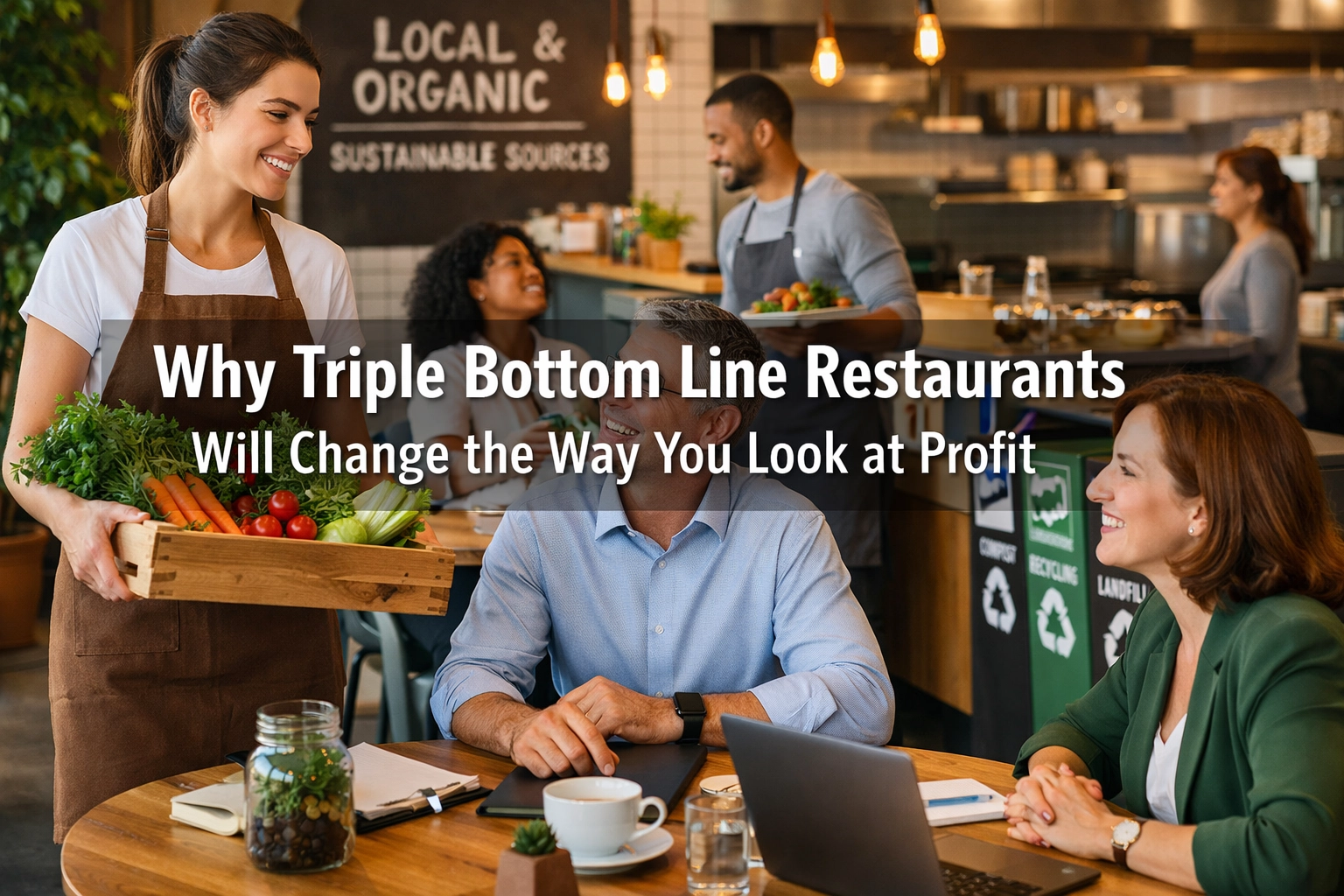
For decades, the restaurant industry has operated on a singular, often brutal, metric: the bottom line. It’s the "how much is left in the register after we pay the landlord and the butcher" philosophy. But as we sit here in 2026, that old-school, extraction-based model is looking a bit like a 1990s POS system: clunky, slow, and prone to crashing when you need it most.
If you’re still looking at profit through a straw, you’re missing the forest for the trees. Enter the Triple Bottom Line (TBL). It’s a framework that forces operators to look at three things: People, Planet, and Profit.
Now, I know what some of you are thinking. "Robert, I'm trying to keep my doors open, not save the whales." But here’s the kicker: the most profitable restaurants in our portfolio aren't the ones cutting corners; they’re the ones doubling down on sustainability and social equity. In fact, sustainability isn't an expense: it’s a high-yield investment.
At Restaurant Revenue Incubator, we specialize in scaling concepts that understand this shift. If you want to see how this looks in practice, let’s dive into why the TBL is the secret weapon for modern restaurant growth.
1. Planet: Your Trash is Literally Cash
Let’s get real about waste. The average restaurant loses about 4% to 10% of its food before it even reaches a plate. In an industry where 5% margins are considered "good," that’s your entire profit margin sitting in a dumpster behind the building.
When we talk about the "Planet" pillar of the Triple Bottom Line, we aren’t just talking about using compostable straws (though that’s a start). We’re talking about operational efficiency.
Energy and Utility Optimization
Energy costs are one of the top three expenses for any operator. By switching to high-efficiency HVAC systems, smart refrigeration sensors, and induction cooking, you aren’t just "going green": you’re slashing your overhead. We’ve seen operators reduce their utility bills by 15-20% simply by implementing better tech stacks. If you want to see how technology is changing the game, check out our deep dive on 6 times restaurant tech saved the day.

Waste Reduction as a Revenue Stream
Food waste is a failure of inventory management. By utilizing AI-driven prep tools and waste-tracking software, you can tighten your ordering cycles. Furthermore, upcycling ingredients: turning those vegetable scraps into a high-end house stock or dehydrating citrus peels for a signature cocktail: improves your COGS (Cost of Goods Sold) significantly.
2. People: Solving the Labor Crisis Without Going Broke
The "People" aspect of TBL focuses on your staff and your community. We’ve all seen the headlines about the "Great Resignation" or the "Labor Shortage." In 2026, the shortage isn’t of people; it’s a shortage of good places to work.
Retention is the Ultimate Cost-Saver
The cost to hire and train a new line cook can range from $3,000 to $6,000 when you factor in lost productivity and management time. If you have a 100% turnover rate (which is the industry average), you are essentially lighting money on fire every month.
By investing in living wages, better benefits, and: most importantly: a culture that respects work-life balance, you reduce turnover. A tenured team is a faster, more efficient, and more profitable team. We’ve discussed the importance of this in our post on work-life balance in the restaurant industry.
Community Loyalty
People want to eat at places that care about their neighbors. Sourcing from local farms isn't just a marketing gimmick for your 2025 menu trends; it’s a risk mitigation strategy. When the global supply chain breaks down (and it will), the guy with the local potato farmer in his speed dial is the one whose menu stays consistent.

3. Profit: The Result of the First Two Ps
Here is the "Aha!" moment: The Triple Bottom Line doesn't ask you to sacrifice profit. It argues that profit is the result of taking care of your people and the planet.
When you have a highly engaged staff (low turnover) and efficient operations (low waste), your margins naturally expand. But there’s another layer to this: Consumer Demand.
Gen Z and Gen Alpha are the most value-driven consumers in history. They don't just want a burger; they want a burger that didn't destroy the rainforest, served by someone who can afford their rent. If you don't believe me, take a look at why QSRs are winning Gen Z through transparency and tech.
The Investor Perspective
If you’re looking to scale or franchise, TBL makes you a much more attractive target for acquisition. Modern investors are looking for ESG (Environmental, Social, and Governance) compliance. A restaurant with a built-in sustainability model is a "de-risked" asset. It’s resilient against rising energy costs, labor strikes, and supply chain volatility.

How to Implement TBL Without the Upfront Headache
The biggest hurdle for most operators is the initial cost. "Sure, Robert, I’d love to install $50,000 worth of energy-efficient kitchen gear, but I’ve got a walk-in freezer that’s currently held together by duct tape and prayers."
We get it. That’s why at Restaurant Revenue Incubator, we operate on a No Upfront Cost model. We don't just give you a list of things to fix and wish you luck. We partner with you to implement these turnaround services: from tech stack optimization to menu re-engineering: and we only profit when you do.
We look at your P&L through the TBL lens to find the "hidden money" that’s currently leaking out of your business. Whether it’s through better delivery app margin management or rethinking your entire labor model, our goal is to scale your concept to its maximum potential.

The Data Doesn't Lie
Research shows that companies with high sustainability ratings outperform their peers on EBITDA margins by as much as 3-5%. In the restaurant world, that is the difference between struggling to pay taxes and having the capital to open your third location.
Think about it this way:
- The Old Way: Cut labor, buy the cheapest ingredients, ignore the leaky faucet. (Result: High turnover, inconsistent quality, rising utility bills, eventually closing).
- The TBL Way: Optimize prep to reduce waste, pay a premium for a great GM, invest in smart appliances. (Result: High morale, loyal customers, lower long-term costs, scalable growth).
The Path Forward
If you’re feeling stuck in the "Old Way," it’s time for a pivot. The industry is moving toward transparency and efficiency, and the restaurants that refuse to adapt will be the ones wondering where their customers went.
Transitioning to a Triple Bottom Line model isn't just about being a "good person." It’s about being a smart business owner. It’s about building a brand that can survive the next decade of economic shifts.

Are you ready to stop looking at profit as a one-dimensional number? At Restaurant Revenue Incubator, we help you build a multi-dimensional business that thrives. Whether you're a single-unit operator looking to fix your margins or a growing brand wondering if you should franchise this year, we have the data-driven strategies to get you there.
Remember: The green in your wallet is directly tied to how green your kitchen is. Let’s get to work.