Restaurant Technology · Uncategorized
Eco-Friendly Restaurant Profit: 5 Steps How to Cut Waste and Boost Margins (Easy Guide for Operators)
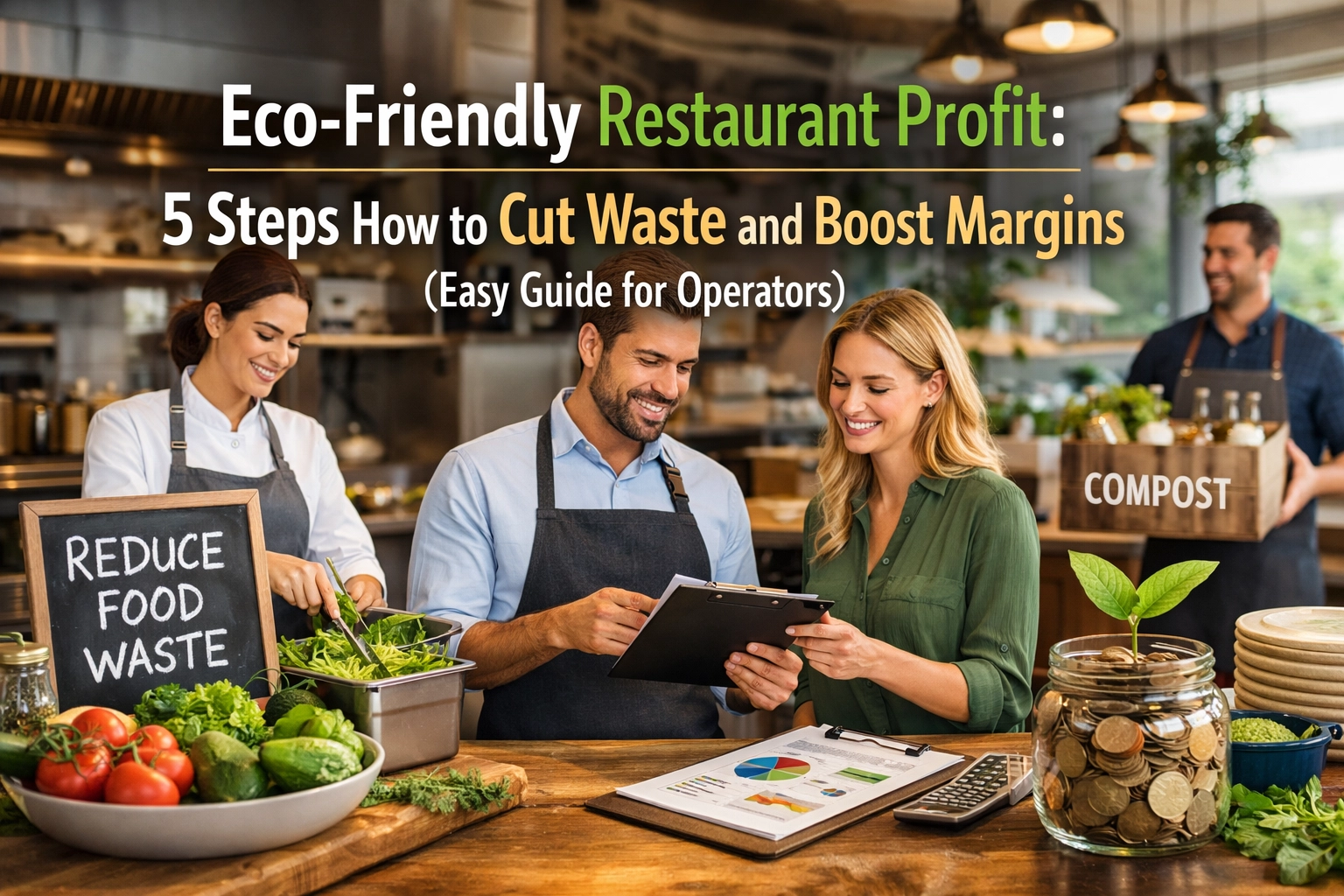
Let’s be honest: in the restaurant world, the word "sustainability" often sounds like a code word for "this is going to be expensive." For years, operators have been told that going green means buying $40,000 composters or sourcing artisan microgreens grown in a repurposed Brooklyn warehouse that cost more than a prime ribeye.
But here’s the reality check: Sustainability isn’t just about hugging trees; it’s about hugging your profit margins.
At Restaurant Revenue Incubator, we focus on the Triple Bottom Line: People, Planet, and Profit. If a practice doesn’t hit all three, it’s not sustainable for your business. When you realize that the average restaurant loses between 4% and 10% of its total food purchases before it even reaches a plate, you start to see that "Eco-Friendly" is actually just another way to say "Operationally Efficient."
If your margins are thinner than a slice of carpaccio, it’s time to rethink your waste. Here are five data-driven steps to cut the trash and boost your cash, all while keeping your operations lean and mean.
1. Master Inventory Management and Kill the "Zombie" Ingredients
Food waste is the silent killer of restaurant P&Ls. According to ReFED, the U.S. restaurant industry generates roughly 11.4 million tons of food waste annually. That’s billions of dollars literally sitting in dumpsters.
The first step to sustainability is a ruthless First In, First Out (FIFO) system. It sounds basic, but you’d be surprised how many walk-ins have a "forgotten corner" where cilantro goes to die.

The Action Plan:
- Daily Waste Logs: If you don't measure it, you can't manage it. Have your prep team record every ounce of food that goes into the bin. Is it over-prepping? Is it spoilage?
- The "Zombie" Audit: Look for ingredients that only appear in one dish. If that dish isn't a top seller, that ingredient is a "Zombie": it’s sucking the life out of your inventory. Cross-utilize everything.
- Portion Control: If plates are coming back with 20% of the fries still on them, you aren’t being generous; you’re being wasteful. Adjust the portion and save the cost.
2. Strategic Menu Engineering: The "Specials" Safety Net
Your menu should be a living, breathing document. Sustainability in the kitchen means never letting an ingredient reach its expiration date without a fight.
Creative chefs are the best weapon against waste. If you have a surplus of kale that’s starting to lose its "vibe," it shouldn't go in the trash: it should be the star of a "Seasonal Tuscan Kale Soup" special.
The Strategy:
- Dynamic Specials: Train your kitchen to identify items that need to move. A "Chef’s Special" is essentially a high-margin way to clear inventory before it becomes a total loss.
- Limited Menus: Data shows that smaller menus lead to less waste and higher quality. By focusing on 20-30 stellar items rather than 60 mediocre ones, you reduce the sheer variety of inventory you need to hold.
When your staff feels like they are part of a mission, they perform better. If you want to get your team on board with these changes, maybe start by outfitting them in some high-quality gear from our logo collection, like a brand-aligned polo or a classic cap. A professional look fosters a professional mindset toward waste.
3. Source Locally (And Actually Save Money)
Wait, isn't local food more expensive? Not always. When you factor in the "Hidden Tax" of logistics, sourcing locally can actually stabilize your supply chain and reduce costs.

Why Local Wins:
- Reduced Logistics: With fuel surcharges and shipping delays becoming the norm, a farmer 20 miles away is often more reliable and cheaper in terms of total landed cost than a distributor shipping from three states over.
- Seasonal Pricing: Buying strawberries in December is a financial mistake. Buying them in June from a local patch is a win. Seasonal ingredients are at their price floor when they are in peak supply.
- Marketing Value: Customers are willing to pay a premium for "Farm-to-Table." By sourcing locally, you’re not just saving on shipping; you’re increasing your perceived value, allowing for better margins on every plate.
4. Tackle the "Energy Vampires" in Your Kitchen
Your utility bill is likely your third largest expense after COGS and Labor. Most restaurants are incredibly inefficient with energy and water. Those old walk-in seals and the "always-on" broiler are "Energy Vampires" sucking the profit right out of your bank account.
The Low-Hanging Fruit:
- Low-Flow Fixtures: Switching to low-flow spray valves in the dish pit can save thousands of gallons of water (and the energy used to heat it) every year.
- Equipment Maintenance: A refrigerator with a dusty coil works 20% harder to stay cool. Regular maintenance isn't a chore; it's a cost-saving strategy.
- LED Everything: If you’re still using old-school bulbs, you’re basically burning money to create light. Switch to LEDs. It’s a one-time cost that pays for itself in months.

At Restaurant Revenue Incubator, we specialize in identifying these operational leaks. Our "No Upfront Cost" turnaround services mean we look at your entire operation: from the HVAC to the POS: to find where you’re bleeding cash. We don't get paid until we improve your bottom line.
5. Incentivize the "Green" Customer
Sustainability is a two-way street. Your customers want to feel good about where they eat, and you can leverage that to reduce your packaging and disposal costs.
Engagement Tactics:
- The "BYO" Discount: Offer a small discount (maybe 25 cents) for customers who bring their own coffee mugs or reusable containers. You save on the cost of a disposable cup and lid, which: let’s face it: have tripled in price lately.
- Packaging Audit: Do you really need to include three napkins, a plastic fork, and two sauce packets in every to-go bag? Implement an "opt-in" policy for disposables.
- Composting Programs: While it requires a bit of setup, composting can significantly reduce your trash pickup frequency, lowering your waste management fees.

The Bottom Line: Profit is Green
Operating an eco-friendly restaurant isn't about virtue signaling; it’s about business intelligence. Every scrap of food saved, every kilowatt-hour reduced, and every local partnership forged is a direct deposit into your profit margin.
If you’re feeling overwhelmed by the thought of auditing your entire operation, that’s where we come in. Whether you need a fresh perspective on your tech stack or a complete overhaul of your supply chain, Restaurant Revenue Incubator is built to scale your concept without the traditional financial risks.
Ready to see how much "green" you’re leaving on the table? Check out our full shop for resources, or contact Admin to learn more about our turnaround services.
Remember: The most sustainable restaurant is a profitable one. Let’s get to work on both.