Restaurant Technology · Uncategorized
Why Eco-Friendly Restaurant Profit Strategies Will Change the Way You Scale
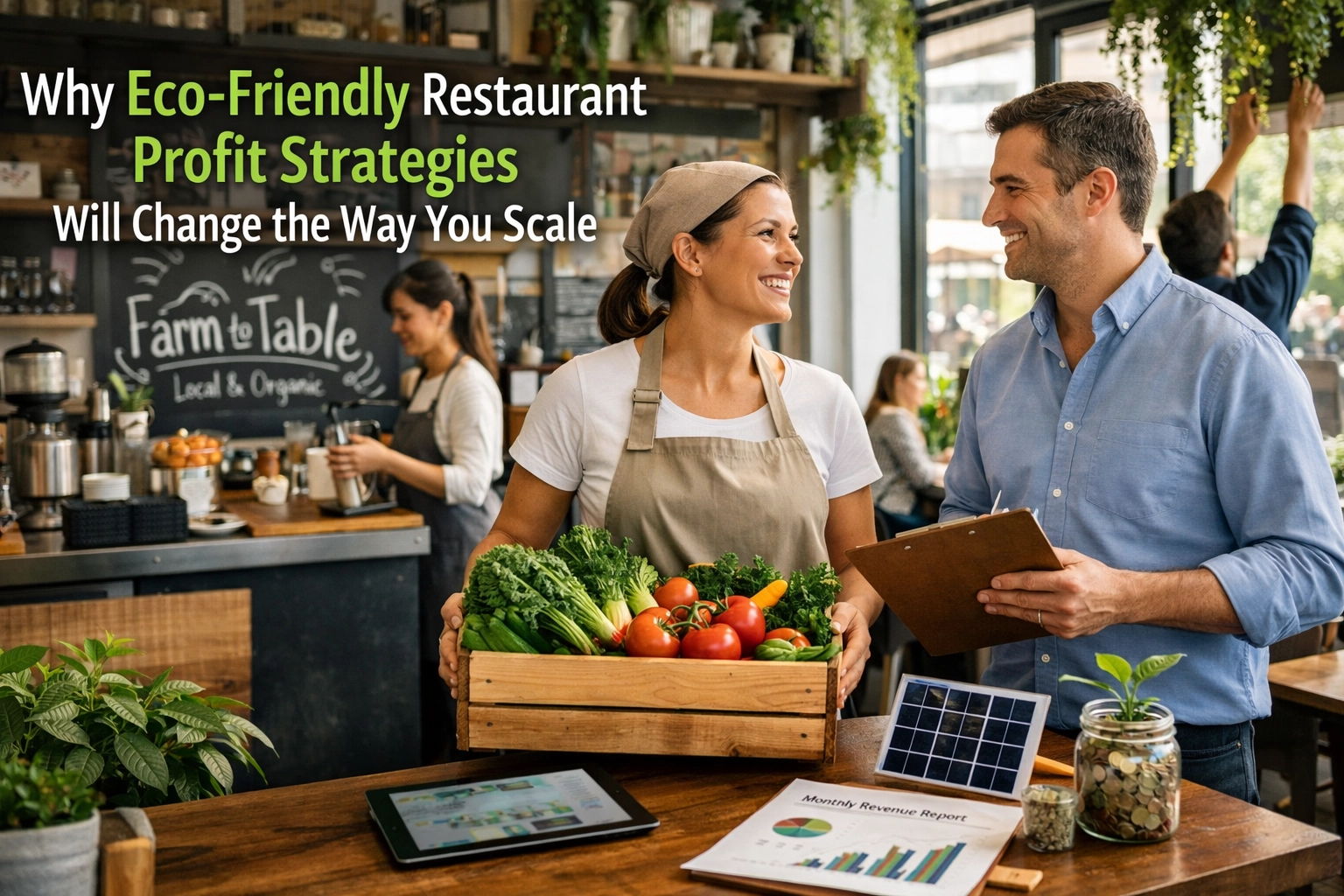
If you’ve spent more than five minutes in a commercial kitchen, you know that the industry’s "green" usually refers to one of two things: the wilted lettuce at the bottom of the crisper or the cash you’re losing through inefficient operations. For a long time, "going green" was seen as a luxury for high-end bistros with $45 avocado toasts and owners who drive electric cars to their yoga retreats.
But here’s the reality check: Sustainability isn’t just about saving the whales; it’s about saving your margins. At Restaurant Revenue Incubator, we’ve seen the data, and it’s staggering. In a world where average restaurant profit margins hover between a razor-thin 3% and 5%, eco-friendly strategies aren’t just a PR stunt: they are the engine that drives scalable growth.
In fact, research shows that for every $1 a restaurant invests in sustainability, profits increase by an average of $7. That’s a 700% return on investment. If I told you that buying a specific stock would net you a 7x return, you’d sell your grandmother’s heirloom silver to buy in. So, why are we still treating sustainability like an optional side dish?
The Triple Bottom Line: People, Planet, and Profit
In the world of revenue optimization, we talk a lot about the "Triple Bottom Line." It sounds like corporate jargon, but it’s actually the secret sauce to scaling a brand that lasts.
- People: Your staff wants to work for a company that doesn’t treat the planet like a dumpster. Happy staff = lower turnover = lower training costs.
- Planet: Reducing your footprint means using fewer resources.
- Profit: Using fewer resources means spending less money.
When you scale a concept, every inefficiency is magnified. If you have one location wasting $500 a month in energy, it’s a nuisance. If you have 50 locations doing it, you’re lighting $300,000 a year on fire. Eco-friendly strategies are the fire extinguisher.

Scaling Through Cost Reduction: The $1 to $7 Math
Scaling a restaurant concept is essentially an exercise in logistics and margin management. As you grow, your overhead grows. The goal of any successful operator is to ensure that revenue grows faster than expenses. This is where cost reduction through green initiatives becomes your best friend.
1. The Energy Efficiency Hack
Utility bills are the silent killers of EBITDA. Simple swaps, like moving to LED lighting, can reduce your utility bills by up to 30%. That sounds small until you realize that across a multi-unit operation, that’s enough capital to fund the build-out of a whole new location every few years. High-efficiency HVAC systems and smart thermostats are no longer "nice-to-haves": they are essential components of a full tech stack leadership strategy.
2. The War on Waste
Waste is the ultimate margin-shredder. Restaurants that implement aggressive food waste initiatives see decreases in waste of up to 53%. Think about that. More than half of the food you were previously throwing away: and paying landfill fees for: stays in your kitchen or never gets bought in the first place.
The "30/30/30/10 rule" is a great framework here: prioritize a 30% reduction in waste first. This creates the data infrastructure and operational discipline needed to scale. If you can’t manage a bin of tomatoes in one store, you definitely can’t manage a supply chain across a region.
The Conscious Consumer: Why They’ll Pay More for "Green"
Let’s talk about the customers. Modern diners, particularly Gen Z and Millennials, are increasingly "values-driven." Research shows that customers are willing to pay an average 20% price premium for environmentally sustainable meals.

This isn’t just theoretical. A London bistro that switched to compostable takeout containers saw a 15% spike in foot traffic within months. Why? Because they marketed it. They told their story. When you position your brand as eco-friendly, you aren't just selling a burger; you're selling a guilt-free experience.
In a saturated market, sustainability is a massive differentiator. It allows you to acquire customers at a lower cost because your "green" story generates organic word-of-mouth and social media buzz. If you’re looking at driving new customers, sustainability is one of the most cost-effective marketing tools in your arsenal.
Leadership: The CEO’s Role in Sustainability
Scaling isn't just about systems; it's about leadership. Successful operators and CEOs understand that sustainability must be baked into the culture. If the dishwasher sees the manager tossing recyclables into the trash to save thirty seconds, the "green mission" is dead.
Leadership in this space means:
- Setting the North Star: Making sustainability a core KPI, not a footnote in the annual report.
- Empowering the Team: Giving kitchen managers the tools (and the bonuses) to reduce waste.
- Investing in Tech: Using AI-driven inventory systems to predict prep levels more accurately.
At Restaurant Revenue Incubator, we focus on services that bridge the gap between "good intentions" and "actual profits." Our turnaround strategies often start with an audit of these very leadership practices.

The Tech Stack Connection: AI and Automation
You can't manage what you don't measure. This is where Restaurant Tech comes into play. The modern eco-friendly restaurant is powered by a sophisticated tech stack.
- AI Inventory Management: Systems that learn your sales patterns to ensure you aren't over-ordering perishables.
- Smart Sensors: Tech that alerts you if a walk-in cooler door is left open or if a fryer is consuming too much energy.
- Waste Tracking Software: Digitizing the "waste log" so you can see exactly which ingredients are hitting the bin most often.
By automating these processes, you take the human error out of sustainability. This makes the model highly replicable, which is the holy grail of scaling.
Scaling Without the Financial Headache
We know what you’re thinking: "Robert, this sounds great, but I don’t have the capital to overhaul my HVAC, buy AI software, and switch to expensive compostable packaging right now."
That’s where the Restaurant Revenue Incubator model changes the game. We specialize in "No Upfront Cost" turnaround services. We don't ask you to write a massive check to become more profitable and eco-friendly. Instead, we work on a performance basis. We identify the inefficiencies, implement the green profit strategies, and optimize your revenue. We only win when you win.
Whether it's improving your restaurant website and brand design to highlight your sustainability efforts or deep-diving into your COGS to find hidden savings, our goal is to help you scale sustainably: both environmentally and financially.
Conclusion: The Future is Green (And Very Profitable)
The "old way" of scaling was to grow at all costs, often ignoring the trail of waste and inefficiency left behind. But the "new way": the way that actually survives economic downturns and changing consumer habits: is built on the Triple Bottom Line.
Eco-friendly restaurant profit strategies aren't just a trend. They are a fundamental shift in how successful hospitality businesses operate. By focusing on energy efficiency, waste reduction, and the conscious consumer, you’re not just doing the "right thing": you’re building a more resilient, more profitable, and more scalable business.
Ready to see how much "green" you’re leaving on the table? Let’s talk about a turnaround that won't cost you a dime upfront. Contact us today and let’s start scaling the right way.

Want to dive deeper into our methodology? Check out our about page or browse our shop for more resources on restaurant leadership and growth.