Restaurant Technology · Uncategorized
How to Integrate AI With Sustainable Kitchen Operations to Slash Costs
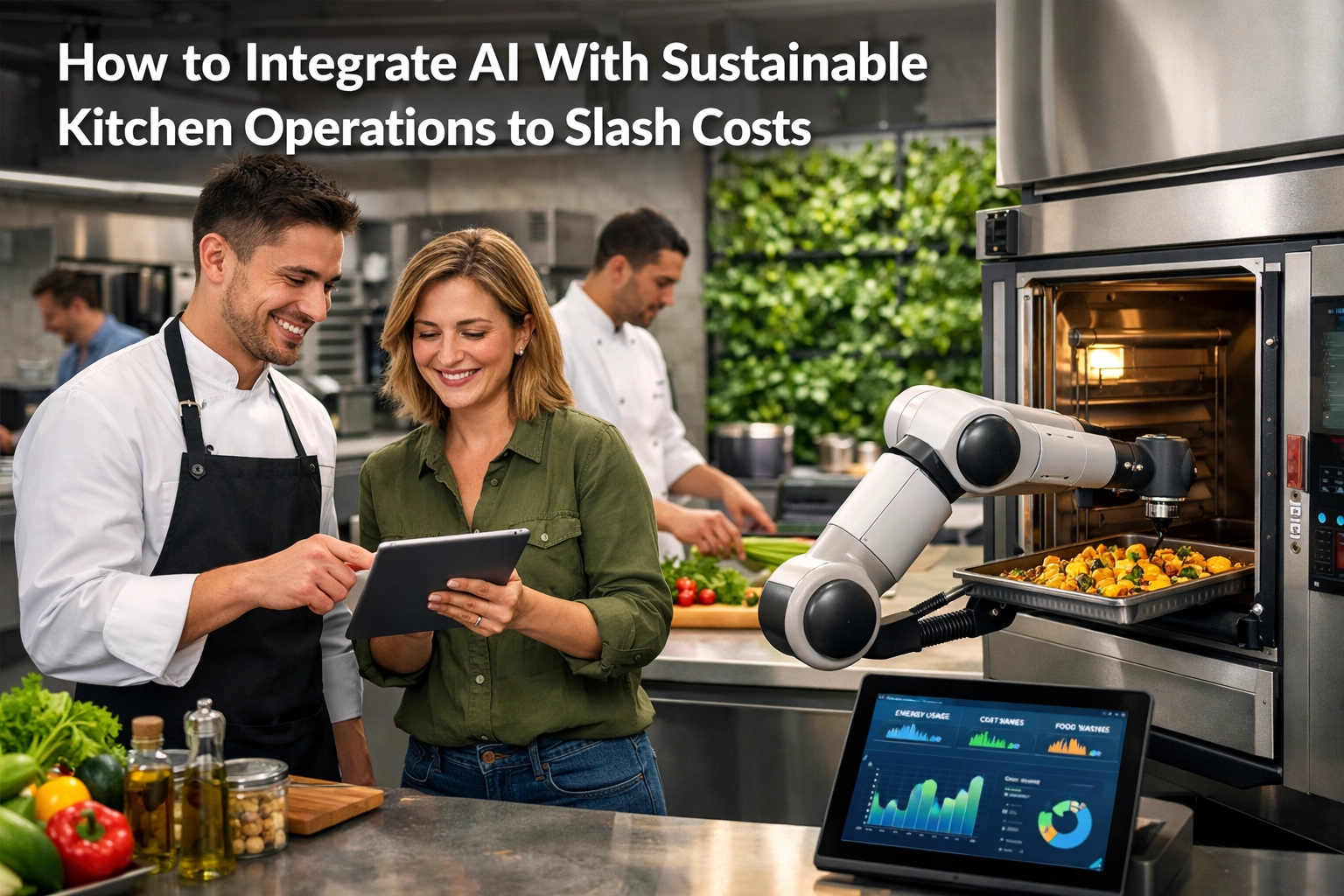
If you’ve ever walked past your restaurant’s dumpster at the end of a shift and felt a physical pang in your chest, you’re not alone. That’s not just yesterday’s daily special sitting in a black bag; it’s your profit margin, your labor hours, and your utility bills slowly rotting away. In the high-stakes world of hospitality, the trash can is often the most expensive "employee" on the payroll.
At Restaurant Revenue Incubator, we talk a lot about scaling and growth, but you can’t fill a bucket if it’s full of holes. Integrating Artificial Intelligence (AI) into your kitchen operations isn’t just a "nice-to-have" tech trend for the Silicon Valley elite; it is the most effective way to plug those holes, achieve true sustainability, and: most importantly: slash your operating costs.
We’re moving past the era of "gut feelings" and "we’ve always done it this way." It’s time to look at the Triple Bottom Line: People, Planet, and Profit.
The Triple Bottom Line: Why "Green" is the New "Black"
For decades, "sustainability" was seen as a luxury. It was something you did if you had a 500% markup on organic microgreens and a customer base that arrived in Teslas. But the narrative has shifted. Today, sustainability is synonymous with efficiency.
- Profit: Reducing food waste by even 10% can add significant points to your bottom line.
- Planet: Every pound of prevented food waste saves roughly 3.3 pounds of CO2 equivalent emissions. Considering food production accounts for 21% of U.S. freshwater resources, being efficient is a moral imperative.
- People: AI doesn't replace your chefs; it removes the "drudge work." Predicting prep amounts means your team isn't staying until midnight chopping onions that will be thrown away on Tuesday.
When we look at revenue optimization, we see that the most successful operators are those who treat sustainability as a financial strategy.
The AI Crystal Ball: Predictive Analytics & Demand Forecasting
The biggest cause of kitchen waste isn't a cook dropping a steak; it’s over-prepping for a Tuesday that ends up being dead because of a sudden rainstorm.
AI-driven demand forecasting analyzes historical sales data, local weather patterns, seasonal variations, and even neighborhood events. If there’s a local high school football game three blocks away, the AI knows you’ll need 40% more wings but 20% fewer salads.
Research shows that NYC fine-dining establishments have achieved a 25% reduction in food waste within just six months of implementing AI-driven inventory management. By aligning your procurement orders with actual anticipated needs, you stop buying what you don't need.

This isn't just about ordering less; it’s about ordering smarter. When your AI system tells you that your salmon usage peaks on Thursday but drops on Sunday, you can adjust your deliveries to ensure maximum freshness and zero spoilage. This is a core component of full tech stack leadership.
Computer Vision: The "Smart Bin" is Watching
It sounds a bit like 1984, but having a camera over your trash can is the best thing that could happen to your food cost. Modern computer vision technology can automatically identify, categorize, and measure wasted items with over 95% accuracy.
In Copenhagen, restaurants using AI-enabled waste-tracking systems saw a 30% reduction in food waste. Why? Because the data doesn't lie. If the system shows that 15% of your expensive ribeye is being trimmed into the bin, you don’t just have a waste problem; you have a training problem.
These systems eliminate the need for staff to manually log waste: a task that is usually the first to be skipped when the dinner rush hits. Instead, the AI provides a real-time dashboard showing exactly what is being tossed, when, and why. Are your portion sizes too large? Is the night shift prep team being a bit too aggressive with the vegetable peelers? The AI knows.
Real-Time Inventory & Smart Prep Scheduling
Inventory management used to involve a clipboard, a cold walk-in, and a lot of guessing. AI changes this by providing real-time optimization recommendations.
Modern platforms can now offer:
- Dynamic Recipe Adjustments: If your inventory of tomatoes is high and they’re nearing their expiration, the AI can suggest a "Soup of the Day" or a special to move that product before it becomes a loss.
- Automated Expiration Alerts: No more finding a box of "mystery sauce" in the back of the freezer from 2023.
- Smart Prep Lists: Instead of a static prep list, the AI generates a dynamic list based on real-time sales. If you sell ten burgers in the first hour of lunch, the AI adjusts the prep requirement for the afternoon shift instantly.
By optimizing these daily tasks, you’re not just saving food; you’re saving labor. And in today’s market, cost reduction in labor is just as vital as food cost control.

Implementation Without the Heartache (or the Upfront Cost)
The biggest barrier to adopting this tech is usually the "sticker shock." Most operators think they need a six-figure investment and a PhD in Data Science to get started.
At Restaurant Revenue Incubator, we do things differently. We believe that if our solutions don't make you money, we shouldn't get paid. That’s why we emphasize our "No Upfront Cost" turnaround services. We help you identify the holes in your operation, implement the right AI and tech stack, and we win when you win.
Whether you are looking for restaurant franchise consulting to scale a sustainable concept or you need front-to-back operations support, the goal is the same: maximum efficiency with minimal environmental impact.
Winning Over the Team: The Human Factor
Technology is only as good as the people using it. If your line cooks feel like the AI is a "spy," they’ll find ways to circumvent it. The key to a sustainable kitchen is transparency and shared goals.
When implementing AI waste tracking or predictive prep, frame it as a tool that makes their jobs easier.
- "We aren't tracking waste to get you in trouble; we're tracking it so we don't have to spend three hours prepping food that we just throw away."
- "This system helps us ensure we always have the freshest ingredients for our guests."
When the team sees that the AI reduces the chaos of the "86 list" and helps the restaurant stay profitable (which leads to better equipment and more stable hours), adoption becomes a breeze.

The Economic Reality: Sustainability as a Competitive Advantage
Let’s be blunt: the restaurant industry is getting tighter. Inflation is squeezing margins, and diners are becoming more conscious of where they spend their money. A restaurant that uses AI to minimize waste and maximize sustainability isn't just "eco-friendly": it's economically resilient.
By lowering your Cost of Goods Sold (COGS) through AI integration, you create a buffer that allows you to survive economic downturns or invest in driving new customers.
If you're wondering where to start, you don't have to overhaul your entire kitchen overnight. Start with a waste audit. Look at your current tech stack. Are your systems talking to each other? If your POS doesn't talk to your inventory software, and your inventory software doesn't talk to your chef, you’re leaving money on the table (and in the trash).

Final Thoughts: The Future is Automated
Integrating AI with sustainable kitchen operations isn't a futuristic dream; it’s a current reality for the world’s most profitable restaurants. From predictive analytics that act as a crystal ball for your ordering to computer vision that turns your trash can into a data goldmine, the tools are here.
At Restaurant Revenue Incubator, we specialize in helping you navigate this transition. We take the tech-heavy lifting off your plate so you can focus on what you do best: making incredible food and providing stellar service.
Ready to stop throwing money away? Let's talk about how we can optimize your revenue and slash your costs with zero upfront investment. Check out our services page or contact us today to start your turnaround.
The planet will thank you, your staff will thank you, and your bank account will definitely thank you.