Restaurant Technology · Uncategorized
The 2026 Restaurant Maturation: Surviving the Value Wars and the Efficiency Pivot
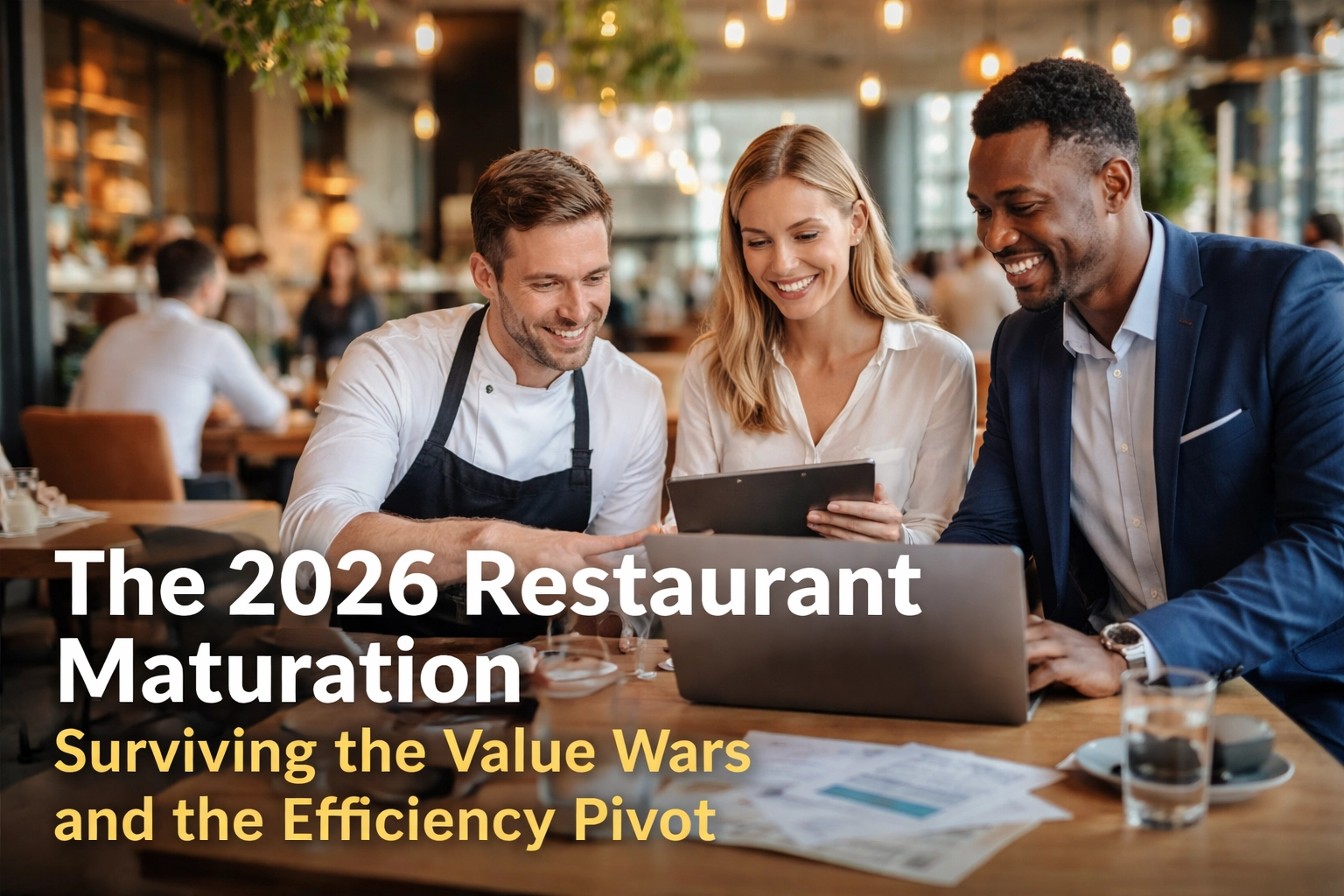
Here's the deal: 2026 isn't about who can open the most locations anymore. It's about who can survive.
The restaurant industry just hit a wall. Four consecutive months of declining comparable sales and traffic. Consumers are asking themselves "Is this meal actually worth it?" before every single order. And with tariff fears pushing 62% of diners to expect more menu inflation this year, the playbook that worked in 2019: or even 2023: is officially dead.
Welcome to the 2026 restaurant maturation. The era of "scale at all costs" is over. What's replaced it? A brutal, necessary pivot toward operational efficiency, strategic menu curation, and proving value in ways that go far beyond slapping a $5 meal deal on the drive-thru board.
Let's break down what's actually happening: and what smart operators are doing to come out ahead.
The Value Wars Have Gone Nuclear
If you've driven past a Wendy's or Burger King lately, you've seen the battlefield firsthand.
Wendy's just revamped its "Biggie Deals" program with $4, $6, and $8 tiers designed to give customers a clear value ladder. It's a direct response to Burger King's aggressive $4.99 meal deal and the debut of their "Ultimate Steakhouse Whopper": a premium play wrapped in a value-forward message.
According to Nation's Restaurant News, this isn't just marketing noise. It's a survival mechanism. The quick-service segment is one of the few bright spots in an otherwise grim traffic report, largely because consumers are "trading down" from casual dining and fast-casual concepts to cheaper QSR options.
But here's the catch: discounting alone isn't sustainable.

The brands winning the 2026 restaurant trends race aren't just offering lower prices. They're redefining what "value" even means. Limited-time offers (LTOs) are outperforming permanent value menus for driving traffic. Premium items at compelling price points are resonating with Gen Z, who: let's be honest: need a solid reason to leave their apartments.
Happy hour promotions? They're the #1 dining trend restaurateurs expect this year, with 51% of Americans actively wanting more of them.
The takeaway: Value isn't about being the cheapest. It's about being worth it.
The Efficiency Pivot: From Growth Mode to Survival Mode
For years, the restaurant industry measured success by unit count. How many locations did you open? How fast did you scale?
That metric is now a liability.
As Restaurant Business Online reported, brands like Noodles & Company are doubling their planned closures (up to 35 units) to focus resources on high-performing locations. It's a trend echoing across the industry: trim the fat, protect the core, survive the bifurcated economy.
This is the operational efficiency era. And it touches everything: from how menus are structured to how kitchens are staffed.
Smaller Menus, Bigger Impact
Chefs and operators are running leaner menus than ever. Fewer SKUs means:
- Simpler staff training
- Faster ticket times
- Reduced food waste
- Better inventory management
Every dish has to earn its spot. If it doesn't move the P&L or drive repeat visits, it's gone.
Proteins are getting strategic, too. With beef prices staying stubbornly high, chicken has become the default: it's cheaper for operators and perceived as healthier by consumers. Smart brands are positioning proteins as customizable add-ons across diverse menu items (smoothie bowls, pancakes, grain bowls), letting them reduce base costs while offering personalization.

The Labor Equation
Here's something that doesn't get enough attention: operational efficiency directly impacts labor retention.
Chains like BJ's Restaurants have seen meaningful improvements in turnover and same-store sales by balancing digital training modules with hands-on mentorship. When your systems are streamlined, your staff isn't drowning. When your staff isn't drowning, they stick around.
In an industry notorious for turnover, that's a competitive advantage you can take to the bank.
The Triple Bottom Line: People, Planet, Profit
Let's talk sustainability: but not in the greenwashing, slap-a-leaf-on-the-logo way.
The 2026 restaurant trends that are actually working tie eco-friendly practices directly to financial outcomes. This is the triple bottom line in action: People, Planet, Profit.
Menu curation reduces waste. When you're running a tighter menu with seasonal, local ingredients, you're not throwing out cases of produce that didn't sell. That's money back in your pocket and a smaller carbon footprint.
Efficient operations use less energy. Streamlined kitchens mean fewer pieces of equipment running, shorter cook times, and lower utility bills.
Ingredient transparency builds trust. Consumers: especially younger ones: are actively seeking cleaner recipes with less processed ingredients. High-protein, whole-food options aren't just trendy; they're what people want to spend their shrinking discretionary budgets on.
If you haven't already, check out our Definitive 2026 Guide to Food Waste Tech for a deep dive on how platforms like Leanpath, Winnow, and Orbisk are helping operators turn waste reduction into real margin gains.
The Tech Reality Check
One more trend worth flagging: the "anti-AI" tech pivot.
Don't get me wrong: technology is still reshaping the industry. AI-powered personalization is helping brands tailor offers to different generations. Dynamic menu pricing is becoming more sophisticated. Discovery platforms are using machine learning to match diners with restaurants that fit their preferences.
But here's what the 2026 Tech Tracker is showing: operators are done with "AI for AI's sake."
The new mandate? Low-friction technology that solves specific problems. Labor scheduling tools that actually work. Food waste systems that pay for themselves in 90 days. Inventory platforms that don't require a PhD to operate.
If your tech stack isn't directly moving the needle on labor costs, food costs, or guest satisfaction, it's a distraction you can't afford.

What Winning Looks Like in 2026
So what separates the survivors from the casualties this year?
Authenticity. Brands that balance modernization with their core identity are seeing financial rewards. Those that chase every trend without a clear "why" are watching customers walk.
Disciplined execution. The operators who are winning aren't the flashiest. They're the ones who've tightened their menus, optimized their labor models, and built systems that actually scale.
Genuine value perception. Not the cheapest price: the best worth. That means quality you can taste, portions that satisfy, and an experience that makes the bill feel fair.
As USA Today noted in their recent consumer spending report, Americans aren't done eating out. They're just done wasting money on mediocre experiences.
Ready to Find Your Hidden Margins?
Look, the 2026 restaurant landscape is brutal. But it's also full of opportunity for operators who are willing to get honest about their numbers.
At Restaurant Revenue Incubator, we offer a free P&L and tech stack review designed to uncover the margins hiding in your operation. We'll look at your menu pricing, your labor model, your vendor contracts, and your technology spend: and show you exactly where the money is leaking.
No fluff. No generic advice. Just a clear-eyed look at what's working, what's not, and what to do about it.
Claim your free review here and let's figure out how to make 2026 your most efficient: and profitable: year yet.
For more insights on navigating the shifting restaurant landscape, explore our latest posts on the Restaurant Revenue Incubator Blog.