Restaurant Technology · Uncategorized
2026 Restaurant News: Chili's Declares War on the Big Mac & The Return of 'Intentional Dining'
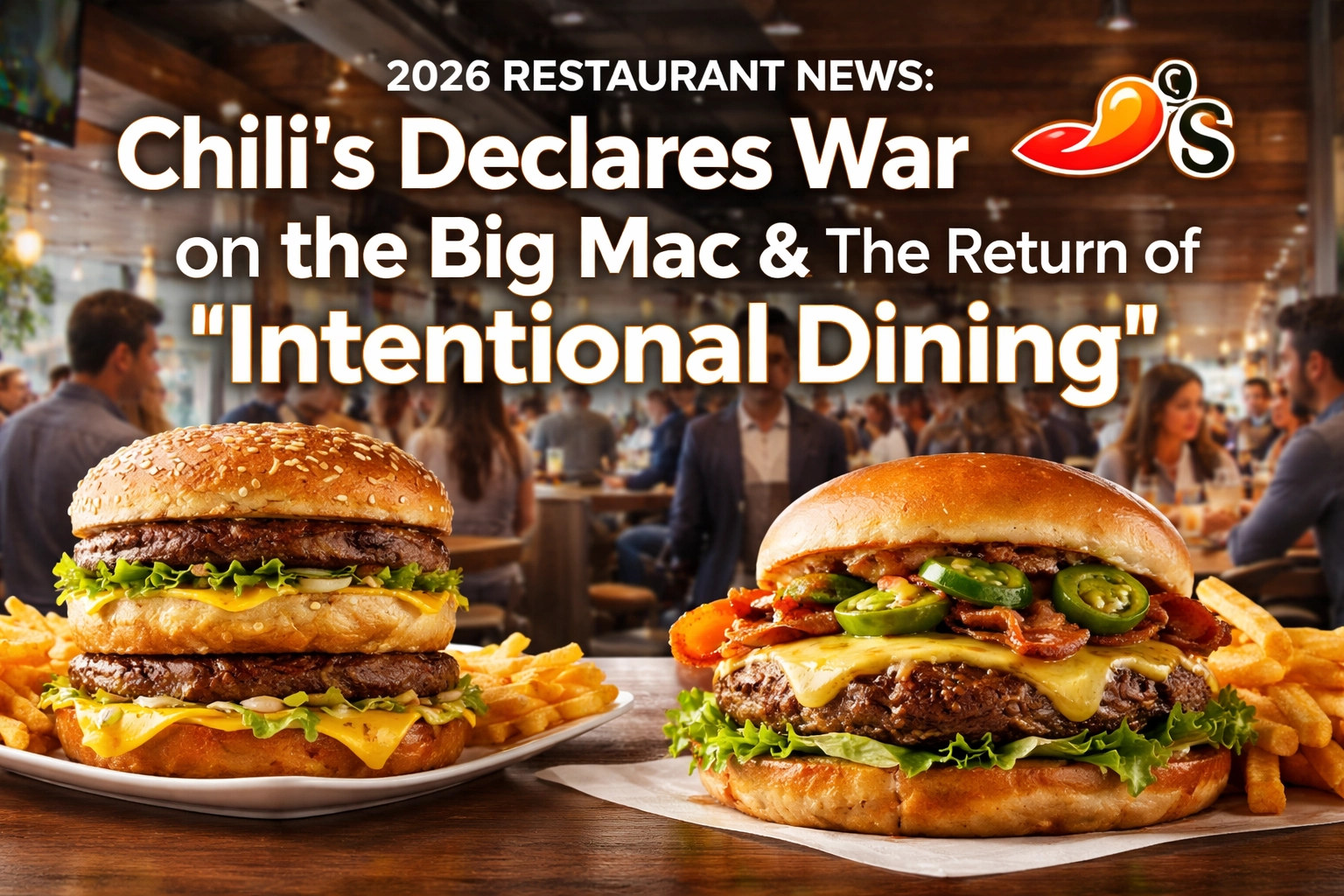
The gloves are off. In a move that has the entire restaurant industry talking, Chili's just threw down the gauntlet against the golden arches: and they're not playing nice.
Welcome to January 21, 2026, where casual dining is fighting back, "intentional dining" is the new buzzword, and analysts are already circling the calendar for a massive traffic surge later this year.
Let's break it all down.
Burger Wars 2.0: How Chili's Is Winning Back Fast Food Customers
Here's the headline that's dominating industry conversations: Chili's has launched the Big Smasher: a nearly half-pound burger designed as a direct shot across McDonald's bow.
The message? Why settle for a Big Mac when you can get a bigger, fresher burger with real service for about the same price?

The Big Smasher is part of Chili's wildly successful $10.99 3-for-Me deal, which bundles a burger, side, and beverage at a price point that directly competes with fast-food combo meals. And the numbers don't lie: Chili's posted a staggering 21.4% same-store sales growth in Q1 of fiscal 2026, with traffic jumping 13% according to Restaurant Business Online.
Let that sink in. In a market where overall restaurant traffic is down 2.9%, Chili's is pulling double-digit traffic gains.
The Strategy Behind the Smash
This isn't a random menu addition. Chili's CEO Kevin Hochman has been vocal about the chain's "good, better, best" strategy: offering premium experiences at accessible prices. The Big Smasher sits at the intersection of value and quality, targeting the exact customer who's been defaulting to the drive-thru out of convenience.
But Chili's isn't stopping at burgers. They're executing a major chicken sandwich relaunch in the back half of 2026, recognizing that boneless fried chicken is one of the top five foods Americans consume: yet remains underrepresented on their menu compared to competitors.
The playbook is clear: attack fast food where it lives, steal back the value-conscious diner, and do it with better food.
The Return of 'Intentional Dining': Why Full-Service Traffic Is Rising in 2026
Here's the paradox of 2026: overall restaurant traffic is down 2.9%, yet full-service restaurants are seeing a 5% rebound.
What gives?
Welcome to the era of intentional dining.

According to traffic data from QSR Magazine, consumers: especially Gen Z and Millennials: are making fewer dining-out trips but being far more deliberate about where they spend their money. They're trading three quick-service runs for one meaningful full-service experience.
Quality Over Quantity
The shift is driven by a few key factors:
- Experience hunger: After years of delivery apps and drive-thrus, diners crave the social, sensory experience of sitting down in a restaurant
- Value recalibration: When you're only eating out twice a month instead of eight times, you want it to count
- Social media influence: A beautifully plated entrée at a full-service restaurant gets more engagement than a bag of fast food
Chili's is leaning hard into this trend with their "Modern Greenville prototype" remodel program: named after the original Chili's location. The initiative focuses on restoring what made the brand distinctive: the margarita bar, the atmosphere, the vibe. Four remodels are expected by end of 2026, with plans to renovate approximately 10% of Chili's roughly 1,200 U.S. restaurants annually starting in 2027.
For operators, the takeaway is crystal clear: if you're going to capture the intentional diner, you need to give them something worth being intentional about.
2026 Tailwinds: Gas Prices, FIFA, and the Traffic Surge on the Horizon
If you've been white-knuckling it through the post-pandemic traffic slump, there's good news on the horizon.
Analysts from Fitch Ratings and Nation's Restaurant News are pointing to two major catalysts that could supercharge restaurant traffic in the back half of 2026:
1. Lower Gas Prices
Fuel costs have been steadily declining, and that extra cash in consumers' pockets historically translates to more dining-out occasions. When it costs less to drive to the restaurant, people drive to the restaurant more. Simple math.
2. The FIFA World Cup Effect
The 2026 FIFA World Cup: co-hosted by the United States, Canada, and Mexico: is expected to be an absolute bonanza for restaurants, bars, and sports-viewing venues. We're talking about the world's most-watched sporting event landing on American soil.
The impact of the FIFA World Cup on US restaurants could be massive:
- Extended hours for match viewing
- Increased bar and beverage sales
- Group dining occasions (watching parties)
- Tourism traffic in host cities
Smart operators are already prepping: adjusting staffing models, planning watch-party promotions, and optimizing their beverage programs.
The Maturation Moment: Operational Efficiency Is the New Growth
If 2024-2025 was about survival and 2025 was about stabilization, then 2026 is the year of operational efficiency.

The industry is pivoting from "growth at all costs" to something more sustainable: lean, profitable operations. That means:
- Tech stack refinement: Consolidating the 47 different platforms that got bolted on during the pandemic into streamlined, integrated systems
- Kitchen optimization: Reducing ticket times, minimizing waste, and maximizing throughput
- Labor efficiency: Smarter scheduling, cross-training, and automation where it makes sense
Chili's exemplifies this with their "North of $6 million" initiative: a program that extracts operational learnings from their top-performing restaurants (averaging $6M+ in sales versus the $4.5M system average) and replicates those practices across the chain.
The 2026 restaurant industry growth story isn't about opening 500 new locations. It's about making your existing locations run like well-oiled machines.
Quick Hits: Who's Winning This Week
Portillo's continues to defy gravity. While much of the industry battles traffic declines, the Chicago-style hot dog chain keeps posting gains: proof that a cult following and operational excellence is a powerful combination.
Krispy Kreme leveraged the National Title Game to drive location-specific spikes with limited-time promotions. Event-based marketing remains a high-ROI play when executed well.
Chicken Salad Chick is running their annual Guest Appreciation Day, turning a simple "thank you" into a traffic-driving event. Sometimes the best promotions are the simplest ones.
What This Means for Your Restaurant
The 2026 landscape is shaping up to be a tale of two industries: operators who adapt and thrive, and those who get left behind.
The winners will be the ones who:
- ✅ Compete aggressively on value without sacrificing quality
- ✅ Create experiences worth being "intentional" about
- ✅ Prepare now for the FIFA World Cup traffic surge
- ✅ Ruthlessly optimize operations for efficiency
- ✅ Study what the top performers are doing and replicate it
The losers? They'll keep doing what they've always done and wonder why the traffic isn't coming back.
Need Help Turning These Trends Into Action?
At Restaurant Revenue Incubator, we specialize in helping restaurant operators navigate exactly these kinds of market shifts. Whether you're looking to refine your value proposition, optimize your operations, or develop a turnaround strategy that actually works: we've got the playbook.
The restaurant industry is evolving fast. Make sure you're evolving with it.
Stay tuned for tomorrow's roundup. The burger wars are just getting started.