Restaurant Technology · Uncategorized
Quick Service, Big Flavors: Fast Casuals Redefine Customer Expectation
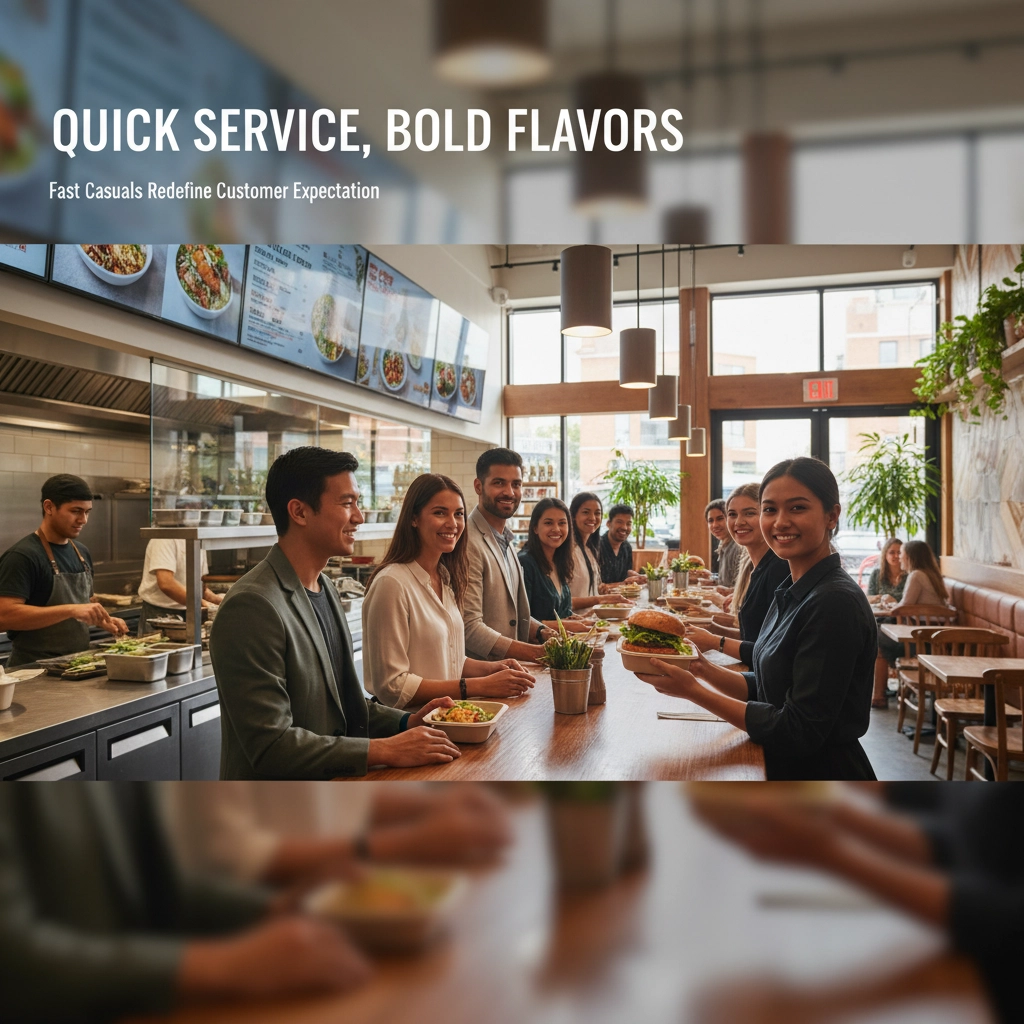
Remember when "fast food" meant greasy burgers and questionable ingredients, while "good food" meant waiting 45 minutes for your entrée? Those days are officially dead and buried, thanks to the fast-casual revolution that's completely rewritten the rulebook on what customers expect from their dining experience.
We're living through the biggest shift in restaurant expectations since the drive-thru was invented. Fast-casual brands have successfully convinced millions of diners that they don't have to choose between speed and quality: and now every other restaurant segment is scrambling to keep up.
The Fast-Casual Formula: Quality + Speed = New Standard
Here's what fast-casual got right from day one: they figured out that modern consumers are time-strapped but not willing to compromise on quality. The segment distinguishes itself by offering higher-quality ingredients, stylish interiors, and customizable menus, all without the wait time of full-service dining.
The numbers tell the story. Fast-casual restaurants serve guests within 10–15 minutes on average, compared to 40–50 minutes per table turn at traditional full-service spots. That's not just faster: that's a completely different value proposition that appeals to consumers who want to save time without sacrificing quality.
But here's where it gets interesting: this wasn't just about speed. Fast-casual brands introduced transparent open kitchens, build-your-own customization options, locally sourced ingredients, and modern design that works equally well for dine-in and takeout. They essentially created a new category of "affordable premium" dining.

The Digital-First Revolution
If you want to understand how dramatically customer expectations have shifted, look no further than ordering behavior. 82% of Gen Z and Millennial consumers prefer ordering via mobile or kiosk, and this isn't just a trend: it's become the new baseline expectation across all age groups.
Chipotle provides the perfect case study: kiosks and mobile apps are responsible for over 65% of their transactions. That's not just adoption; that's complete customer behavior transformation. When two-thirds of your orders come through digital channels, you're not just offering convenience: you're operating in an entirely different business model.
The ripple effect has been massive. 62% of brands are using or rolling out kiosks in 2025, with fast-casual concepts leading the charge. These aren't just order-taking machines; they're upselling tools that boost check averages without the awkward human interaction that can feel pushy.
But here's what many operators miss: digital ordering isn't just about convenience. It's about control. Customers want to see every option, customize without judgment, and take their time making decisions without feeling rushed by a line forming behind them.
The Portability Imperative Changes Everything
The pandemic accelerated a trend that was already brewing: customers expect their food to travel well. Off-premise dining now accounts for 66% of all restaurant sales, with fast-casual formats outperforming full-service by nearly 2:1 in this category.
This shift has forced restaurants to rethink everything from packaging to menu design. Ghost kitchens are popping up everywhere, drive-thru windows are being retrofitted into existing fast-casual locations, and delivery has become a make-or-break revenue stream.

The expectation isn't just that food should be portable: it's that the entire dining experience should be flexible. Customers want to order ahead and pick up, have food delivered to their office, or grab something on the way to their next appointment. The rigid "dine-in or takeout" model feels antiquated.
The Value Perception Crisis
Here's where things get complicated for fast-casual operators. The segment built its reputation on being the sweet spot between fast food and casual dining: better quality than McDonald's, faster than Applebee's. But that positioning is under serious pressure.
Fast-casual "combo" meals hitting $12–14 are outperforming full-service entrées at $19–25 in terms of perceived value, but customers are increasingly trading down to cheaper alternatives or simply eating out less frequently. Budget-conscious consumers who once embraced fast-casual as their go-to option are now questioning whether that premium is worth it.
Meanwhile, casual dining chains like Chili's and Applebee's have gotten aggressive with value messaging and bundled meals. They've proven that a compelling value proposition can still drive significant traffic and sales, even in a challenging economic environment.
The satisfaction numbers tell a concerning story: the percentage of diners reporting good/excellent satisfaction with their fast-casual meal remained flat at 54% from 2021 to 2025, while both quick-service and casual dining satisfaction scores improved. When you're not getting better while your competitors are, you're effectively falling behind.
The Loyalty Game Has Changed
Traditional "buy 10, get one free" punch cards feel prehistoric compared to what customers expect from loyalty programs today. Modern consumers want early access to new menu items, surprise merchandise drops, exclusive experiences, and personalized offers based on their order history.

The challenge for multi-brand operators is creating programs that let guests earn and redeem across different concepts without eroding margins. It's not just about discounts anymore: it's about creating genuine emotional connection and making customers feel like VIPs.
Smart brands are using loyalty data not just for marketing, but for menu development, staffing decisions, and location planning. When you know exactly what your best customers order and when they order it, you can optimize your entire operation around their preferences.
What This Means for Restaurant Operators
The fast-casual revolution has essentially raised the bar for every restaurant segment. Customers now expect:
- Digital ordering as standard, not premium – If you don't have a mobile app or online ordering, you're already behind
- Transparency in ingredients and preparation – Open kitchens and detailed ingredient lists aren't nice-to-haves anymore
- Customization without complexity – Customers want options, but they want the process to be simple
- Speed without sacrifice – Quality ingredients and preparation, but served quickly
- Portability by design – Every menu item needs to work for dine-in, takeout, and delivery
The operators who are thriving in this environment understand that value isn't just about price: it's about the entire experience. Fair pricing, consistent quality, convenient ordering, and reliable service have become the minimum viable product.
The Road Ahead
As we head into 2026, the fast-casual segment is maturing. The novelty factor is wearing off, and customers are getting more discerning about where they spend their dining dollars. The brands that survive and thrive will be those that can deliver authentic value at every price point while maintaining the speed and convenience that defined the category.
This isn't just a fast-casual problem: it's an industry-wide challenge. Every restaurant operator needs to understand how customer expectations have evolved and what that means for their business model, menu design, staffing strategy, and technology investments.
The fast-casual revolution wasn't just about creating a new restaurant segment. It was about proving that customers don't have to settle for trade-offs between quality, speed, and value. That expectation isn't going anywhere, and it's only going to get more demanding.
For restaurant operators looking to navigate these changing expectations and optimize their concept for today's market, the key is understanding that this isn't just about copying what fast-casual brands do: it's about understanding why those strategies work and how they can be adapted to your unique brand and customer base. The restaurants that figure this out first will be the ones writing the next chapter of industry evolution.
Ready to optimize your restaurant concept for today's evolved customer expectations? Learn more about our revenue optimization strategies and discover how to build a sustainable competitive advantage in the modern dining landscape.