Restaurant Technology · Uncategorized
Restaurant Labor Shortages 2.0: Coping with a New Normal
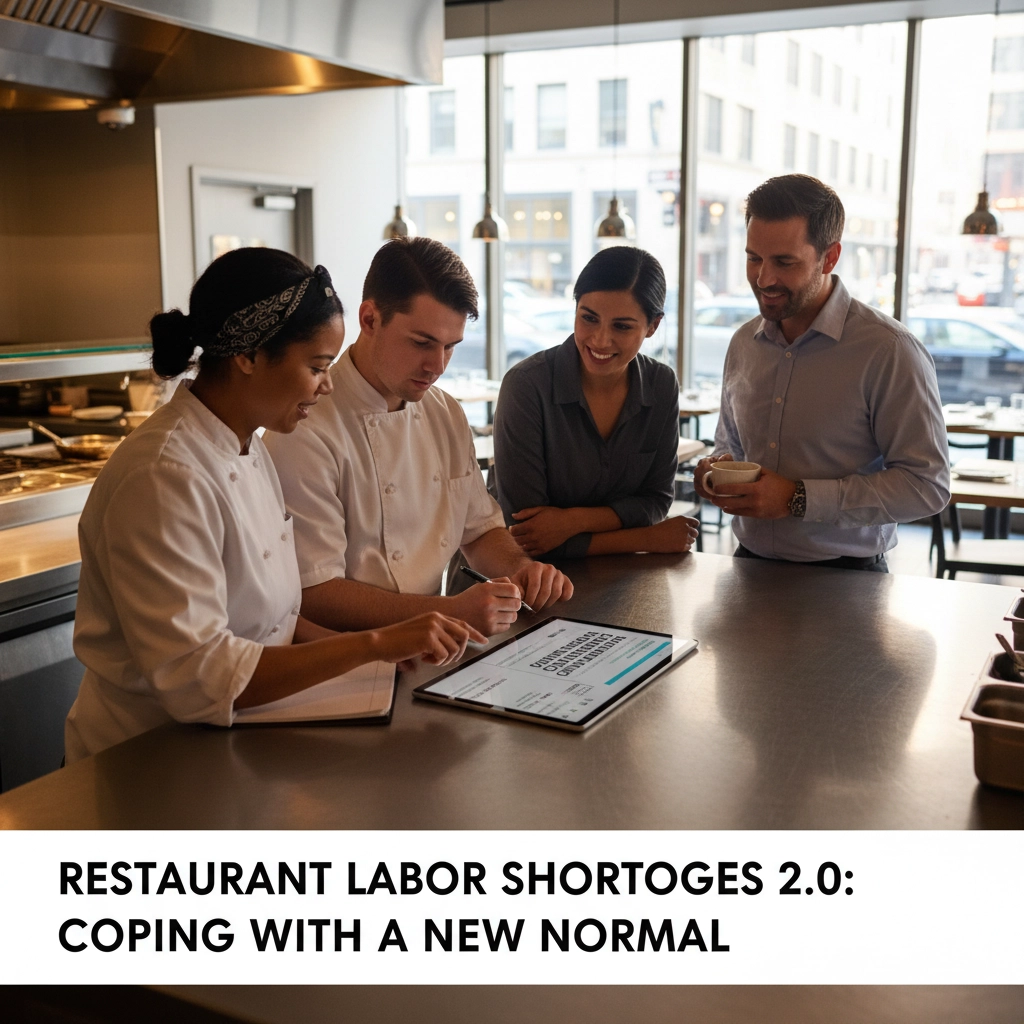
The restaurant industry has entered a new phase of its labor crisis. While the acute pandemic-era disruptions have largely subsided, what remains is something far more complex: a fundamental restructuring of how restaurants attract, retain, and manage their workforce. This isn't the same labor shortage that devastated the industry in 2020-2021. This is Labor Shortages 2.0: a structural challenge that requires strategic adaptation rather than crisis management.
The Current State: Numbers Don't Tell the Whole Story
As we close out 2025, the employment picture reveals a paradox that's confounding industry leaders. The National Restaurant Association projects the industry will reach 15.9 million workers by year-end, with over 100,000 jobs added throughout 2025. On paper, restaurant employment sits 144,000 jobs (1.2%) above pre-pandemic February 2020 levels.
But here's where it gets interesting: 70% of restaurant operators report having job openings that are difficult to fill, and 45% say they don't have enough employees to support existing customer demand. These aren't contradictory statistics: they're indicators of a transformed labor market where quantity doesn't equal quality or sustainability.
The first quarter of 2025 served as a wake-up call, with bars and eateries losing a net 25,500 jobs: the weakest quarterly performance since late 2020. While March saw a rebound with nearly 30,000 jobs regained, the volatility highlighted the fragile nature of current staffing levels.

The Tale of Two Restaurant Segments
The recovery hasn't been uniform across restaurant categories, and this disparity reveals crucial insights about where the industry is headed. Quick-service and fast-casual restaurants have not only recovered but thrived, running 107,000 jobs (2.4%) above pre-pandemic levels as of mid-2025.
Meanwhile, full-service restaurants remain significantly behind, sitting 212,000 jobs (3.7% to 4%) below pre-pandemic employment levels. This gap isn't just about numbers: it represents a fundamental shift in how Americans dine and work.
"The full-service segment faces unique challenges that go beyond simple hiring difficulties," notes a recent Restaurant Business Online analysis. "These establishments require higher skill levels, longer training periods, and more complex scheduling coordination: all areas where traditional approaches are failing."
Beyond the Pandemic: Root Causes of the New Normal
What makes this Labor Shortages 2.0 different from its predecessor is the underlying causes. We're no longer dealing with temporary pandemic disruption but permanent shifts in worker expectations and industry dynamics.
The Great Reassessment: The pandemic gave restaurant workers time to evaluate their careers, and many concluded they wanted something different. Enhanced unemployment benefits provided a buffer that allowed workers to be selective about their next moves. According to CNBC's recent workforce analysis, many former restaurant employees moved to sectors offering better work-life balance, consistent scheduling, and higher baseline compensation.
Immigration Policy Impact: With immigrants accounting for over 20% of the U.S. restaurant workforce, tighter immigration policies and increased bureaucratic hurdles have constricted a traditionally reliable labor pipeline. This isn't a temporary policy adjustment: it represents a structural change in workforce availability.
Gig Economy Competition: The rise of flexible work arrangements has created direct competition for restaurant workers. Why accept rigid scheduling and variable income when gig work offers greater autonomy and often higher hourly rates?

The New Worker Expectations Framework
Today's restaurant job seekers operate under a completely different set of priorities than their pre-pandemic counterparts. Based on recent industry surveys and HR consulting data, the hierarchy of worker priorities has fundamentally shifted:
Compensation Beyond Wages: Workers now expect comprehensive compensation packages that include predictable scheduling, paid time off, and advancement opportunities. The days of competing solely on hourly wages are over.
Work-Life Balance: Flexible scheduling isn't a perk: it's a requirement. Workers are prioritizing employers who respect their time and offer consistent, predictable schedules.
Career Development: Restaurant workers increasingly view their positions as stepping stones rather than destinations. They're seeking employers who invest in skill development and provide clear advancement pathways.
Workplace Culture: The tolerance for toxic workplace environments has plummeted. Workers actively seek supportive management, team collaboration, and respectful treatment as baseline expectations.
Strategic Adaptations: What's Actually Working
Smart operators aren't fighting these changes: they're adapting their business models to work within the new reality. Here are the strategies showing measurable results:
Retention-First Hiring: Instead of constantly replacing departed workers, successful restaurants are investing heavily in keeping existing staff. This includes competitive compensation reviews, regular check-ins with employees, and addressing concerns before they become resignation letters.
Technology-Assisted Operations: Automation isn't replacing workers: it's making existing workers more productive. From kitchen display systems to automated ordering, technology is helping restaurants operate efficiently with smaller core teams.
Cross-Training Investment: Restaurants are developing smaller, more versatile teams where each employee can handle multiple functions. This approach reduces hiring pressure while increasing employee value and job security.

Flexible Scheduling Systems: Forward-thinking operators are implementing scheduling systems that accommodate worker preferences while maintaining operational needs. This might mean higher base wages in exchange for consistent availability or premium pay for peak-hour flexibility.
The Financial Reality Check
The cost of adaptation isn't trivial. Labor costs as a percentage of revenue have increased across most restaurant categories, and the pressure on margins is real. However, operators who view this as a temporary expense rather than a permanent investment are missing the strategic opportunity.
Consider the math: If improved retention reduces turnover by 50%, the savings in recruitment, training, and lost productivity often offset higher base compensation costs. Add the revenue impact of maintaining consistent service quality with stable staffing, and the business case becomes compelling.
[INFOGRAPHIC SUGGESTION: "The True Cost of Turnover vs. Retention Investment" – showing comparative analysis of traditional high-turnover model vs. retention-focused approach, including recruitment costs, training time, productivity loss, and customer impact metrics]
Industry Peer Insights: What Leaders Are Saying
Restaurant industry executives are sharing increasingly candid assessments of the labor landscape. During recent earnings calls and industry conferences, several themes have emerged:
"We've stopped treating this as a hiring problem and started treating it as a business model problem," shared one multi-unit operator during a Restaurant Business roundtable. "The restaurants that thrive will be the ones that design their operations around smaller, more committed teams rather than trying to recreate pre-pandemic staffing levels."
CFOs across the industry are reporting similar strategic shifts. The focus has moved from minimizing labor costs to optimizing labor productivity and retention. This represents a fundamental change in how restaurant finance teams evaluate workforce investments.
Looking Ahead: Sustainable Growth in a Changed World
The projection for restaurant spending to reach $921.7 billion in 2025: representing $26.6 billion in growth from 2024: suggests that consumer demand remains strong. The challenge isn't market demand; it's building sustainable operations that can capture that demand with the available workforce.
The restaurants positioned for long-term success are those treating current labor market conditions as the new baseline rather than a temporary disruption to overcome. This means:
- Designing operations around realistic staffing levels
- Building compensation and culture strategies that attract and retain quality workers
- Investing in technology and training that maximizes team productivity
- Creating advancement pathways that align with worker career aspirations
The Path Forward
Restaurant Labor Shortages 2.0 isn't a problem to solve: it's a market reality to navigate strategically. The operators who recognize this distinction and adapt accordingly will build competitive advantages that extend far beyond staffing stability.
The industry's future belongs to restaurants that can deliver exceptional customer experiences with efficient, engaged teams rather than those trying to recreate labor-intensive models from a bygone era. In this new normal, workforce quality trumps quantity, and strategic adaptation beats nostalgic resistance.
For restaurant operators ready to embrace this evolution, the opportunities are significant. The question isn't whether the labor market will return to pre-pandemic conditions: it won't. The question is whether your restaurant will adapt quickly enough to thrive in the market that actually exists.
Looking to develop a strategic workforce plan that works in today's market? Restaurant Revenue Incubator specializes in helping operators build sustainable growth strategies that align with current labor realities. Learn more about our revenue optimization approach.