Restaurant Technology · Uncategorized
Your Restaurant’s Tech Stack Is Bleeding Money: How AI and Automation Can Fix It in 2026
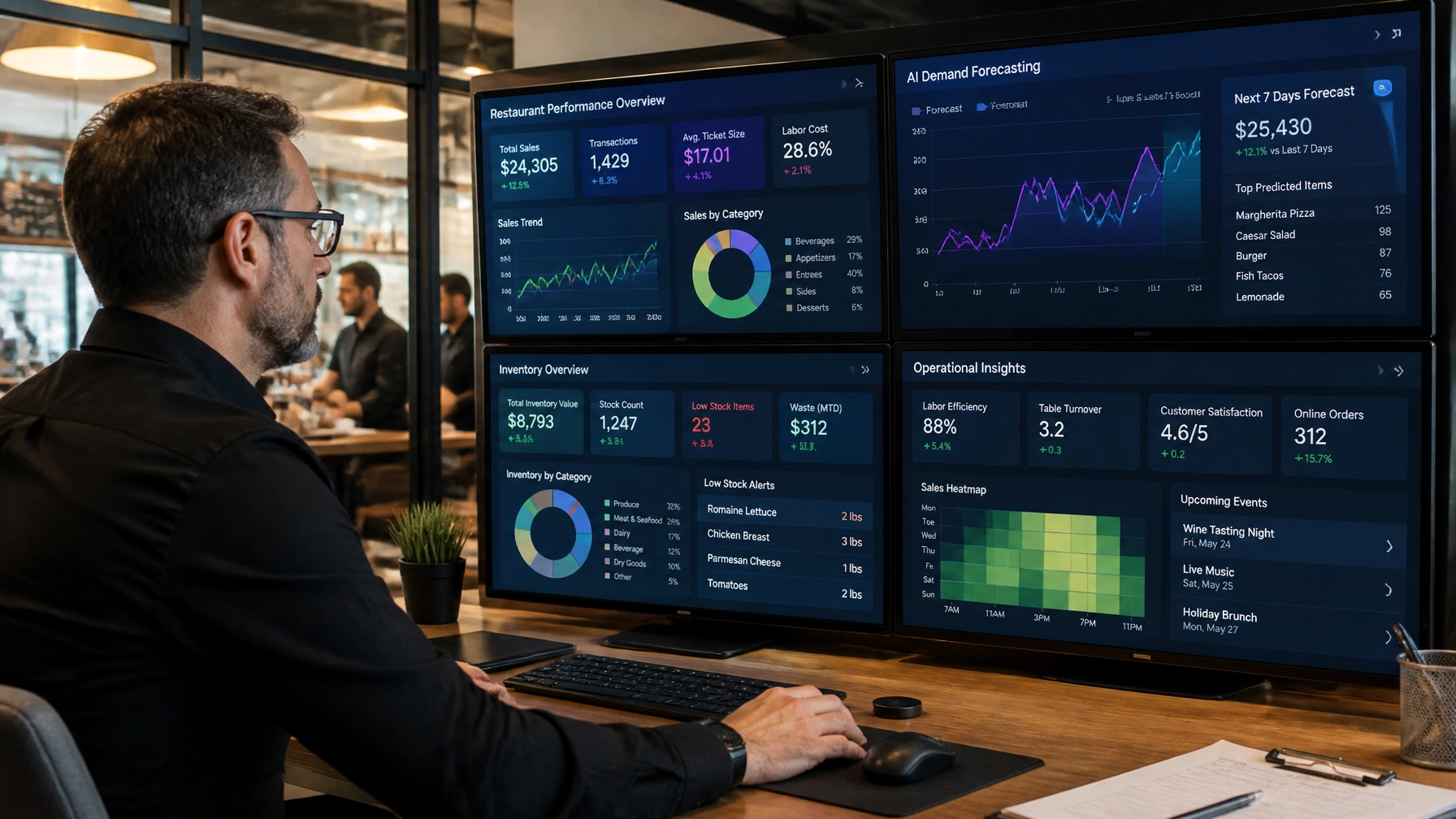
Let’s be honest for a second. When was the last time you logged into every single software subscription your restaurant is currently paying for? If you hesitated, you are not alone.
By 2026, the modern hospitality landscape has transformed into a bewildering digital maze. What started as a promise to make restaurant operations easier has morphed into a sprawling monster of SaaS bloat. Today, the average independent restaurant and multi-unit group is quietly hemorrhaging between $15,000 and $40,000 every single year on disconnected software tools that staff barely know how to use, let alone integrate.
At Restaurant Revenue Incubator, we sit down with operators every week who are drowning in subscription fees while their prime margins get squeezed tighter than a Friday night line cook's station. But here is the good news: 2026 is also the year AI and intelligent automation finally stop being Silicon Valley buzzwords and start acting as the ultimate financial rescue raft.
Let’s examine how your tech stack got so bloated, how AI is rewriting the rules, and how you can reclaim your profitability without losing your sanity.
1. The 2026 Reality: The 12-Tool Trap and the "Stack of Shame"
Picture this: It’s a hectic Tuesday afternoon. Your general manager is frantically jumping between 15 different browser tabs. There’s the cloud POS, the kitchen display system, the third-party delivery aggregator manager, the inventory tracker, three separate staff scheduling apps because half the front-of-house refused to download the first two, a digital tipping platform, two distinct loyalty marketing tools, an email newsletter software you haven’t sent a blast from since Thanksgiving, a review management dashboard, and, of course, QuickBooks.

We call this the "Stack of Shame."
It’s the digital junk drawer of the hospitality industry. Operators accumulate these point solutions one by one during moments of pandemic panic or peak hiring crises. "Oh, this little $79/month widget will solve our scheduling headache!" "And this $149/month AI review responder will magically boost our Yelp ratings!" Before you know it, you’re paying for 12 tools that operate in absolute silos, refusing to talk to each other, forcing your management team to manually export CSV files just to figure out if you made money on brunch.
Beyond the sheer financial drain ($15k–$40k/yr in dead weight), this fragmentation creates massive operational friction. When your tech doesn't talk, your people have to translate. That means burned-out managers spending two hours in the back office doing data entry instead of coaching staff on the floor: hurting your People bottom line right alongside your Profit.
2. How AI & Automation Are Actually Moving the Needle in 2026
So, should you throw your tablets out the back door and go back to pencil and paper? Absolutely not. The problem isn’t technology; it’s uncoordinated technology.
When leveraged correctly, modern AI and automation deliver quantifiable, game-changing operational impact. Across our client network, we track real, measurable breakthroughs:
- 30% Reduction in Labor-Related Admin: AI-powered predictive scheduling automatically aligns shift rosters with historical sales data, local weather forecasts, and upcoming neighborhood events. Managers stop guessing who to cut on a rainy Wednesday, saving hours of administrative spreadsheet wrangling.
- 20% Improvement in Inventory Accuracy: Smart inventory tools paired with POS item-level tracking flag variance and waste in real-time. This not only protects food cost percentages but also champions our Planet bottom line by drastically curbing food waste: a massive win for sustainable operations.
- 15% Boost to Average Check Size: AI-driven upselling prompts integrated into digital ordering and Kiosk systems analyze guest ordering patterns on the fly, seamlessly suggesting beverage pairings or premium add-ons without annoying the customer or slowing down service.
3. The Three-Tier Optimization Framework: Cut, Consolidate, Automate

Getting your financial health back on track doesn't require complex engineering. It requires a disciplined, three-step framework that we deploy with every restaurant group we partner with:
Tier 1: Cut (The Ruthless Audit)
List every active vendor contract your restaurant holds. If a tool hasn’t been actively used by your team in the last 30 days: or if its data output simply feeds another spreadsheet you rarely look at: cancel it. Eliminate the redundancy immediately.
Tier 2: Consolidate (The Single Source of Truth)
Stop buying point solutions. Modern cloud POS systems now handle inventory, basic CRM, gift cards, and kitchen display integration natively or through robust, native-feeling extensions. Shrink your vendor list from 12 down to an essential core of 3 to 4 tightly integrated platforms.
Tier 3: Automate (Let AI Do the Heavy Lifting)
Once your data foundation is clean and consolidated, deploy high-ROI automation:
- Automated review responses that keep local SEO glowing while saving hours of manual typing.
- Automated demand forecasting that tells your kitchen exactly how much prep to do based on real-time data.
- POS-connected email/SMS workflows that trigger targeted win-back campaigns for lapsed guests automatically.
4. Case Study: How a 5-Unit Group Saved $68,000 and Boosted Margins by 3 Points
To see what this looks like in practice, consider our composite case study of Rustica Kitchen & Bar, a 5-unit casual dining group we partnered with last quarter.
When Rustica came to us, they were spending nearly $42,000 annually across 14 distinct software subscriptions. Their general managers were spending 12 hours a week manually reconciling invoices and labor hours across incompatible systems. Food waste was creeping up, and prime margins had dipped below healthy industry standards.

We executed our zero-upfront-cost tech stack overhaul:
- The Purge: We cut 8 redundant marketing and reporting apps, instantly saving $22,000 a year in SaaS fees.
- Consolidation: We unified their POS, inventory, and labor management onto a single, cohesive data architecture.
- AI Integration: We turned on predictive labor scheduling and automated inventory tracking.
The Results after 90 days:
- Total tech spend dropped by 40%.
- Managerial administrative hours decreased by 65%, freeing them up to focus on hospitality and staff training (People).
- Food waste plummeted by 18% (Planet).
- Net operating margins expanded by a full 3 percentage points (Profit).
5. How We Do This For You : Risk-Free
At Restaurant Revenue Incubator, we know that restaurant operators don't have extra capital to gamble on expensive consulting retainers or unproven software audits. That’s why our approach is entirely different.
We don't charge upfront retainers. We review your entire tech stack and P&L at absolutely no cost, delivering actionable insights from day one. If you choose to move forward with our growth and operations solutions, we only take a share of the actual savings and results we create together. Our 50+ combined years of industry leadership mean we speak your language: whether you're a single-unit concept looking to tighten your grip on costs or a growing group scaling into a regional powerhouse.
Ready to Stop Bleeding Cash?
Your restaurant's technology should be driving your business forward, not acting as an expensive anchor dragging down your bottom line.
Stop paying for tools that don't talk to each other. We'll audit your entire tech stack : at no cost : and show you exactly where to cut, consolidate, and automate.
Ready to turn your tech spend into profit? Let's talk today.