Restaurant Technology · Uncategorized
Why the Triple Bottom Line Will Change the Way You Run Your Kitchen Operations
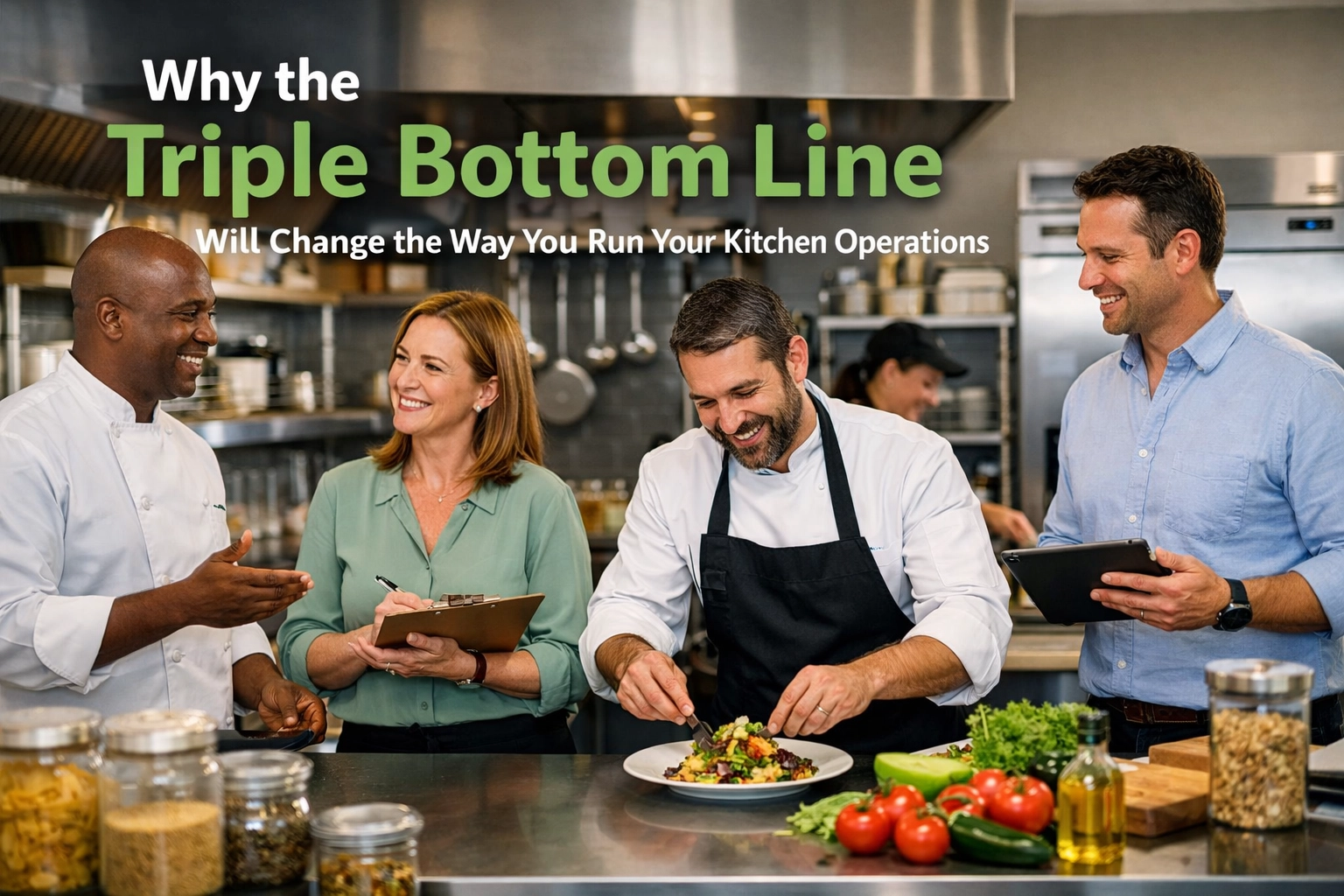
If you’ve spent more than five minutes on a busy Friday night line, you know the only “bottom line” that usually matters is whether the tickets have stopped printing or if the grease trap is about to overflow. In the heat of the moment, “sustainability” sounds like something for people with desk jobs and clean aprons.
But here’s the reality: the old way of running a kitchen, squeezing every penny out of labor and buying the cheapest, most energy-guzzling equipment you can find, is a recipe for a slow, expensive death.
At Restaurant Revenue Incubator, we see it every day. Operators come to us because their margins are thinner than a poorly sliced carpaccio. The solution isn't just "cutting costs." It’s shifting to the Triple Bottom Line (TBL).
The TBL is a framework that moves beyond the single focus of profit and incorporates two other vital pillars: People and Planet. You might think, "Robert, I’m trying to pay rent, not save the polar bears." I hear you. But in 2026, being green isn't just about the environment; it’s about greening your bank account.
Profit: The Bottom Line That Still Matters (But Better)
Let’s start with the one we all know: Profit. In a TBL model, we aren't just looking at the P&L at the end of the month; we are looking at strategic cost management.
Most restaurants react to supply chain instability by panicking. When egg prices spike, they cry. When beef prices soar, they pull it off the menu. A TBL-focused kitchen addresses this through strategic partnerships. Instead of being at the mercy of the weekly market, savvy operators are joining buying cooperatives or locking in long-term contracts with local vendors. This doesn’t just support the community; it gives you a predictable food budget.
And let’s talk about your equipment. That 20-year-old range you’re keeping alive with duct tape and prayers? It’s costing you a fortune. Modern, programmable induction ranges or energy-efficient warming cabinets aren’t just "fancy gadgets." They reduce labor needs because they’re faster and more consistent, and they prevent food waste by holding temperatures perfectly.

If the thought of the upfront cost for new tech makes you sweat, remember that we specialize in "No Upfront Cost" turnaround services. We help you find the waste, fix the flow, and implement the tech without you having to dig into a capital reserve that might not even exist right now.
Planet: Efficiency is the New Discount
The "Planet" part of the Triple Bottom Line is where most restaurateurs leave money on the table. Literally.
Energy efficiency and waste reduction are the secret weapons of the modern kitchen. If you’re still using equipment that takes 45 minutes to preheat and stays on "high" all night regardless of whether there's a pan on it, you’re essentially burning cash to heat the room.
Research shows that upgrading to equipment with pan-sensing technology and instant-on capabilities can reduce energy usage by 15-30 minutes per cycle. Over a year, that’s thousands of dollars back in your pocket. It’s not just about being "eco-friendly"; it’s about stop-paying-the-utility-company-more-than-your-landlord.
Then there’s food waste. The average restaurant loses 4% to 10% of its food before it even reaches a plate. By implementing TBL practices, like tracking waste metrics and sourcing locally, you reduce transportation emissions (good for the planet) and ensure your ingredients are fresher (good for the customer). Fresh food lasts longer and tastes better, which means fewer comps and more repeat business.
While you're rethinking your footprint, you might want to look at your brand's physical presence too. Even your merch can reflect this shift. Check out our Logo Collection or grab a long-sleeve tee that says your brand cares about quality.
People: Turning "Staff" into "Assets"
The third "P" is People. In an industry with turnover rates that would make a revolving door dizzy, treating labor as a budget line item to be slashed is a losing game.

A Triple Bottom Line approach views labor as an investment. We track metrics like "meals per labor hour" not to see who we can fire, but to see how we can optimize. When you combine automation and high-efficiency equipment, your staff spends less time on repetitive, soul-crushing tasks and more time on high-value work.
Think about it: would you rather have your best cook standing over a temperamental fryer all night, or using an automated system that allows them to focus on plating and prep quality?
When you invest in your people, through better tech, strategic scheduling, and a commitment to their growth, you reduce turnover. The cost of hiring and training a new line cook in 2026 is astronomical. Keeping the one you have by providing a better work environment (and maybe some sweet branded gear) is just good business.
A TBL kitchen also strengthens ties with the community. Sourcing from local farms and meat markets doesn't just look good on a chalkboard menu; it builds a loyal local fan base that will support you when the economy gets shaky.
The "No Upfront Cost" Advantage
I get it. This sounds like a lot of work. You’re already working 70 hours a week, and now I’m telling you to rethink your entire supply chain and equipment stack.
This is exactly why Restaurant Revenue Incubator exists. We aren't consultants who hand you a 50-page PDF and a bill. We are partners. Our "No Upfront Cost" model means we work with you to implement these Triple Bottom Line changes. We find the savings in your energy bills, the efficiency in your labor, and the profit in your waste.
We win when you win.

Real-World Data: Does It Actually Work?
Let’s look at the numbers. Kitchens that have fully embraced TBL principles aren't just "surviving", they are scaling.
- Energy: Transitioning to Energy Star-rated appliances can reduce energy bills by 10% to 30%.
- Labor: Strategic scheduling and tech integration can improve meals-per-labor-hour efficiency by up to 15%.
- Waste: Comprehensive waste tracking can reduce food costs by 2% to 6% almost immediately.
If your restaurant does $1 million in sales, that 2% food cost saving is $20,000 straight to your pocket. That’s more than enough for a new equipment lease or finally getting that hoodie with a logo you've been eyeing for the team.
How to Start (Without Losing Your Mind)
You don't have to flip your entire operation overnight. Start small:
- Conduct an Audit: Look at your utility bills and your trash cans. What’s going out that shouldn’t be?
- Talk to Your Team: Ask your chefs where the bottlenecks are. Usually, it’s a piece of equipment that doesn't work or a process that’s redundant.
- Localize One Ingredient: Pick one high-volume item and find a local source. See how it affects quality and delivery reliability.
- Call Us: Seriously. If you’re tired of running in circles, let’s talk about a turnaround.
The Triple Bottom Line isn't a trend; it's the future of the hospitality industry. The operators who ignore it will continue to struggle with rising costs and labor shortages. The operators who embrace it will find themselves with more profit, a more loyal team, and a business that actually contributes to the world around it.
Running a kitchen is hard enough. Don't make it harder by sticking to a 20th-century business model. It's time to incubate some real revenue.

Want to stay updated on the latest in restaurant tech and leadership? Keep an eye on our blog for daily deep-dives into how to make your restaurant the powerhouse it was meant to be. Whether it's AI-driven scheduling or the latest in induction cooking, we’ve got you covered.
And hey, if you're going to change the world of hospitality, you might as well look good doing it. Grab a beanie for those early morning deliveries or a v-neck t-shirt for the post-shift debrief.
The kitchen of the future is green, efficient, and profitable. Are you coming with us?