Restaurant Technology · Uncategorized
Why Eco-Friendly Kitchens Are Actually High-Profit Powerhouses (If You Do This)
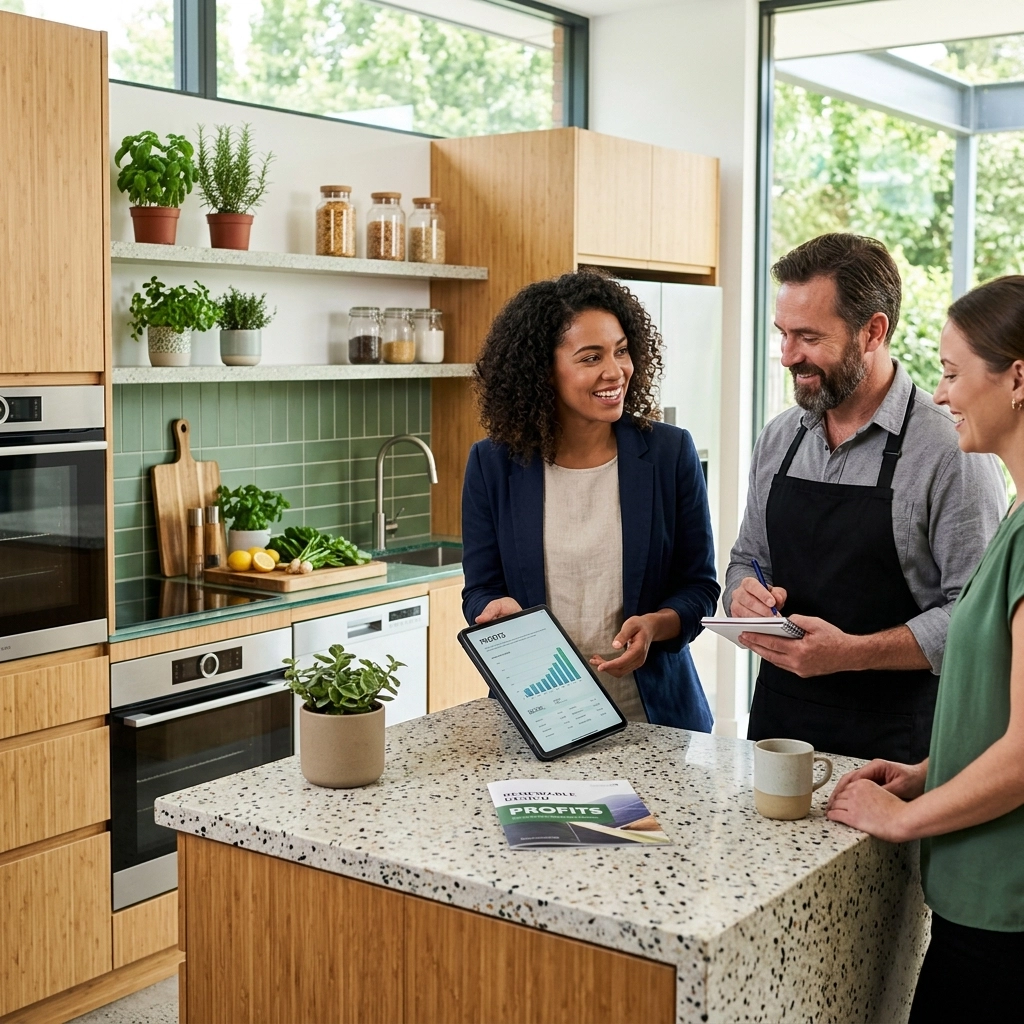
For decades, the word "eco-friendly" in the restaurant industry was treated like a luxury item, something you did if you had a massive marketing budget or a guilty conscience. Most operators looked at high-efficiency ovens and compostable packaging and thought, "That’s nice for the planet, but my P&L is already bleeding out."
Well, it’s 2026, and the script has flipped. If you’re still viewing sustainability as a "cost center," you’re essentially leaving a stack of $100 bills on a hot grill and watching them curl into ash.
At Restaurant Revenue Incubator, we specialize in the Triple Bottom Line: People, Planet, and Profit. The reality is that an eco-friendly kitchen isn’t just a "feel-good" PR move; it’s a high-profit powerhouse. But: and this is a big "but": it only works if you do it right.
Let’s dive into how going green can actually make your bank account see a lot more green.
The Myth of the "Green Tax"
The biggest hurdle for most restaurant owners is the "Green Tax" myth: the idea that anything sustainable must inherently cost more. While a high-efficiency walk-in cooler might have a higher sticker price than a used unit from 1998 that sounds like a 747 taking off, the math tells a different story.
In a typical restaurant, energy costs account for 3% to 5% of total operating costs. That might sound small until you realize that your profit margin is likely only 6% to 10%. If you can cut your energy usage by 30%: which is easily achievable with modern tech: you aren't just saving pennies; you’re effectively increasing your bottom-line profit by nearly 20%.
The Triple Bottom Line Lens
- People: A cooler, more efficient kitchen leads to less staff burnout.
- Planet: Obviously, less carbon, less waste.
- Profit: Lower utility bills, less food waste, and higher customer loyalty.

1. Energy: Stop Cooking the Air
Most commercial kitchens are surprisingly good at one thing: heating up the air around the food rather than the food itself. Traditional gas ranges are only about 40% efficient. The rest of that heat goes into the kitchen, which your HVAC system then has to work overtime to remove. It’s a double-whammy of wasted cash.
The "If You Do This" Move: Switch to Induction.
Induction cooking is roughly 90% efficient. There is no open flame, and the surface stays cool to the touch. This doesn't just save on the gas bill; it slashes your cooling costs.
Furthermore, smart sensors and AI-driven vent hoods (the kind we often implement in our revenue optimization strategies) can sense when there’s smoke or heat and adjust fan speeds accordingly. Running a vent hood at 100% when you’re just chopping onions is like burning money in a high-speed fan.
2. The High Cost of Garbage
Food waste is the silent killer of restaurant margins. Estimates suggest that 4% to 10% of food purchased by restaurants never reaches a guest's plate. If you’re doing $2 million in sales, that’s potentially $100,000 of inventory going into the dumpster every year.
The "If You Do This" Move: Implement AI Waste Tracking.
Modern restaurant tech now includes cameras and scales that sit over your trash cans. These systems use AI to identify what is being thrown away. Is it prep waste? Is it plate waste because your portions are too large?
When you see a data-driven report that shows you’ve thrown away $400 worth of wilted cilantro in a month, you don't just "go green": you fix your ordering. This is where cost reduction meets environmental stewardship.

3. Leadership & The Culture of Efficiency
Sustainability isn't a piece of equipment; it’s a culture. We’ve seen successful operators: the kind we spotlight in our leadership series: who turn "Eco-Friendly" into a competitive advantage for hiring.
Gen Z and Millennial workers (who now make up the bulk of the hospitality workforce) are far more likely to stay at a job where they feel the company values match their own. In an industry where turnover costs can exceed $5,000 per employee, retention is a massive profit driver.
The "If You Do This" Move: Incentivize the Team.
Don’t just tell your staff to turn off the burners. Give them a stake in the savings. We’ve seen operators who take 10% of the monthly utility savings and put it into a staff party or bonus pool. Suddenly, everyone is a "Green Warrior" because it benefits their wallet, too.
4. Growth & Scaling: The "Green" Brand Premium
Customers aren't just looking for good food anymore; they’re looking for a brand they can trust. A study by Nielsen found that 73% of consumers are willing to change their consumption habits to reduce their environmental impact.
If you are scaling a concept, building "Eco-Friendly" into the DNA of the brand allows you to command a premium price. People will pay an extra $1.50 for a burger if they know the beef is sustainably sourced and the packaging won't sit in a landfill for 500 years.

5. Restaurant Tech: The Automation Edge
The modern eco-friendly kitchen is an automated one. We’re talking about:
- Smart Refrigeration: Sensors that alert you the second a walk-in door is left ajar, preventing $5,000 in food spoilage.
- Automated Inventory: Systems that sync with your POS to ensure you aren’t over-ordering perishables.
- Water Filtration: High-efficiency dishwashers that use 50% less water and chemicals.
By integrating these into your tech stack, you remove the human error factor. You aren't relying on a tired line cook to remember to flip a switch; the building does it for you.
How to Get There With "No Upfront Cost"
Now, here is the catch. Most of this equipment: the AI waste trackers, the induction suites, the smart HVAC: requires capital. And if you’re currently struggling with margins, "spending money to save money" feels like a cruel joke.
This is where Restaurant Revenue Incubator steps in. We believe that a restaurant’s potential shouldn't be limited by its current cash flow. We offer turnaround services with no upfront cost.
We look at your operation, identify the "invisible leaks" where you’re losing money, and implement the systems, tech, and training needed to plug them. We win when you win. By modernizing your kitchen and adopting a Triple Bottom Line approach, we turn your "eco-friendly" goals into a high-profit reality.
Conclusion: The Profit is in the Practice
The "Green Revolution" in the restaurant world isn't about saving the whales (though that’s a nice perk); it’s about saving your business. An inefficient kitchen is a dying kitchen. An eco-friendly kitchen is a streamlined, data-driven, high-margin machine.
If you’re ready to stop cooking your profit and start scaling your brand, let’s talk. Visit our services page to see how we can help you transition into a high-profit powerhouse without the upfront financial burden.

Want to learn more? Check out these resources:
- Our Guide to Cost Reduction
- How we Drive New Customers Through Sustainable Branding
- About the Restaurant Revenue Incubator Mission
Ready to transform your kitchen? Contact us today and let’s build something sustainable( together.)