Restaurant Technology · Uncategorized
The Ultimate Guide to Triple Bottom Line Restaurants: How to Balance People, Planet, and Profit
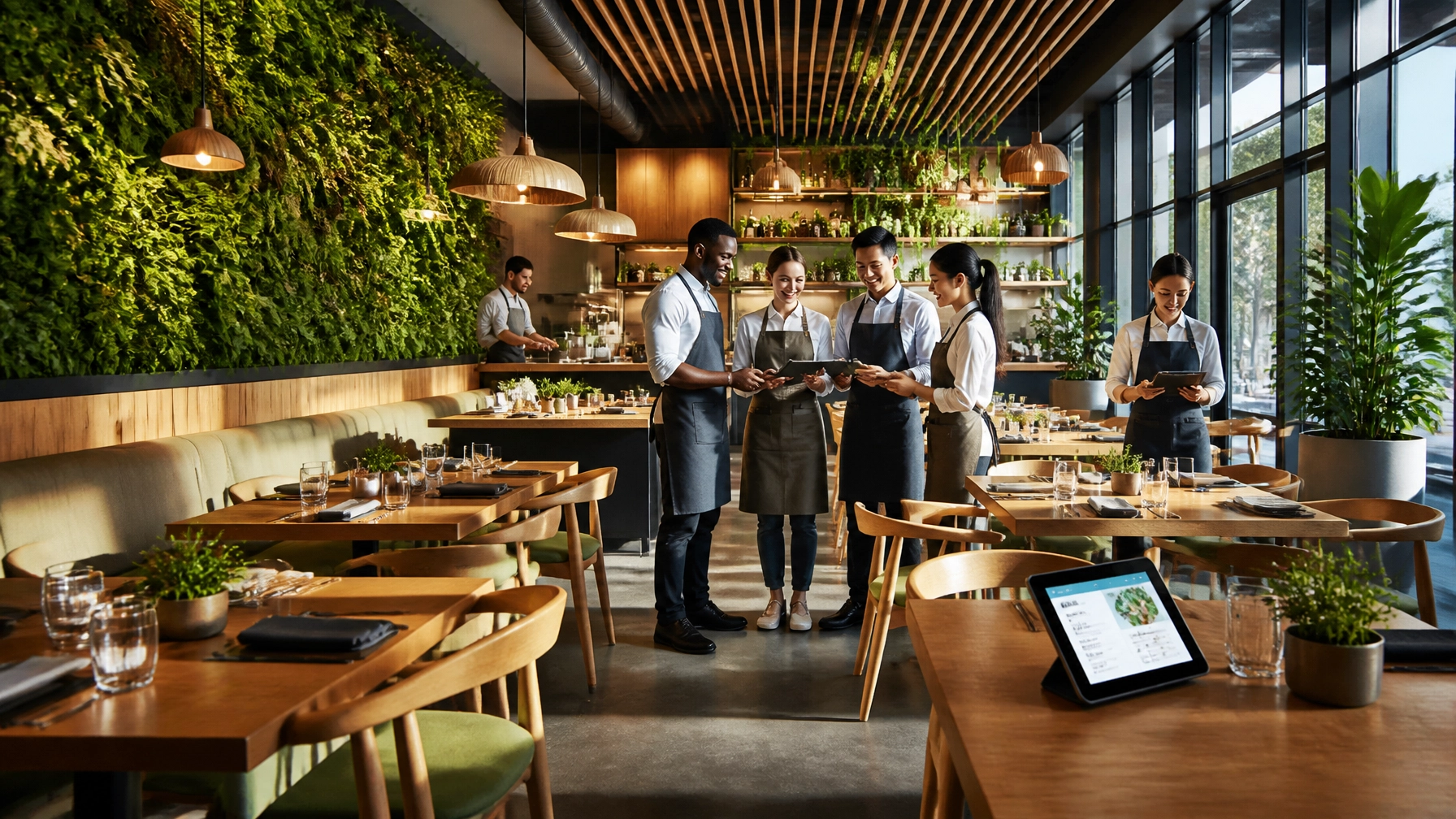
Let’s be honest: the traditional restaurant model is a bit of a nightmare. You’re working on margins thinner than a single-ply napkin, your staff turnover looks like a revolving door on fast-forward, and the amount of food waste in your dumpster could probably feed a small moon.
For a long time, the industry mantra was "Profit at all costs." But in 2026, that "at all costs" part is starting to cost way too much.
Enter the Triple Bottom Line (TBL). It sounds like something a corporate accountant would whisper in a dark alley, but it’s actually the most powerful growth framework for modern operators. TBL shifts the focus from a single financial bottom line to three: People, Planet, and Profit.
And here’s the kicker: it’s not just about "feeling good." It’s about making significantly more money. According to a Harvard Business Review analysis, companies using a TBL approach saw an average annual ROI of 13.5%, compared to just 9.1% for traditional companies.
At Restaurant Revenue Incubator, we specialize in turning struggling concepts into high-growth machines. Today, we’re doing a deep dive into how you can balance the holy trinity of restaurant success without losing your mind: or your shirt.
1. Profit: The Engine That Drives Everything

Let’s get one thing straight: if you aren't profitable, you can't help the planet, and you definitely can't pay your people. Profit is the fuel. But in the TBL world, profit isn't just about how much you rake in: it's about how much you stop leaking.
The 3% Revenue Leak
Did you know that up to 3% of your annual revenue is likely being lost to inventory write-offs? That’s expired stock, over-ordering, and simple spoilage. For a restaurant doing $2 million a year, that’s $60,000 literally rotting in your walk-in.
By implementing smarter inventory tech and real-time analytics, you can spot these risks before they become "dumpster delicacies." This is where our tech stack leadership comes in. We review your P&L and tech setup for free, identifying where you're bleeding cash from day one.
Efficient Scaling
When you scale a sustainable model, your efficiencies multiply. Whether you're a single unit looking to expand or a group scaling into a franchise, the TBL approach ensures your growth is built on a foundation of low waste and high efficiency.
2. Planet: Turning Green into Gold

Sustainability used to be a luxury. Now, it’s a cost-saving strategy. If you think "going green" is just about expensive organic sprouts, you’re missing the forest for the (very expensive) trees.
Waste is a Line Item
A zero-waste audit can lead to massive savings. One study showed that optimizing waste systems can lead to a 22% reduction in annual waste management costs. That’s money back in your pocket just for being more organized with your cardboard and composting.
The Energy Siphon
Your kitchen is a heat-breathing monster. By switching to energy-efficient appliances and automated controls: like ovens that idle during slow periods: you aren't just helping the ozone; you're slashing your utility bills.
Customer Demand
The data doesn’t lie: 60% of consumers prefer restaurants that recycle, and over half are willing to pay a 10% premium to eat at a sustainable establishment. If you aren't shouting about your green initiatives on your website or shop page, you’re leaving money on the table.
3. People: Your Secret Growth Weapon

In an industry where the labor market is tighter than a pair of skinny jeans after Thanksgiving, your "People" pillar is your greatest competitive advantage.
Retention = Revenue
The cost of hiring and training a new line cook can range from $2,000 to $5,000. If you’re losing staff every three months, you’re essentially lighting a pile of cash on fire in the parking lot.
A TBL focus means investing in your team. Better wages, a safer work environment, and clear career paths lead to engaged workers. Engaged workers provide better service, which creates loyal customers. And loyal customers? They drive your TBL performance into the stratosphere.
Community Impact
Being a "Triple Bottom Line" restaurant means being a pillar of your community. Local sourcing isn't just a buzzword; it builds a resilient supply chain and creates a brand story that people actually care about. When you hire locally and support local vendors, the community supports you back.
4. Scaling the Sustainable Way (Without the Upfront Cost)
You might be thinking, "Penny, this sounds great, but I don't have $50k to overhaul my kitchen and hire a sustainability consultant."
We hear you. And that’s exactly why Restaurant Revenue Incubator exists.
We don't do retainers. We don't do upfront costs. We operate on a risk-free, results-oriented model. We provide:
- Capital via F&B Credits: Through our partner, we provide funding in exchange for food and beverage credits. No interest, no equity, no dilution. It’s the ultimate way to fund your growth without giving up your soul.
- 2-Week Turnarounds: Our team has over 50 years of combined experience. We can review your tech stack and P&Ls and deliver a turnaround plan in under two weeks: for free.
- Tech & Ops Optimization: We’ll help you implement the AI and automation tools needed to hit those TBL goals without adding to your workload.
Whether you're looking to scale your current concept or create a new franchise powerhouse, balancing People, Planet, and Profit is the only way to build a brand that lasts.
The Challenge
I challenge you to look at your P&L this week. Find one "Planet" waste item (like food spoilage) and one "People" cost (like turnover). Imagine if you could cut both by 20%. That’s not just "green" thinking: that’s just good business.
Ready to see how much your restaurant could really be making? Let’s talk. We’ll review your business for free and show you exactly where the growth is hidden.