Restaurant Technology · Uncategorized
The $14 Return: Why Sustainability Is the Highest-ROI Investment Most Restaurants Are Ignoring in 2026
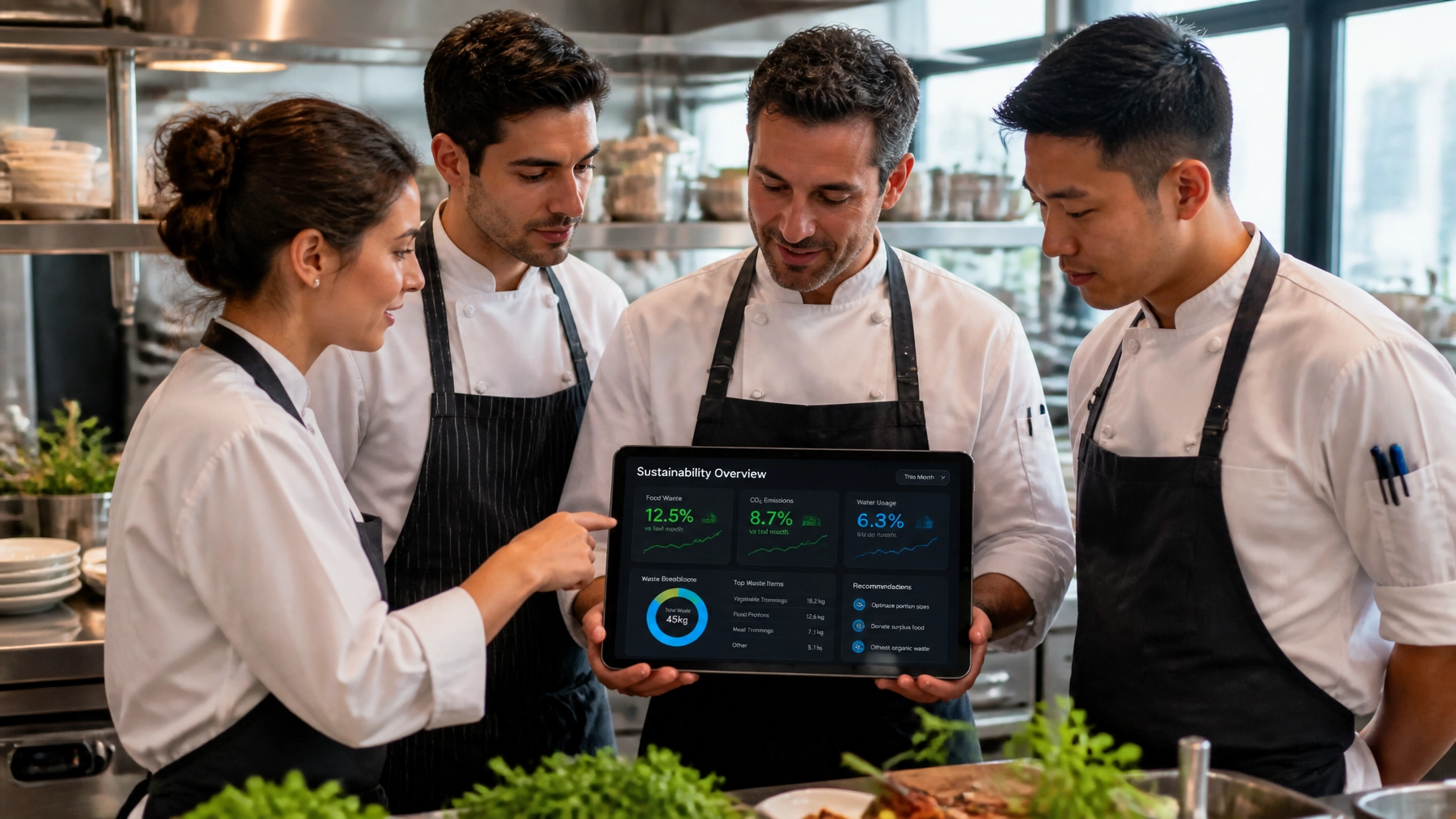
Let’s be honest for a second. When you hear the word "sustainability" in the restaurant business, what’s your immediate reaction? Do you picture a guy in linen trousers lecturing you about compostable stirrers, or do you imagine an expensive line item on your P&L that you simply don’t have room for right now?
If you rolled your eyes, you’re in good company. For decades, green initiatives in hospitality felt like a luxury tax: something you adopted if you ran a Michelin-starred farm-to-table sanctuary in Sonoma, but completely irrelevant if you were busy trying to survive Friday night rush at a high-volume concept on a razor-thin margin.
Here is the plot twist for 2026: Sustainability isn't just about saving polar bears anymore; it’s about saving your bottom line.
In fact, data from across the hospitality sector proves that embracing the Triple Bottom Line (People, Planet, Profit) is quietly becoming the highest-ROI investment in the entire culinary playbook. While your competitors are busy slashing portion sizes or wrestling with fluctuating commodity prices, operators who lean into smart sustainability are unlocking eye-popping financial returns.
Grab your weekend coffee. Let’s look at the numbers, examine the top restaurant technology trends of 2026, and explore why ignoring sustainability is the most expensive mistake an operator can make this year.
The Brutal Math of Restaurant Margins
Let's start with a humbling reality check. In the traditional full-service restaurant sector, pre-tax profit margins hover around an agonizing 2.8%.
Think about that. For every single dollar that comes through your doors, barely three pennies remain after rent, labor, food costs, and utilities. If a disgruntled customer sends back a medium-rare steak, your kitchen has to sell several more plates just to break even on that single ticket.
Because margins are microscopic, waste is catastrophic. Yet, food surplus quietly gobbles up roughly 14% of total foodservice sales. That is a mountain of cash literally rolling off prep stations and into the dumpster every week.
This is where the Triple Bottom Line framework changes the game. When you optimize operations for People, Planet, and Profit simultaneously, you stop plugging leaks with Band-Aids and start engineering permanent financial resilience.

The $14 Return: Where the Magic Happens
Let’s talk about the headline-grabbing statistic that is turning savvy restaurateurs’ heads in 2026: Every $1 invested in food waste reduction generates approximately $14 in returns.
Read that again. A 1,400% return on investment makes venture capital look like a savings bond. How is that possible? Because when you eliminate waste, you aren't just saving the cost of the discarded ingredient: you are eliminating the labor required to prep it, the energy required to cook or refrigerate it, and the disposal fees required to haul it away.
According to the latest Winnow Impact Report, AI-powered kitchen waste systems have saved the hospitality industry over $100 million in food costs. These smart optical scales and computer-vision tools track every scrap tossed into the bin, identifying patterns of over-production, spoilage, and trim waste in real time.
The results speak for themselves:
- 25% to 60% reductions in food waste within months of implementation.
- Full payback on technology investments achieved in as little as 2 months.
- Overall margin improvements of 3% to 7% for operators fully committed to TBL practices.
When your baseline net profit margin is 2.8%, boosting your margins by an extra 3 to 7 percentage points doesn't just help: it completely reinvents your business model.
Powering Down: The Hidden Goldmine in Your Utility Closet
Food waste is only half the battle. Let’s talk about your utility room: that dark, humming space you only enter when the walk-in freezer starts making a ominous buzzing sound.
Energy costs typically account for 3% to 5% of total restaurant revenue. For a busy concept doing $2M a year, that’s up to $100,000 burned on electricity and gas alone.
The good news? You don’t have to cook in the dark to fix this.
Modern restaurant technology trends for 2026 heavily feature smart IoT monitoring systems. Implementing intelligent energy monitoring can cut utility overhead by 21% or more simply by optimizing equipment runtime, automating HVAC setbacks during off-hours, and preventing compressors from fighting open doors. When paired with targeted ENERGY STAR upgrades, restaurants regularly see total utility cost reductions of 10% to 40%.

The Diner Has Spoken: The "People" and "Planet" Payoff
Of course, sustainability isn't just about P&L spreadsheets and smart scales. It fundamentally touches your guests and your team.
Consumer sentiment has shifted dramatically. Market research indicates that 68% to 73% of diners now actively factor sustainability practices into their choice of where to eat. Today’s diners: especially Gen Z and Millennials: vote with their wallets. They want to know their Saturday night dinner isn't leaving a crater in the local ecosystem.
Furthermore, the "People" pillar of TBL pays massive dividends in kitchen culture. High employee turnover is the silent killer of restaurant profits. When you install streamlined, high-tech systems that reduce chaos, eliminate frantic over-prepping, and foster an organized, purpose-driven kitchen culture, staff morale skyrockets. Happier line cooks stay longer, reducing the crushing recruitment and training costs that plague the industry.
Scaling Up Without Selling Your Soul
Implementing these operational upgrades requires more than good intentions: it requires expert restaurant operations support and access to cutting-edge restaurant growth strategies. But if your cash flow is tight, how do you invest in the tech and systems needed to turn things around?
This is where traditional funding models fail independent operators. Taking on high-interest loans or giving away equity just to fund operational upgrades is a fast track to burnout.
At Restaurant Revenue Incubator, we believe there is a better way. We specialize in comprehensive restaurant turnaround services built on a completely risk-free, zero-upfront-cost approach. Through our alternative funding partners, capital is provided in exchange for food & beverage credits: meaning no interest, no equity, and no dilution.
Even better? We review your tech stack and P&Ls at no cost and deliver actionable insights from day one. We only succeed when you succeed, sharing strictly in the tangible financial results we create together.

Ready to Turn Waste Into Wealth?
Sustainability in 2026 isn't a PR stunt; it’s the ultimate financial hack for an industry that has operated on thin ice for far too long. Whether you're a single-unit concept looking to tighten your margins or an expanding group building out your franchise roadmap, mastering the Triple Bottom Line is your ticket to long-term profitability.
You don't have to figure it all out alone, and you certainly don't need to empty your bank account to get started.
👉 Visit Restaurant Revenue Incubator today to schedule your free P&L and tech stack review. Let’s turn your operational blind spots into your greatest competitive advantage: with zero upfront cost and absolute peace of mind.