Restaurant Technology · Uncategorized
Sustainable Kitchen Operations: Why the Triple Bottom Line Is the Only Way to Survive Tight Margins
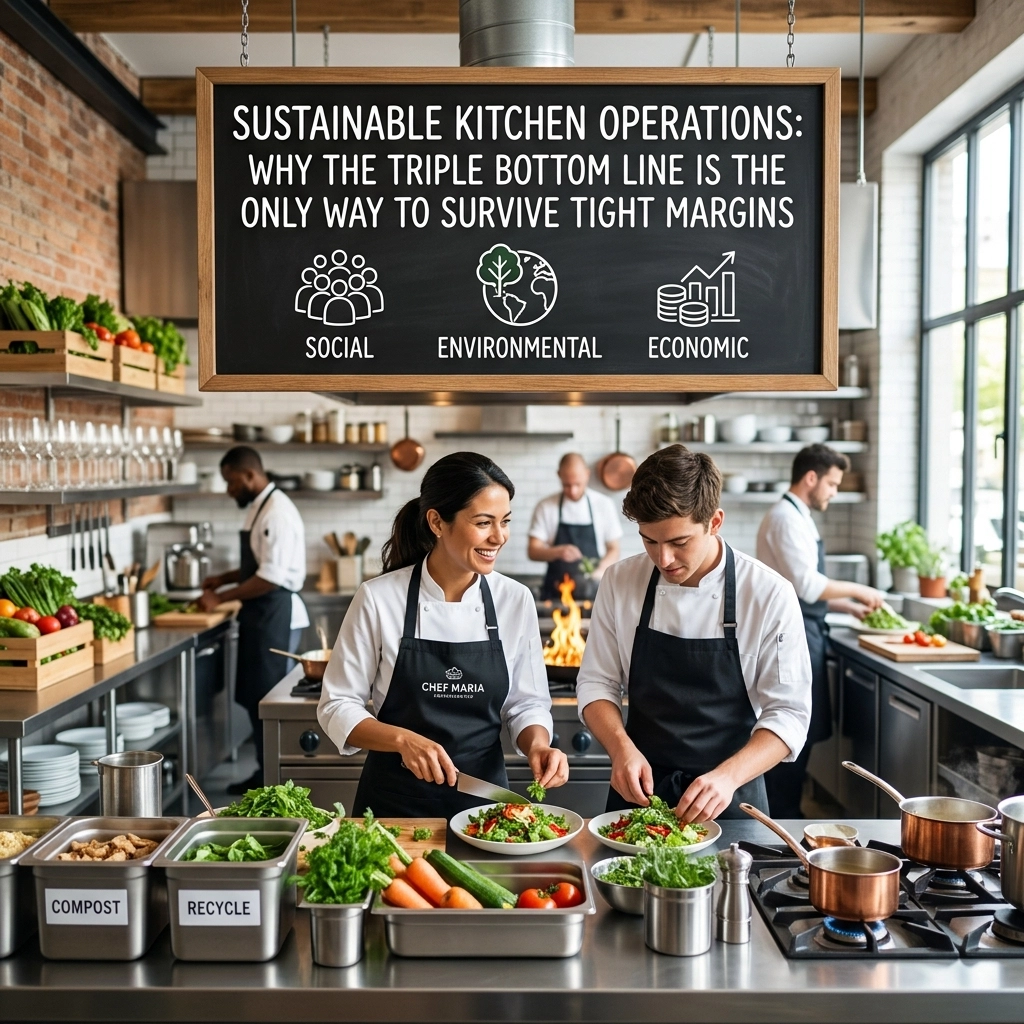
It’s April 2026, and if you’re running a restaurant, you already know the drill. Rent is up, labor is tighter than a pair of pre-shrunk skinny jeans, and food costs have a mind of their own. For years, "sustainability" was treated like a luxury item: a shiny "nice-to-have" sticker you’d put on your menu to make the local Pilates enthusiasts feel better about their avocado toast.
But the game has changed. We are no longer in an era where you can choose between being profitable and being green. In today’s market, if you aren't green, you're likely in the red.
The Triple Bottom Line (TBL): Profit, People, and Planet: isn't just a buzzword for corporate social responsibility reports. It is the most effective framework for surviving the razor-thin margins of the modern hospitality industry. At Restaurant Revenue Incubator, we see it every day: the operators who embrace sustainability don't just "save the world"; they save their businesses.
Profit: The "Green" That Actually Matters
Let’s start with the "P" that keeps the lights on. Many owners shy away from sustainable upgrades because they fear the price tag. "Robert," they tell me, "I can barely afford to fix the ice machine; how am I supposed to buy an AI-powered smart oven?"
The irony is that the old, inefficient equipment is the very thing bleeding you dry. Research shows that energy-smart refrigerators, dishwashers, and stovetops can slash energy costs by up to 20%. In a business where a 3% net profit is considered "doing okay," a 20% drop in utility bills is life-changing.
Take the latest tech in combi ovens, for example. Systems like the Electrolux SkyLine use AI to optimize cooking cycles, reducing warming phases by 15-30 minutes. That isn't just "eco-friendly"; it's a direct attack on your overhead. If your kitchen is hotter than the surface of the sun because your ranges are constantly blasting heat, you aren't just making paninis: you’re melting your bank account through the HVAC system.
Integrating these efficiencies is part of a larger full tech stack leadership strategy. It’s about making sure your hardware is as smart as your software.

Planet: Waste is Just Inventory You Haven't Sold Yet
Food waste is the silent killer of restaurant margins. Every time a prep cook trims too much off a tenderloin or a server clears a plate with half a side dish left on it, you’re throwing money into the dumpster.
The Triple Bottom Line forces us to look at waste management as a profit-recovery mission. Better portion control and implementing "trash audits" can reveal shocking insights into where your money is going. We’ve seen operators repurpose vegetable scraps into house-made stocks or fermented garnishes, turning "trash" into a high-margin menu feature.
Then there’s the menu itself. 2025's biggest menu trends showed a massive shift toward plant-forward dining. Why? Because meat is expensive. Plant-based proteins have seen a 3,000% growth in sales over the last 15 years, and 22% of those purchases are driven specifically by environmental concerns. Shifting even 10% of your menu to high-quality, plant-based options can drastically lower your COGS (Cost of Goods Sold) while appealing to the Gen Z and Millennial diners who are now the primary drivers of restaurant revenue.
If you want to see how these shifts have evolved, look at how delivery apps changed restaurant profit margins forever. When you're losing 30% to a third-party app, you literally cannot afford to waste a single ounce of protein.
People: The Secret Weapon of Retention
The "People" part of the Triple Bottom Line is often the most overlooked. In 2026, the labor market isn't just about wages; it’s about culture. Employees: especially the younger cohort: want to work for companies that stand for something.
A restaurant that prioritizes sustainability often has a more engaged workforce. When your team sees you investing in a better work environment, reducing waste, and perhaps even donating leftovers to local food banks, they feel a sense of purpose. And purpose leads to retention.
High turnover is one of the single greatest hidden costs in our industry. Between recruiting, onboarding, and training, losing a single line cook can cost you thousands of dollars. By focusing on the "People" pillar: offering work-life balance in the restaurant industry: you’re not just being a "nice boss." You’re protecting your bottom line from the revolving door of hiring.

The Data Doesn't Lie
If you’re still skeptical, let’s look at the heavy hitters. Ken’s Foods, a major player in the food space, generates 7 million kilowatt hours of electricity annually just by repurposing methane emissions. That cut their greenhouse gases by 342 tons and saved them a fortune in energy procurement.
On the consumer side, look at why QSRs are winning Gen Z. It’s not just the speed; it’s the transparency. Brands like Amy’s Kitchen, which started with TBL principles back in the 80s, are now pulling in over $600 million in annual sales. Sustainability isn't a niche market anymore: it’s the market.
Even when things go wrong: and they will: a commitment to these values helps. When you have to handle Karen tales from the host stand, having a brand that is respected for its ethics gives you a "buffer of goodwill" that a faceless, purely profit-driven corporation just doesn't have.
The Upfront Cost Trap (And How We Fix It)
Here is the "catch" that keeps most restaurateurs up at night: "Sustainability sounds great, Robert, but I don't have $50,000 to overhaul my kitchen."
We get it. You’re fighting for every dollar. This is where most consultants tell you to go get a loan and hope for the best. We take a different approach. At Restaurant Revenue Incubator, we specialize in "No Upfront Cost" turnaround services.
We believe that if a tech stack or a sustainable operation initiative is actually going to save you money, you shouldn't have to go into debt to implement it. We partner with you to optimize your operations: whether that’s through AI-driven waste reduction, energy-efficient tech, or menu engineering: and we win only when you win. We find the "leaks" in your bucket, plug them, and share in the recovered revenue.

Is It Worth the Certification?
You might be wondering if you need to go out and get every "Green Leaf" or "Eco-Certified" badge available. The short answer? It depends. We did a deep dive on whether sustainability certifications are worth it, and the consensus is that the practice matters more than the plaque. Your customers will notice the compostable packaging and the local farm mentions on the menu long before they look for a seal of approval on the front door.
Conclusion: Adapt or Evaporate
The era of the "wasteful" restaurant is over. The margins simply won't allow it. By looking at your kitchen through the lens of the Triple Bottom Line, you aren't just doing a favor for the planet: you’re performing a radical act of self-preservation.
You don't have to do it all at once. Start with a trash audit. Look at your utility bills. See where a bit of tech could replace a lot of manual waste. Or, better yet, let us do the heavy lifting for you.
In a world where margins are tight, the "greenest" kitchen is the one that’s still open five years from now.
Ready to see how much money you’re leaving on the kitchen floor? Let's talk about a turnaround that costs you nothing out of pocket but changes everything about your profit margin. Browse our blog for more insights, or reach out to see if your concept is a fit for our incubator program.
