Restaurant Technology · Uncategorized
Sustainable Kitchen Operations Secrets Revealed: How to Boost Eco-Friendly Restaurant Profit Without the Capex
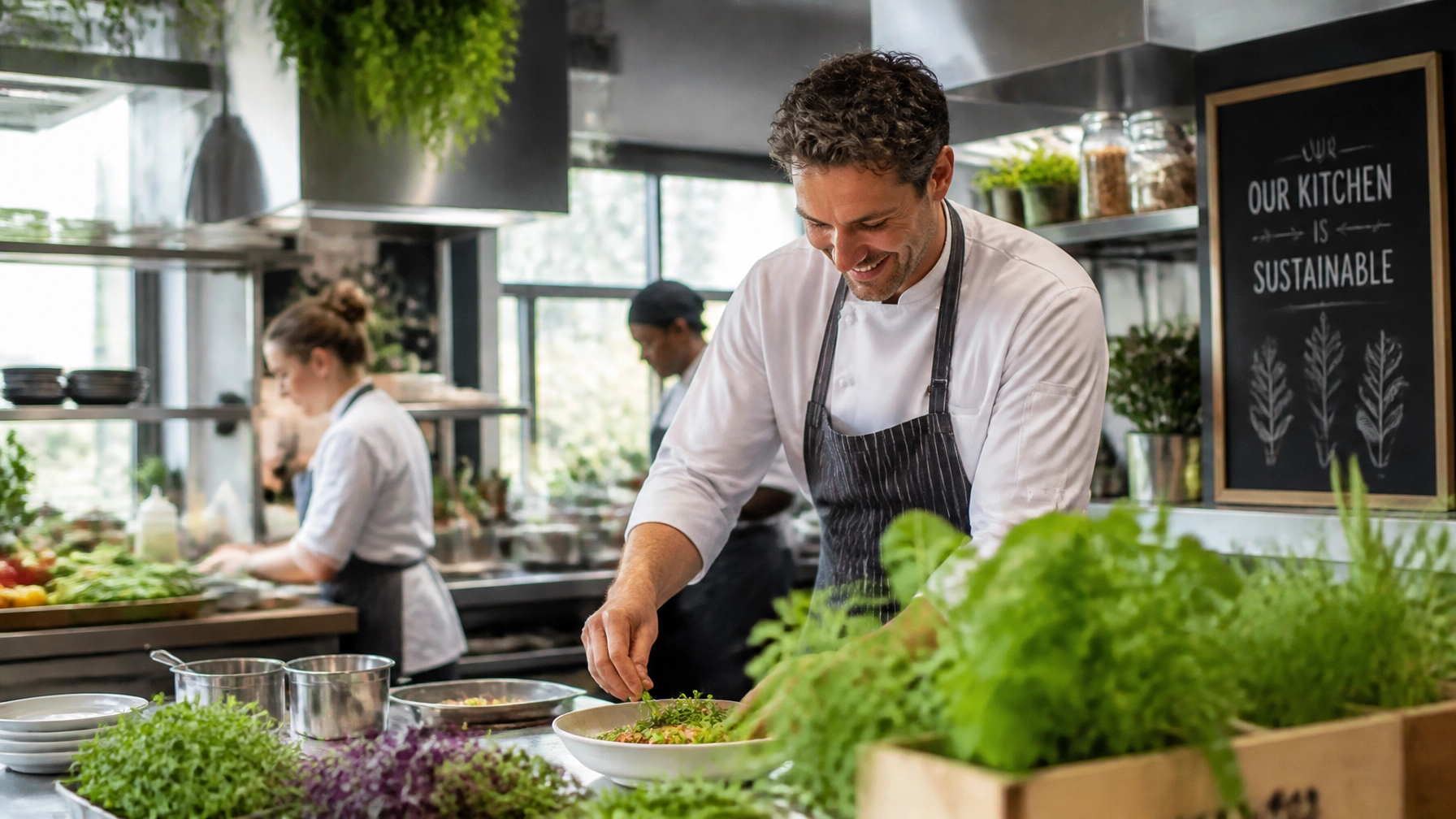
Let’s be real: when most restaurant owners hear the word “sustainability,” they hear the sound of a cash register: but it’s the sound of money leaving their bank account. They picture $20,000 composting machines, solar panels that cost more than a small yacht, and organic ingredients that eat the bottom line faster than a hungry linebacker at a buffet.
But here is the secret that the big consultants don’t want you to know: Sustainability isn’t a luxury purchase; it’s an efficiency strategy.
At Restaurant Revenue Incubator, we’ve spent years helping operators scale their concepts and optimize their P&Ls. What we’ve discovered is that the greenest thing you can do for your restaurant is also the most profitable. We’re talking about the Triple Bottom Line: People, Planet, and Profit. In that order of importance? Maybe. But let’s be honest: without the Profit, your Planet and People initiatives are going to have a very short lifespan.
In the U.S. alone, restaurants toss out about 11.4 million tons of food annually. That’s a $25 billion problem. If you’re looking to boost your margins without dropping a dime on new equipment (Capex), you’re in the right place. Here is how to turn your kitchen into a lean, green, profit-generating machine.
1. The $8 ROI: Cutting Food Waste (The Process Way)
If I told you I had an investment that returned $8 for every $1 you spent, you’d probably check my credentials to make sure I wasn’t running a Ponzi scheme. But data from Champions 12.3 shows that for every $1 restaurants invest in food waste reduction, they save an average of $7 to $8 in operating costs.
The best part? You don’t need a fancy robot to do this. You need a scale, a tablet, and a culture of accountability.

The No-Capex Waste Strategy:
- The "Waste Log" Reality Check: Most kitchens think they know what’s going in the bin. They don’t. Start by weighing prep waste, spoilage, and plate waste for one week. When a line cook sees that they just tossed $40 worth of trim into the trash, the behavior changes instantly.
- Creative Upcycling: That broccoli stalk isn't trash; it's the base for a fermented slaw or a charred vegetable puree. Those day-old bread heels? Croutons or bread pudding. This isn't just "being green": it's lowering your COGS (Cost of Goods Sold).
- Precision Purchasing: Use your tech stack to track inventory in real-time. If you’re consistently tossing 10% of your spinach, stop ordering 10% of your spinach. Our revenue optimization team often finds thousands of dollars hiding in over-ordering and poor FIFO (First-In, First-Out) practices.
2. Energy: The "Start-Up" Secret
Your kitchen equipment is like a heavy metal band: it’s loud, it’s hot, and it’s incredibly expensive to keep running when nobody is watching. Most kitchens turn everything on at 8:00 AM: the ovens, the fryers, the salamander, the plate warmer: and leave them running until 11:00 PM.
This is the operational equivalent of leaving your car idling in the driveway for 15 hours a day.
The No-Capex Energy Strategy:
- The Staggered Start: Create a "Power Up" schedule. Ovens don't need to be at 450 degrees for the prep team to chop onions. Turn on the equipment only 20 minutes before it’s actually needed. This behavioral change alone can save hundreds of dollars a month on utility bills.
- Idle Management: If your fryers aren't dropping baskets between 2:00 PM and 4:00 PM, turn them down. It’s a simple SOP (Standard Operating Procedure) that requires zero capital investment but delivers immediate cost reduction.
- The Gasket Check: This is the only "hardware" tip, and it costs about $20. If your walk-in cooler gaskets are cracked, you’re paying to cool the entire kitchen. Replace them. It’s a 10-minute DIY job that saves a fortune.
3. The People Factor: Culture Over Capital
You can have the most sustainable tech stack in the world, but if your team doesn't buy into the vision, you're just spinning your wheels. The Triple Bottom Line starts with People. When staff feel like they are part of a mission: reducing waste, saving the planet, and helping the restaurant grow: they are more engaged, and engaged staff have lower turnover rates.

At Restaurant Revenue Incubator, we believe that leadership is the secret sauce. A team that understands that "Sustainability = Job Security" is a team that will watch your margins like a hawk.
Engagement Hacks:
- Gamify the Savings: Set a goal to reduce utility costs or food waste by 10% and share a portion of the savings with the team. It’s the ultimate win-win.
- Transparency: Show them the P&L (or at least the relevant parts). When they understand the "Profit" part of the Triple Bottom Line, they become stakeholders in the "Planet" part.
4. Tech Stack Leadership: Data is the New Green
In 2026, if you aren't using AI and data to drive your decisions, you're essentially flying a plane with a blindfold on. Your tech stack shouldn't just take orders; it should provide the insights necessary to eliminate waste before it even happens.

By integrating your POS with smart inventory management, you can predict exactly how much prep you need for a Tuesday night based on the weather, local events, and historical data. This isn't just tech-savviness; it's defensive driving for your bank account.
The RRI Difference: Why Capex is Overrated
Most consultants come into a restaurant, tell you everything you're doing wrong, and then hand you a bill for $50,000 for "equipment upgrades" and "consulting fees."
We don't do that.
We operate on a risk-free, no-upfront-cost model. We review your tech stack and your P&Ls for free. We look for those hidden pockets of waste and inefficiency: the "non-sustainable" habits that are bleeding your cash flow. Then, we implement the solutions and only ask for a share of the results we create.
Whether you are a single-unit operator looking to scale or a growing brand ready for franchise development, our 50+ years of combined experience allows us to turn businesses around in under two weeks. We don't want your equity or your interest: we want your growth.
Summary of No-Capex Green Gains:
| Action Item | Cost | Potential Impact |
|---|---|---|
| Food Waste Log | $0 | 26% reduction in waste |
| Staggered Equipment Start | $0 | 10-15% utility savings |
| "On-Request" Disposables | $0 | Thousands saved annually |
| Inventory Tech Audit | $0* | Massive COGS reduction |
| *When performed by the RRI team. |
Final Thoughts: The Future is Lean
The "Triple Bottom Line" isn't a corporate buzzword; it's the survival guide for the modern restaurateur. By focusing on People and the Planet through the lens of Profit, you create a resilient business that can survive tight margins and scale into a powerhouse brand.
You don't need a million dollars to go green. You need better processes, smarter tech, and a partner who knows where the bodies: and the wasted profits: are buried.
Ready to see how much "green" you're leaving on the table? Contact us today for a no-cost review of your operations. Let's build something sustainable together.