Restaurant Technology · Uncategorized
Sustainable Kitchen Operations Matter: Why Eco-Friendly Changes Are Your Fastest Path to Higher Margins
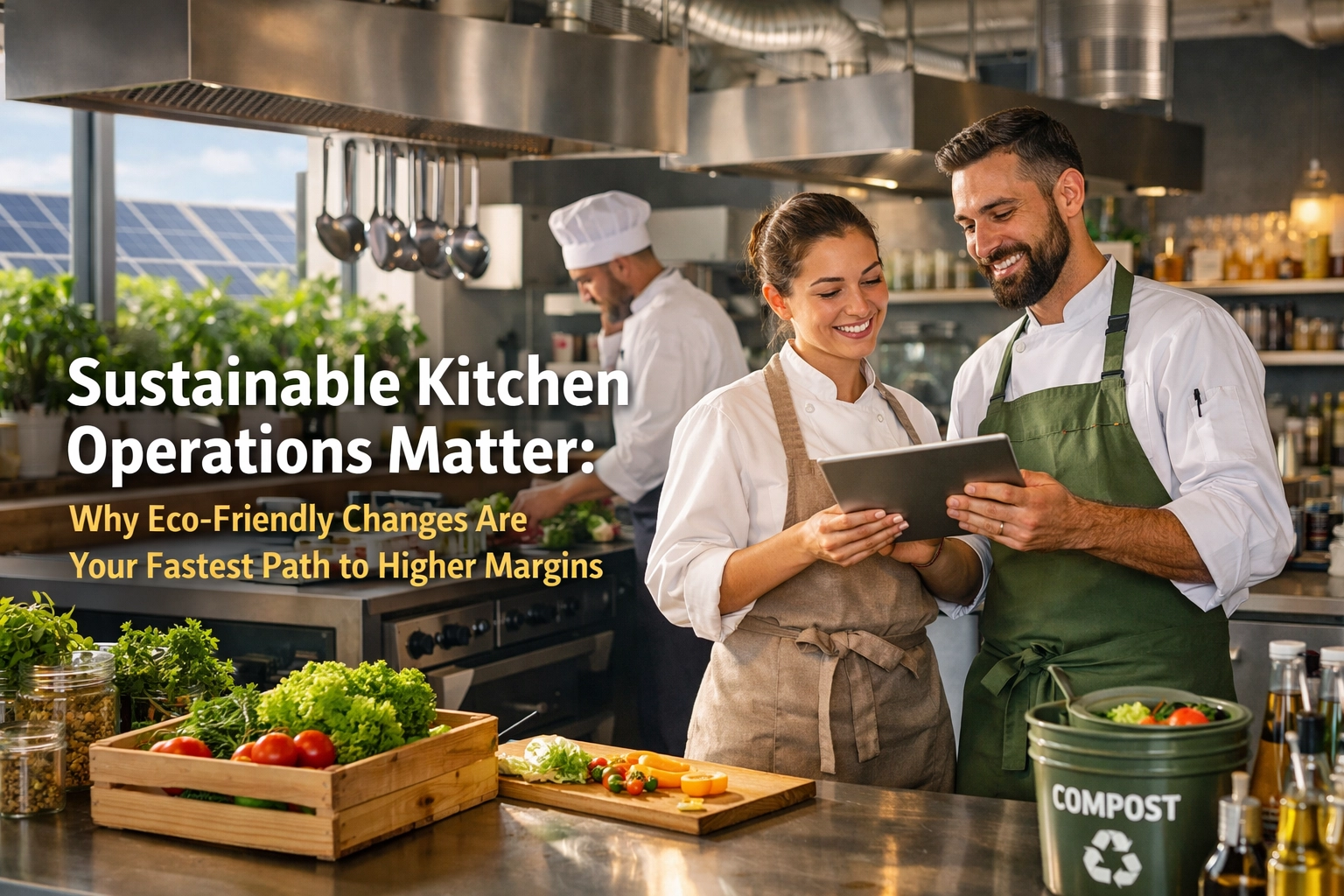
Let’s be honest: when most restaurant owners hear the word “sustainability,” they don't think about a flourishing bank account. They think about expensive compostable straws that turn into mush in five minutes, overpriced organic kale, and a massive bill for solar panels that might pay for themselves by the time their grandkids retire.
If that’s your mental image of going green, I’ve got some news for you: and it’s the kind of news that makes CFOs weep with joy.
In the modern restaurant landscape, sustainability isn't a "nice-to-have" charity project. It is, quite literally, one of the fastest ways to claw back your margins from the brink of extinction. At Restaurant Revenue Incubator, we focus on the "Triple Bottom Line": People, Planet, and: most importantly for your survival: Profit.
If you’re tired of watching your profits literally disappear down the drain (or into the dumpster), it’s time to stop looking at eco-friendly changes as an expense and start looking at them as an investment with a massive ROI.
The $1 to $7 Rule: Why Your Dumpster is Your Biggest Competitor
If I told you that you could hand me a $1 bill and I would give you $7 back, you’d probably check to see if I was running a Ponzi scheme. But in the world of food waste reduction, that’s just standard math.
Research shows that for every $1 a restaurant invests in programs to reduce kitchen food waste, they save an average of $7 in operating costs. That is a 600% return. You won’t find those margins on your wine list, and you certainly won’t find them on third-party delivery apps.
Think about what actually goes into your trash can. It’s not just "scraps." It’s labor hours spent prepping food that never got eaten. It’s the electricity used to keep that food cold. It’s the gas used to cook it. And finally, it’s the cold, hard cash you paid your waste management company to haul it away.
How to stop the bleeding:
- Track the Trash: You can’t manage what you don’t measure. Use a simple tracking sheet (or high-tech AI sensors) to see exactly what’s being tossed. Is it prep waste? Over-portioning? Plate waste?
- Repurpose with Purpose: That broccoli stalk isn't trash; it’s the base for a killer slaw. Those beef trimmings? That’s your new house-made ragu.
- Adjust the Buy: If you’re consistently tossing 10 pounds of spinach every Friday, stop buying 10 pounds of spinach on Thursday. It sounds simple, but you’d be surprised how many kitchens run on "autopilot" ordering.

Energy and Water: Stop Lighting $100 Bills on Fire
The average restaurant uses about 2.5 times more energy per square foot than any other commercial building. Unless you’re trying to heat the entire neighborhood with your walk-in fridge's exhaust, that’s a problem.
Energy-efficient appliances can reduce consumption by 20-30%. If your utility bill is $3,000 a month, we’re talking about putting nearly $1,000 back into your pocket every single month. Over a year, that’s $12,000: the price of a decent used car or a very fancy espresso machine.
The Low-Hanging Fruit of Efficiency:
- LEDs are Non-Negotiable: Replacing old-school bulbs with LEDs cuts lighting energy use by up to 75%. Plus, they last forever, so you can stop paying your prep cook to climb a ladder every two weeks.
- The "Low-Flow" Secret: Installing low-flow faucets and ENERGY STAR-rated dishwashers can decrease operating costs by 11%. Water is getting more expensive every year; stop letting it run while your staff stares at their phones.
- Smart Maintenance: A dusty coil on a refrigerator makes the motor work twice as hard. Cleaning your equipment isn't just about health codes; it’s about your power bill.
Sourcing and Resilience: The Hidden Margin in "Local"
Sustainable sourcing often gets a bad rap for being "expensive." But let’s look at the data. Sourcing locally reduces transportation costs and protects you from the insanity of global supply chain disruptions. Remember the "Great Avocado Shortage" or the "Egg-pocalypse" of recent years?
By building relationships with local producers, you gain transparency and stability. Seasonal menu optimization: using ingredients when they are at their peak and their cheapest: is a masterclass in margin management. A strawberry in June is cheap and delicious. A strawberry in January is an expensive, flavorless rock flown in from 3,000 miles away. Which one do you want on your P&L?
Moreover, the modern diner: especially Gen Z and Millennials: is voting with their wallets. They want to know where their food comes from. High-quality, sustainable sourcing isn't just a cost; it’s a marketing strategy that allows you to command a premium price.

The "People" Part of the Triple Bottom Line
We talk a lot about food and electricity, but the "Triple Bottom Line" includes People. Turnover is the silent killer of restaurant margins. It costs, on average, $5,000 to $7,000 to replace a single line cook when you factor in recruiting, training, and lost productivity.
Eco-friendly operations actually help with staff retention. Employees: especially the younger generation: want to work for companies that align with their values. When you implement waste reduction programs or energy-saving initiatives, you give your team a "why" beyond just flipping burgers.
A streamlined, efficient kitchen (one that doesn't have 120-degree ambient temperatures because the equipment is ancient) is a better place to work. Better working conditions = lower turnover = higher margins. It’s all connected.
The Barrier: "I Can't Afford to Go Green"
This is where most owners get stuck. You know the old broiler is a gas-guzzling relic, but a new one costs $5,000. You know you need a smart thermostat, but the HVAC guy wants a fortune.
At Restaurant Revenue Incubator, we see this every day. That’s why we built our business model around No Upfront Cost turnaround services. We specialize in identifying these exact inefficiencies: the "leaks" in your bucket: and fixing them.
We don't just give you a "to-do" list and a bill. We partner with you to implement these sustainable, high-margin changes. We’re so confident in the data-driven results that we often work on a performance basis. If we don’t find the revenue or the savings, you don’t pay. It’s that simple.

Data-Driven Decisions Over Gut Feelings
The "old school" way of running a restaurant was based on "gut feelings."
- "I feel like we’re wasting too much bread."
- "I feel like the AC is running too much."
Feelings are great for Taylor Swift songs, but they suck for running a business. Sustainable operations rely on data. When you track your waste, monitor your kilowatt hours, and analyze your plate costs with surgical precision, you move from "guessing" to "knowing."
And what you’ll find is that "green" is the color of money.
Final Thoughts: The Fastest Path to Higher Margins
If you want to increase your margins by 5% this year, you could try to raise your prices and hope your customers don't desert you for the taco truck down the street. Or, you could look inward at your operations.
Sustainable kitchen operations offer a path to higher margins that doesn't rely on market whims or customer moods. It’s about efficiency. It’s about respect for the ingredients, the environment, and your own bottom line.
Stop throwing money in the trash. Literally.
If you’re ready to see how a "Triple Bottom Line" approach can transform your restaurant from a struggling concept into a high-margin machine, let’s talk. Visit our shop to see how we represent the brand, or check out our services to learn more about our No Upfront Cost turnaround model.
Sustainability isn't just about saving the planet; it’s about saving your business. And in 2026, those two things are one and the same.

Looking for more insights on scaling and restaurant leadership? Check out our blog for daily deep-dives into tech, growth, and the future of the industry.