Restaurant Technology · Uncategorized
Sustainable Kitchen Operations Matter: How to Cut Costs and Boost Your Triple Bottom Line
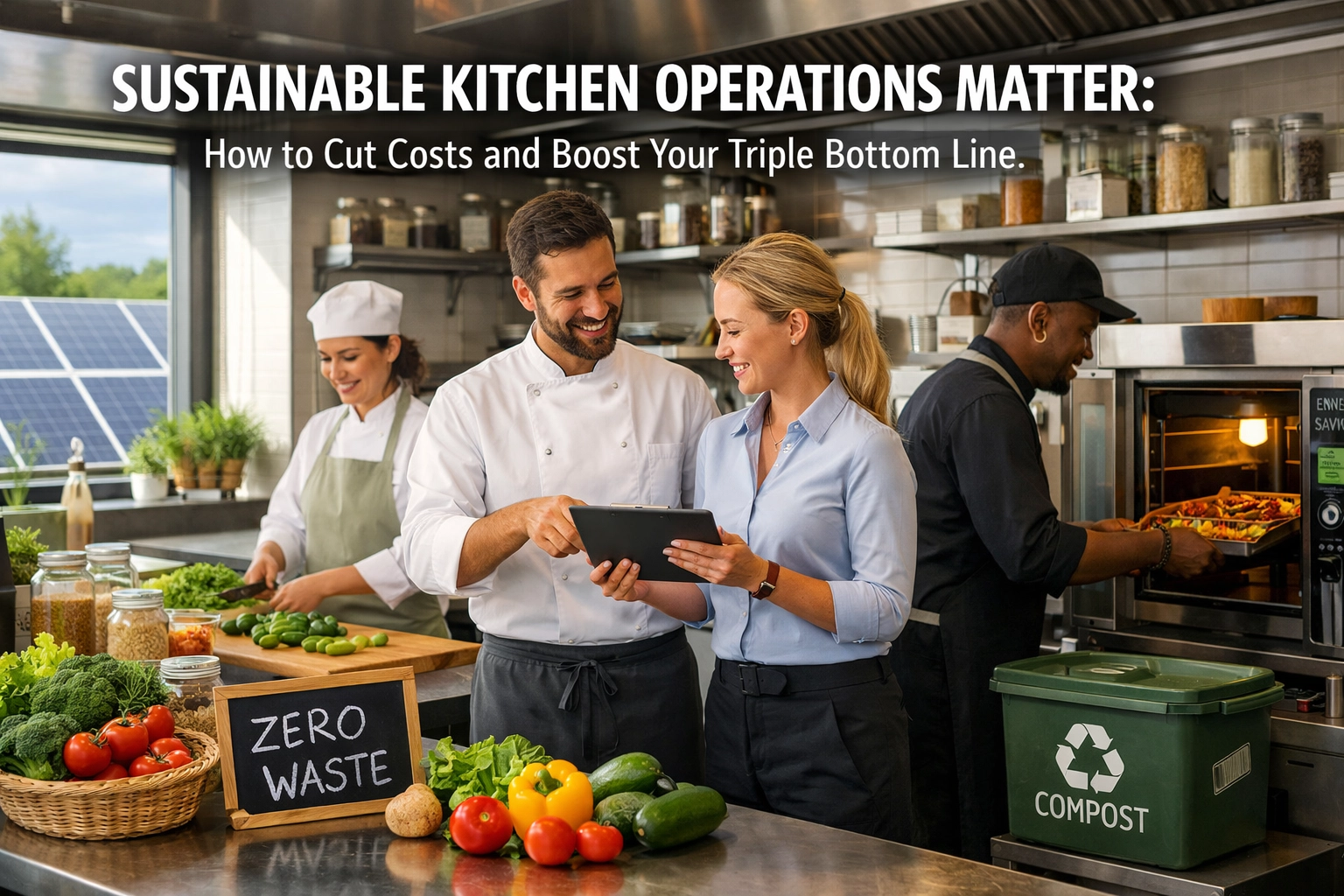
Let’s be honest: in the restaurant world, "sustainability" used to be a buzzword that owners associated with expensive organic kale and paper straws that disintegrate into a soggy mess before the customer finishes their soda. It felt like a luxury: something you did if you had a massive marketing budget and a customer base willing to pay $24 for a salad.
But it’s 2026, and the narrative has shifted. Sustainability isn’t just about being a good citizen of the planet; it’s about being a genius at business. We’re talking about the Triple Bottom Line (TBL): People, Planet, and: most importantly for your survival: Profit.
At Restaurant Revenue Incubator, we see it every day. The most profitable kitchens aren't the ones cutting corners on quality; they’re the ones cutting out the waste. If your utility bills are higher than your rent and your dumpster is full of "pre-consumer" waste (that’s fancy talk for food you bought but never sold), you aren't just hurting the Earth: you’re setting fire to your margins.
The 1:7 Rule: Why Green is the Color of Money
If I told you that for every $1 you invested in a specific operational change, you’d get $7 back, you’d probably ask where to sign. This isn't a crypto scam or a "get rich quick" scheme. According to industry research, that is the average return on investment for restaurants that commit to reducing food waste.
Think about that. A 700% return. In an industry where a 10% net profit is considered a victory, ignoring sustainable operations is essentially leaving a pile of cash on the sidewalk.
Reducing waste isn't just about feeling good; it’s about tightening the screws on your P&L. When you stop over-ordering, you stop over-spending. When you stop over-prepping, you reduce labor hours. It’s a cascading effect of efficiency.

Food Waste: The Silent Profit Killer
Food waste is the single largest controllable expense in your kitchen. There are three main ways food waste eats your soul (and your bank account):
- Over-ordering and Spoilage: Buying 10 cases of tomatoes when you only need seven because "it was a deal." It’s not a deal if three cases rot in the walk-in.
- Prep Waste: This is where the skill of your team comes in. Are your line cooks hacking away at proteins like they're in a slasher flick, or are they maximizing yield?
- Plate Waste: If 30% of your fries are coming back on the plate, your portions are too big. You’re literally paying people to throw away your inventory.
The Strategy: Real-Time Tracking
We’ve seen a Chicago fine-dining establishment slash their food costs by 15% in just 90 days simply by implementing automated inventory tracking. When you know exactly what is going into the bin, you can change your ordering habits.
If you're still doing inventory on a clipboard once a week (or worse, once a month), you’re flying blind. Modern Restaurant Tech and AI-driven POS systems can now reduce food waste by up to 30% by predicting exactly how much prep you need for a Tuesday shift versus a Friday night.
Energy and Water: Stop Liquidating Your Assets
Your kitchen is likely the most energy-intensive part of your entire building. Between the walk-ins, the ovens, the dishwashers, and the HVAC trying to keep the cooks from melting, the meter is spinning faster than a DJ at a wedding.
The Induction Revolution
If you’re still clinging to gas ranges because "that’s how real chefs cook," your accountant might have some notes. Induction cooktops are 90% efficient compared to the measly 40% efficiency of gas. Gas ranges dump a massive amount of ambient heat into the kitchen, which then forces your AC to work twice as hard. Switching to induction or ENERGY STAR-certified appliances can reduce energy consumption by up to 20%.
Every Drop Counts
Water costs are rising across the country. Simple fixes like low-flow pre-rinse spray valves can save a single unit 150,000 gallons of water a year. That’s not just a win for the local reservoir; that’s a massive reduction in your utility bill. If you haven't looked at your water bill lately, brace yourself: it’s probably higher than it needs to be.

The "People" Part of the Triple Bottom Line
Sustainability isn't just about carbon footprints; it’s about the people who walk those footprints.
- Employee Retention: Gen Z and Millennials (who now make up the bulk of the hospitality workforce) want to work for companies that have a purpose. A kitchen that respects ingredients and minimizes waste is a more professional, pride-filled environment.
- Customer Loyalty: Today’s diners are savvy. They know the difference between "greenwashing" and actual commitment. When you can market your sustainable practices: like sourcing locally or composting: you build a brand that people feel good about supporting. This leads to higher "Customer Lifetime Value" (CLV), which is a fancy way of saying they’ll keep coming back and bringing their friends.
Waste Disposal: Paying to Throw Things Away
Most operators look at their trash hauling bill as a fixed cost. It’s not. By implementing comprehensive recycling and composting programs, you can significantly reduce the volume of "wet waste" heading to the landfill. Many municipalities charge by weight or frequency of pick-up. If your trash is 50% food scraps, and you start composting, you might be able to cut your pick-up schedule in half.
In some cases, you can even turn waste into a minor revenue stream. Aluminum recycling or selling used cooking oil for biodiesel are small wins that add up over the course of a fiscal year.

How We Turn "Green" into "Growth"
At Restaurant Revenue Incubator, we don't just give you a list of things to fix and wish you good luck. We understand that most owners are spread too thin to worry about the wattage of their lightbulbs or the flow rate of their sinks.
This is where our No Upfront Cost turnaround services come in.
We specialize in identifying these operational leaks: the places where your profit is literally going down the drain or into the dumpster. We look at your cost reduction strategies through the lens of the Triple Bottom Line.
We don't get paid until you see results. We partner with you to implement the tech, the training, and the sustainable systems that boost your margins. Whether it’s optimizing your menu to reduce prep waste or upgrading your tech stack to automate inventory, we handle the heavy lifting.
Conclusion: The Future is Efficient
The restaurants that will be standing (and thriving) in five years aren't the ones sticking to "the way we've always done it." They are the ones embracing the intersection of technology, sustainability, and fiscal responsibility.
Cutting costs through green initiatives isn't just a "nice to have": it’s a competitive advantage. You get a leaner operation, a more engaged staff, a loyal customer base, and a significantly healthier bank account.
Are you ready to stop wasting money and start building a sustainable legacy? Check out our services to see how we can help you scale your concept without the upfront financial burden.
It’s time to make your kitchen as efficient as your vision. Let’s get to work.
Looking to upgrade your team's look while you upgrade your operations? Check out our merch shop for the latest in restaurant-branded gear.