Restaurant Technology · Uncategorized
How to Integrate Sustainable Kitchen Operations with Your Tech Stack (For Zero Upfront Cost)
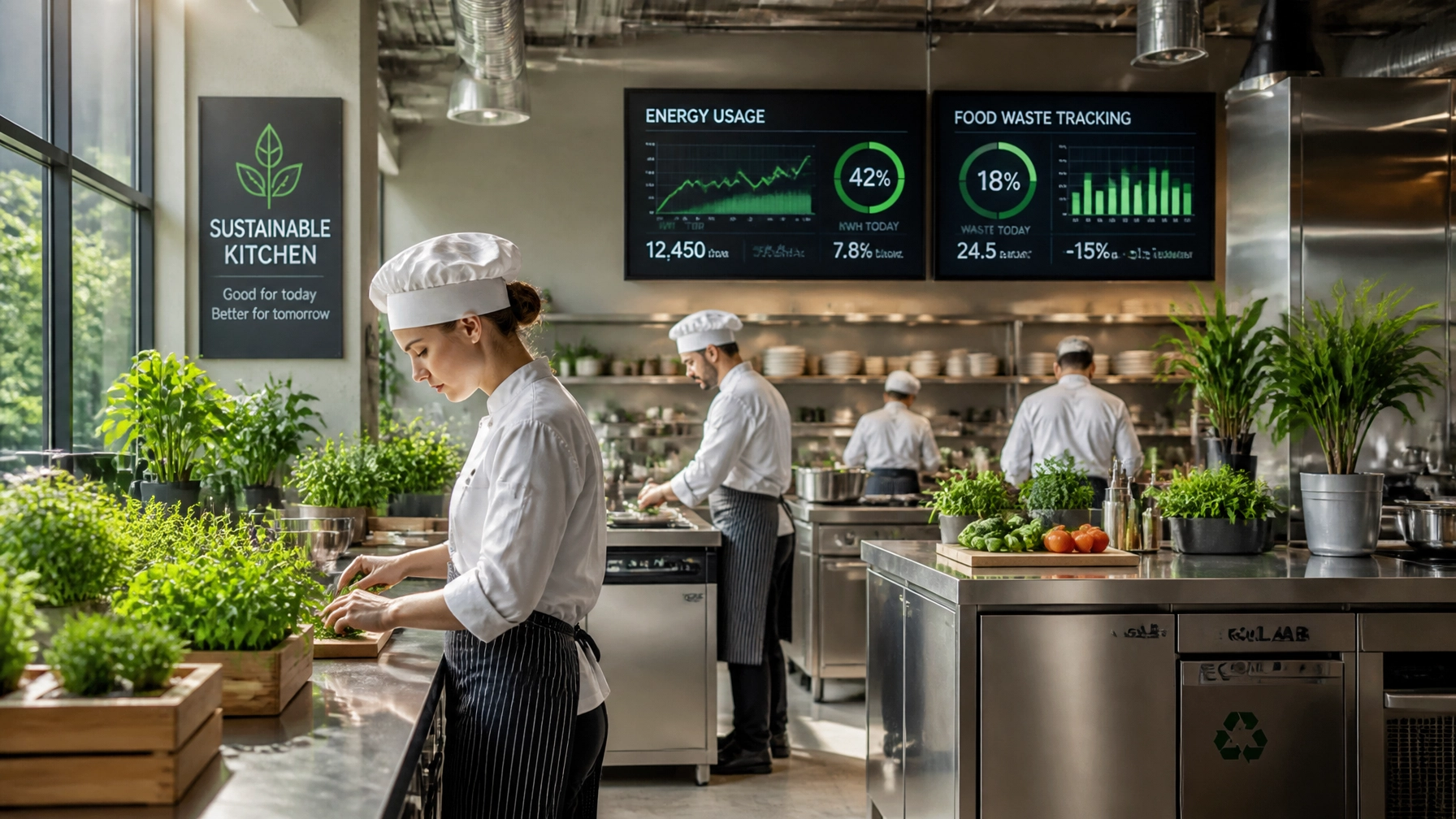
Let’s be honest: when most restaurant owners hear the word “sustainability,” they don’t think about saving the polar bears. They think about their bank accounts bleeding out. They imagine expensive solar panels, overpriced biodegradable straws that melt in your drink after three sips, and a whole lot of paperwork.
But what if I told you that sustainability isn't a luxury item? It’s actually a secret weapon for scaling your profit margins.
At Restaurant Revenue Incubator, we’ve spent over 50 years collectively watching restaurant groups try to grow. The ones that win aren't just the ones with the best burgers; they’re the ones that treat their kitchen operations like a high-performance engine. Today, we’re diving into how you can turn your kitchen into a green, mean, profit-making machine by integrating sustainability directly into your tech stack, and doing it without a single dollar of upfront capital.
The Triple Bottom Line: Green is the New Gold
Before we talk about the gadgets, we have to talk about the philosophy. In the old days, the "Bottom Line" was just one number: Profit. But modern, scalable concepts use the Triple Bottom Line: People, Planet, and Profit.
- Planet: Reducing food waste and energy consumption.
- People: Creating a kitchen environment that doesn’t burn out your staff.
- Profit: Taking the money you saved from the first two and putting it back into expansion.
When you use tech to optimize these three, you aren't just being a "good person", you’re being a smart operator. Every pound of food thrown in the bin is literally cash being tossed into a dumpster. According to industry data, food waste costs the hospitality sector over $100 billion annually. If you could cut that waste in half, how many more units could you open?

Step 1: Making the POS Your Sustainability Brain
Your Point of Sale (POS) shouldn't just be a glorified cash register. It needs to be the central nervous system of your operation. To integrate sustainability, your POS must talk to your inventory management system in real-time.
Most operators "guess-timate" their prep. "Oh, we usually sell twenty chickens on a Tuesday." But an integrated stack uses historical sales data, weather patterns, and even local events to tell you exactly how much to prep.
The Strategy:
- AI Forecasting: Connect tools like Leanpath or Orbisk (more on them in a second) to your sales data. If the forecast says it’s going to rain, your tech stack should automatically suggest a lower prep level for outdoor-seating items.
- Real-Time Inventory: When a steak is sold, it should be subtracted from your inventory immediately. This prevents over-ordering and the "oops, this expired" dance that costs you thousands every month.
Step 2: Stopping the "Profit Dump" with AI Waste Tracking
If you want to see a restaurant owner cry, show them the data on what’s in their trash can. This is where the magic happens. Tools like Winnow and Orbisk use AI-powered cameras and scales to track exactly what your team is throwing away.

Imagine a world where your prep cook throws out three gallons of soup, and a tablet instantly flags that this is the fourth time this week that specific soup has been wasted. The tech doesn't just record the waste; it identifies the pattern.
Maybe your portioning is off. Maybe that dish needs to be removed from the menu. By integrating this into your tech stack, you get a "Profit & Loss" statement for your garbage. We’ve seen restaurants reduce food costs by up to 8% just by making waste visible. That 8% doesn't go to the landfill: it goes toward your next location.
Step 3: IoT Sensors: The Invisible Cost-Savers
Energy is the second-highest controllable cost in a restaurant after labor and COGS. Yet, most operators just pay the utility bill and hope for the best.
Integrating IoT (Internet of Things) sensors into your kitchen is a game-changer. These are small, relatively cheap devices that monitor temperature, energy draw, and even fridge-door-open-times.
Why this matters for your Triple Bottom Line:
- Preventative Maintenance: A sensor can tell if a walk-in compressor is working too hard before it dies. Losing a walk-in full of proteins on a Saturday night is a $5,000 disaster. The tech prevents the waste (Planet) and saves the cash (Profit).
- Energy Optimization: Smart thermostats and demand-controlled ventilation (like those reviewed in our cost reduction frameworks) adjust airflow based on how much heat the stoves are putting out. Why run the fans at 100% when only one burner is on?

Step 4: The "No Upfront Cost" Integration Strategy
Here is where the "Incubator" part of our name comes in. Most owners read about this tech and think, "Sounds great, Robert, but I don't have $50k to drop on smart ovens and AI cameras."
We get it. That’s why at Restaurant Revenue Incubator, we’ve pioneered a risk-free approach. We don't ask for massive retainers or upfront capital.
Our 2-Week Turnaround Process:
- P&L and Tech Stack Review: We audit your current systems and financial statements at zero cost. We find the leaks where money is dripping out of your kitchen.
- The Credit Exchange: Through our partner network, we can provide the capital needed for these tech upgrades in exchange for food & beverage credits. No interest. No equity dilution. No debt on your balance sheet.
- Result-Based Sharing: We only ask for a share of the results we create. If we don’t save you money or grow your revenue, we don’t get paid.
By using this model, you can install the latest sustainable tech, lower your food costs, and optimize your labor without touching your cash reserves.
Step 5: Growth Through Efficiency
Sustainability is the foundation of scale. Think about it: if you have one unit that is inefficient, you have one problem. If you scale that concept to ten units without fixing the kitchen operations, you have ten problems: and they’re all eating your margins.
Integrating your tech stack allows you to see a bird's-eye view of your entire group. You can compare the food waste at Location A versus Location B and realize that Location B’s manager needs more training on prep-planning. This data-driven leadership is what separates a "local favorite" from a "national brand."
And if you’re looking to gear up for your next big push, don't forget to look the part. Check out our RRI Shop for some high-quality gear (like our logo hoodies) that keeps your team looking as sharp as your data.

Conclusion: Stop Guessing, Start Growing
The era of "gut-feeling" restaurant management is over. The future belongs to the operators who use tech to protect the planet and their profits simultaneously. You don't need a massive bank account to start: you just need the right partner.
Whether you're a single-unit owner looking to scale or a group looking to tighten up your P&L, we’re here to help. We turn businesses around in under two weeks, and we do it by focusing on the data that matters.
Ready to see how much you’re leaving on the table? Contact us at Restaurant Revenue Incubator for a free tech stack and P&L review. Let’s build something sustainable( together.)