Restaurant Technology · Uncategorized
AI in Restaurants 2026: The Tools That Are Actually Moving the Needle
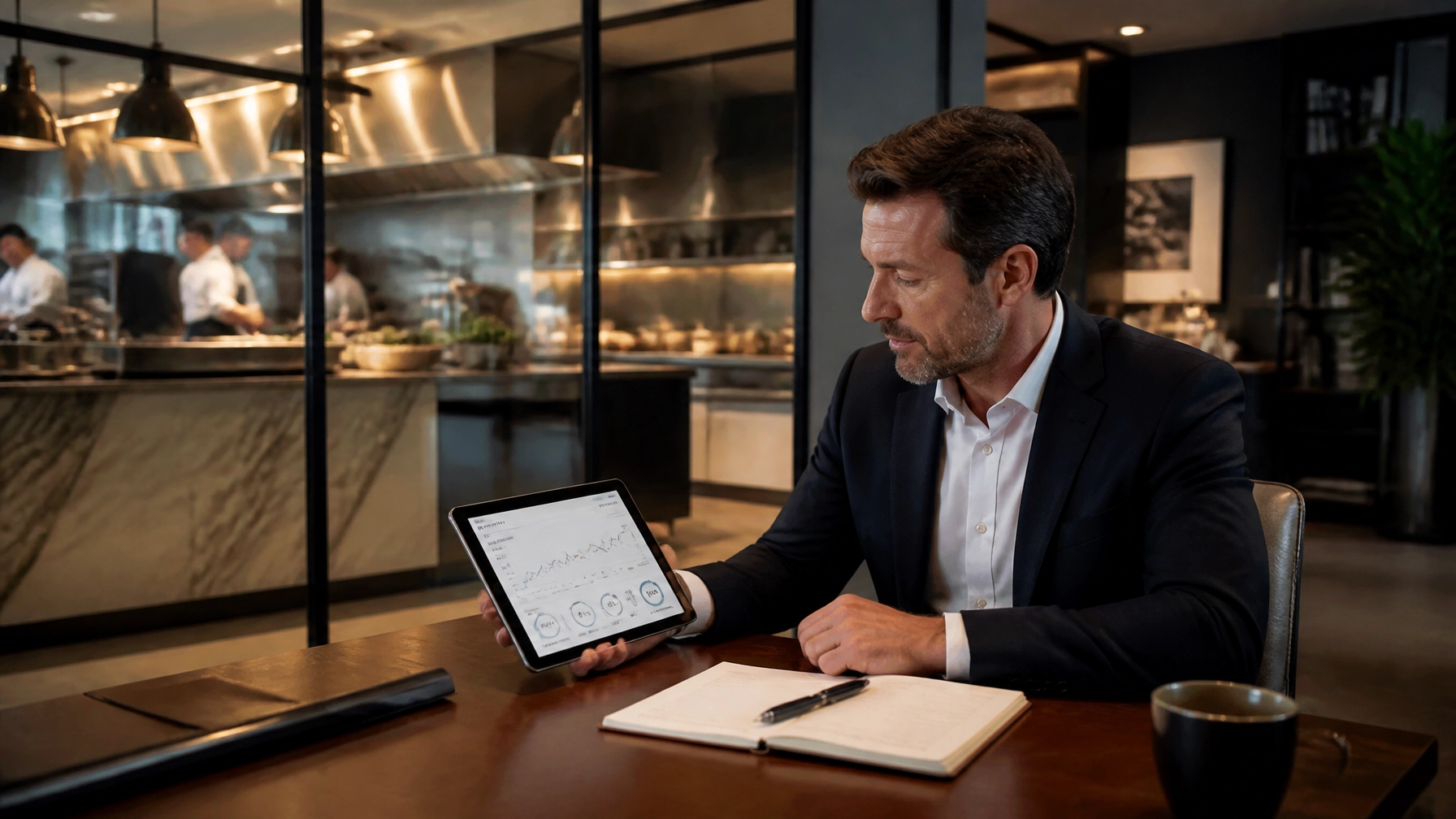
Remember when ordering a double-shot espresso meant talking to a human being instead of negotiating with a sentient kiosk that judged your milk choice? Ah, simpler times.
We are halfway through 2026, and the restaurant industry’s relationship with artificial intelligence has matured past the initial sci-fi panic. Gone are the days when every tech vendor promised that a talking robot would magically slice your tomatoes and greet table four. Today, restaurant operators are asking a much more pragmatic question: What is actually moving the needle on our P&L?
The data tells a compelling story. According to recent industry benchmarks, an impressive 85% of operators now hold favorable views of AI, and 73% are currently investing in or planning new AI deployments. Yet, paradoxically, only 9% report a truly transformational impact from their tech stack. Why the gap? The culprit is system fragmentation: too many disconnected silos that don't speak to each other.
At Restaurant Revenue Incubator, we work side-by-side with independent operators and growing groups to untangle this exact chaos. Let’s dive into where AI is delivering genuine ROI in 2026, where it’s falling short, and how you can optimize your tech stack without risking a dime.
The Back-Office Revolution: Where Profit Meets Planet
Let’s be honest: nobody ever opened a restaurant because they dreamed of spending three hours matching invoices to inventory spreadsheets. But in an era where margins are tighter than a pair of skinny jeans after the holidays, back-office optimization is where restaurants survive or sink.
This is where AI shines. Far from the flashy customer-facing gadgets, back-office automation is quietly transforming the triple bottom line: balancing People, Planet, and Profit:
- Food Costs & Waste Reduction: Among operators actively using AI in their back office, 61% report reduced food costs. By predicting customer traffic patterns and cross-referencing prep sheets with historical waste data, AI inventory systems cut unnecessary ordering. From a sustainability standpoint, this is a massive win: less food in the dumpster means a lighter carbon footprint and fatter margins. Profit meets planet.
- Labor Optimization: Labor continues to be one of the heaviest lifts for operators. Today, 62% of AI-adopters report lower labor costs, driven largely by predictive scheduling. Best of all? Scheduling automation typically pays back its investment in just 45 to 75 days. That means less time drowning in shift swaps and more money staying in your bank account.

Why Front-of-House AI Is Moving Slowly (And Why That’s Good)
If you read the mainstream tech headlines, you’d think every dining room in America was being run by an army of glowing androids. The reality on the ground is vastly different.
In 2026, only 6% of restaurants use AI for customer orders. Why so low? Because independent and group operators alike understand a fundamental truth: hospitality is a human business. Guests don't go out to dinner for maximum computational efficiency; they go out for connection, ambiance, and care.
Operators are deliberately exercising restraint at the front of the house to preserve the warmth of genuine human hospitality. AI should assist your servers, bartenders, and hosts: never replace them. When used correctly behind the scenes to optimize table turns or personalize marketing, it empowers your team to deliver better guest experiences without feeling rushed off their feet.
Overcoming Fragmentation: The 9% Trap
If 73% of operators are investing in AI, why are only 9% seeing transformational results?
The answer is fragmentation. Many restaurants have cobbled together a digital Frankenstein's monster: a POS from one vendor, an inventory tool from another, online ordering from a third, and a scheduling app that refuses to sync with any of them. Instead of saving time, your management team spends half their shift copy-pasting data between tabs.

Fixing this requires a holistic view of your tech stack and your P&L. But when you're running a busy shift, finding the bandwidth to audit your entire digital infrastructure feels impossible.
That is precisely why we created our risk-free turnaround model at Restaurant Revenue Incubator. We know that restaurant owners don't need another expensive consultant demanding a hefty upfront retainer. That’s why we review your tech stacks and P&Ls at no cost, delivering actionable insights from day one. We only get paid when we actually create measurable results for your business. No risk, no equity dilution, just seasoned operators helping you scale.
Summary and Actionable Takeaways
As we look toward the second half of 2026, AI is no longer a futuristic luxury: it's a practical toolkit for survival. But tools are only as good as the carpenter wielding them.
Here is your quick action checklist:
- Audit your back-office first: Focus AI investments where they deliver immediate, measurable ROI (inventory forecasting and labor scheduling).
- Protect your hospitality: Keep human connection at the front of house. Let technology support your team, not replace them.
- Consolidate your tech stack: Eliminate redundant software subscriptions that create data silos and burn out your management team.

Ready to see how your current tech stack and P&L stack up against top-performing concepts? Visit our Full Tech Stack Leadership page or explore our comprehensive growth resources at Restaurant Revenue Incubator. Let's turn your numbers around( risk-free.)