Restaurant Technology · Uncategorized
Sustainability Vs. Scaling: Why Triple Bottom Line Restaurants Are Smarter (and More Profitable) in 2026
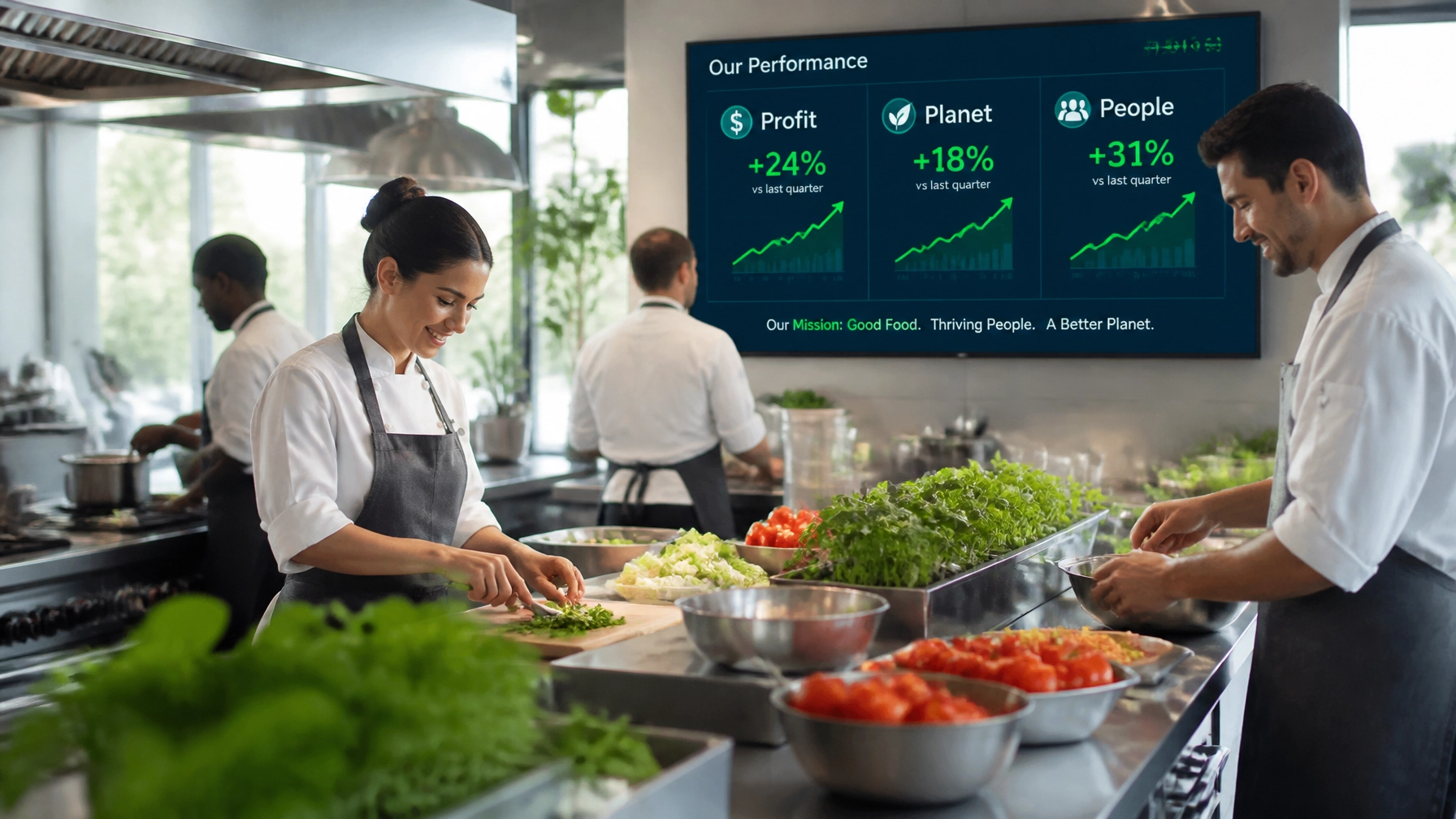
If you’re still running your restaurant like it’s 2019, you’re not just behind the times: you’re likely leaving a massive pile of cash in your dumpster every single night.
In the high-stakes world of 2026 hospitality, the old "growth at any cost" model has officially gone the way of the plastic straw. Today, the most successful restaurant groups aren’t just scaling; they’re scaling sustainably using a framework called the Triple Bottom Line (TBL).
For the uninitiated, the Triple Bottom Line focuses on three things: People, Planet, and Profit. In the past, people thought these three were in a constant cage match. You could either be "green" or you could be profitable. You could either pay your staff well or you could expand.
Spoiler alert: They were wrong.
At Restaurant Revenue Incubator, we’ve spent over 50 years combined in the trenches of private, public, and chef-driven concepts. We’ve seen that the restaurants winning the scaling game in 2026 are the ones that treat sustainability as a financial lever, not a charity project.
Let’s dive into why TBL is the smartest way to scale your brand and how you can do it without spending a dime in upfront retainers.
The "Profit" Pillar: The Hidden Gold in Your Trash Can
Let’s talk about everyone’s favorite topic: money. Specifically, the money you’re literally throwing away.
Data from 2026 shows that the average restaurant wastes between 22% and 30% of the food it prepares. If you’re a multi-unit operator, that’s not just a "cost of doing business": it’s a catastrophic leak in your P&L. Research has consistently shown that every $1 invested in food-waste reduction yields roughly $14 in financial returns.
Why Waste is Your Biggest Competitor
When you reduce waste, you get a "double net effect." You buy less inventory, and you pay less to have the trash hauled away. In an era where 4–10% of food purchases never even reach a customer's plate, tightening your inventory tech stack is the fastest way to find "free" capital for expansion.

At Restaurant Revenue Incubator, we start every partnership with a free P&L and tech stack review. We often find that by simply optimizing inventory tracking and portion controls, we can boost a restaurant's margins by 3-5% in under two weeks. When you’re looking to scale, that extra margin is the difference between opening one new location and opening three.
The "Planet" Pillar: Efficiency is the Ultimate Scalability Hack
There’s a common myth that "going green" is expensive. Sure, if you’re buying artisanal, hand-woven napkins made from recycled sea-glass, it’s going to hurt. But true sustainability in 2026 is about operational efficiency.
Energy & Utilities: The Silent Profit Killers
A 20% reduction in energy use can add between $3,000 and $5,000 per year directly to the bottom line of a single-unit restaurant. When you scale that across a 10-unit group, you’re looking at an extra $50,000 in pure profit.
Modern tech stacks (which we lead the charge on optimizing) now include smart kitchen systems that can reduce energy costs by up to 25%. These aren't just "feel-good" initiatives; they are rigorous cost-reduction strategies that make your concept more attractive to investors and franchisees.
What Customers Actually Want
It’s not just about the back-of-house. In 2026, 72% of consumers say they are willing to pay a premium for sustainable dining. By highlighting your local sourcing and zero-waste initiatives, you aren’t just saving money: you’re increasing your "pricing power." People will happily pay an extra 10% for a burger if they know the cow lived a better life than they do and the packaging won't outlive their grandchildren.

The "People" Pillar: Why Culture is Your Greatest Growth Asset
Scaling a restaurant concept is impossible if your turnover rate looks like a revolving door in a hurricane. The "People" part of the Triple Bottom Line is about creating a workforce that actually wants to stay.
In 2026, labor is still the biggest headache for operators. However, TBL-focused restaurants report significantly higher employee engagement. When your team knows they are part of a brand that cares about the community and the environment, they don’t just work harder: they stay longer.
The Math of Retention:
Replacing a single line cook can cost upwards of $5,000 in recruiting, training, and lost productivity. If you can reduce your turnover by 20% through better culture and community engagement, you’ve just "found" the budget for your next marketing campaign.
Our team at Restaurant Revenue Incubator specializes in front-to-back operations support. We help you build the leadership structures that turn "jobs" into "careers," ensuring that as you scale, your culture doesn't dilute.
The 2026 Scaling Trap: Growth vs. Sustainability?
Many owners think they have to choose: "Do I spend my capital on high-efficiency equipment, or do I spend it on opening my second location?"
This is a false choice.
The biggest hurdle to scaling is capital. Traditional lending is a nightmare, and giving up equity feels like selling your soul. This is where our unique funding model comes in. Through our partners, we provide alternative funding in exchange for food & beverage credits.
- No interest.
- No equity.
- No dilution.
This allows you to invest in the tech and sustainability measures that drive profit, using your future excess capacity to pay for it. It’s a risk-free way to upgrade your operations while keeping your foot on the gas of expansion.

Why "No Upfront Cost" is the Only Way to Turn Around
If your restaurant is struggling with margins or you're stuck in the "single-unit trap," you don't need another expensive consultant who bills by the hour and leaves you with a 50-page PDF of "suggestions."
You need a partner who has skin in the game.
At Restaurant Revenue Incubator, we operate on a share-of-results model. We don't ask for upfront retainers. We review your tech, your P&L, and your operations for free. We deliver insights from day one, and we only get paid when we create measurable results for your business.
Whether it’s a full brand optimization or a tech stack overhaul, we can often turn a business around in under two weeks. We’ve done it for public companies, and we’ve done it for neighborhood staples.
Conclusion: The Future is Green (and Profitable)
Scaling a restaurant brand in 2026 isn't about being the biggest; it's about being the smartest. By embracing the Triple Bottom Line: optimizing for Profit, Planet, and People: you create a resilient, high-margin business that customers love and employees respect.
Sustainability isn't a cost. It’s the most effective growth strategy in your arsenal.
Ready to see the hidden profit in your P&L?
Contact Restaurant Revenue Incubator today for a free review of your tech stack and financials. Let’s build your legacy together: without the upfront costs.
