Restaurant Technology · Uncategorized
Triple Bottom Line Restaurants: 20 Secrets to Get You Started with Zero Upfront Cost
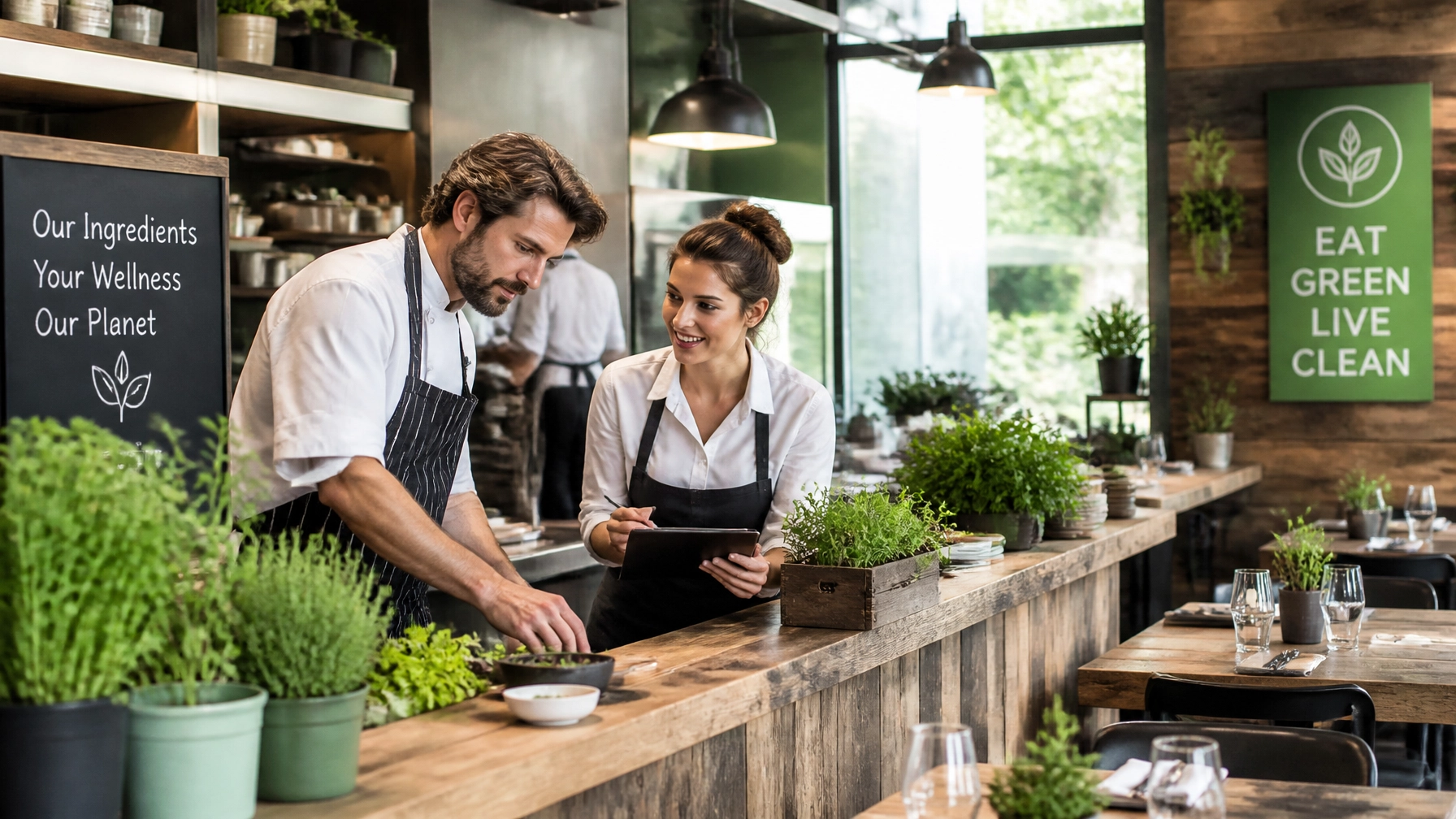
Let’s be real for a second: running a restaurant in 2026 feels a bit like trying to solve a Rubik’s Cube while riding a unicycle. Between rising food costs, labor shortages, and customers who expect your carbon footprint to be as small as their espresso cup, the pressure is on.
But what if I told you that "going green" isn't just for fine-dining spots with massive budgets and rooftop gardens? What if the secret to scaling your concept and increasing your margins was hidden in plain sight, buried within a framework called the Triple Bottom Line (TBL)?
At Restaurant Revenue Incubator, we don't believe in "pay-to-play" growth. We believe in results. That’s why we help restaurants scale through alternative funding and operations support with zero upfront cost. Today, we’re diving deep into the 20 secrets of TBL, People, Planet, and Profit, that you can implement right now without spending a single dime of capital.
What is the Triple Bottom Line, Anyway?
In the old days, the "Bottom Line" was just one thing: Profit. If the number at the bottom of the P&L was black, you were winning. If it was red, you were in trouble.
The Triple Bottom Line expands that view. It suggests that a truly successful restaurant balances three things:
- Planet: Environmental stewardship.
- People: Social responsibility and employee well-being.
- Profit: Financial viability and growth.
The kicker? These three aren't in competition. They are teammates. When you save water (Planet), you save money (Profit). When you treat your staff better (People), your turnover drops, and your service improves (Profit). It’s a virtuous cycle, and you don’t need a massive bank loan to start spinning it.
Planet: The Green Goldmine (Secrets 1-7)
Reducing your environmental impact is the fastest way to find "hidden" money in your operations. Most restaurants are literally flushing cash down the drain or throwing it in the dumpster.
1. The "Straws on Request" Policy
Stop putting a straw in every glass. By moving to an "on request" model, you’ll likely see straw usage drop by 60-80%. It costs $0 to implement and saves you a few hundred dollars a year in purchasing.
2. The Equipment "Turn-Off" Schedule
Most kitchens fire up every piece of equipment the moment the first prep cook walks in. Create a staggered schedule. Does the salamander really need to be at 500 degrees three hours before the first order? No.
3. The Full-Load Dishwasher Rule
Train your dish team to only run the machine when it's at capacity. A half-empty rack uses the same amount of hot water and chemicals as a full one. This behavioral shift can shave 10-15% off your utility bills.
4. Conduct a "Mini-Audit"
You don't need a consultant. Spend 30 minutes looking at your trash. Are there half-eaten burgers? (Portion size issue). Is there a lot of plastic wrap? (Prep container issue). Identifying waste is the first step to eliminating it.
5. Water-Saving Rinse Practices
Don't let the faucet run while scrubbing pans. Use a soak basin instead. It’s a small habit that adds up to thousands of gallons of saved water over a year.
6. Digital-Only Receipts
Ask "Would you like a printed receipt?" before the machine starts humming. Many customers don't want the paper clutter, and you’ll save on thermal paper rolls, which are surprisingly expensive (and non-recyclable).
7. Consolidate Your Baking
Instead of preheating the oven four different times for four different items, block your baking into one window. You’ll save energy and reduce the ambient heat in the kitchen, making it easier on your HVAC system.

People: The Soul of the Sale (Secrets 8-14)
Your restaurant is only as good as the people working in it. High turnover is the ultimate profit-killer. These secrets focus on building a culture that keeps people around: and keeps them happy.
8. Predictable Scheduling
Chaos is the enemy of retention. Try to get your schedule out at least two weeks in advance. It costs nothing but a little extra organization, and it allows your staff to have a life outside of work. Happy staff = better service.
9. Cross-Training for Career Growth
Don't let your dishwasher stay "just" a dishwasher. Offer to teach them prep. Teach your servers how to bartend. Cross-training makes your team more resilient to call-outs and shows your staff that you’re invested in their professional growth.
10. Community Partnerships (The Non-Cash Way)
Can’t afford a $5,000 sponsorship for the local Little League? Offer your space for a "Community Night" where a portion of sales goes to the team, or volunteer your team’s expertise at a local food bank on a slow Tuesday.
11. Transparent Sustainability Communication
Tell your story. If you’re sourcing from a farm down the road or implementing a new waste-reduction plan, put it on the menu or your Instagram. Customers (especially Gen Z and Millennials) are more likely to stay loyal to a brand with a purpose.
12. The "Staff Feedback Loop"
Your line cooks see the waste every day. Ask them, "What’s one thing we’re doing that’s a total waste of time or money?" They usually have the best answers. Implementing their ideas builds a sense of ownership.
13. Surplus Food Donation
Instead of tossing the extra bread at the end of the night, partner with a local shelter. In many regions, there are tax incentives for food donations, and it’s a massive morale booster for your team to know they aren't just "throwing away money."
14. Shared Goals, Shared Rewards
At Restaurant Revenue Incubator, we only ask for a share of the results we create. You can apply this internally. If your kitchen team hits a food-cost target, celebrate with a small reward. When everyone wins, the business wins.

Profit: The Engine of Growth (Secrets 15-20)
Profit isn't a dirty word. It’s the oxygen that allows your restaurant to breathe and expand. These secrets focus on tech and operational efficiency to squeeze every cent of value out of your concept.
15. Menu Rationalization
Take a hard look at your P&L. If an item isn't a top seller and has a high food cost, kill it. A smaller, focused menu reduces inventory, spoilage, and prep time. It’s addition by subtraction.
16. Track Meals Per Labor Hour (MPLH)
Are you overstaffed at 3 PM? Probably. Track how many meals you’re actually serving per labor hour. Aligning your labor to your actual demand is the single fastest way to drop your prime cost.
17. Join a Buying Group
Small operators often pay "retail" prices. Look for local or national buying cooperatives that allow you to pool your purchasing power with other restaurants. You get better prices on everything from napkins to chicken wings without any upfront fees.
18. Renegotiate with Suppliers
When was the last time you called your vendors to talk about pricing? If you’ve been a loyal customer, they may have room to move. It’s a 10-minute phone call that could save you 2% on your COGS.
19. Optimize Your Tech Stack
Are you paying for three different software tools that all do the same thing? We provide a full tech stack leadership and review your P&L at no cost. Sometimes, the best way to make money is to stop spending it on "vampire" subscriptions.
20. Creative Specials for Leftovers
Got a surplus of roasted chicken? Don't toss it. Turn it into a stellar Chicken Salad or a special soup. This isn't "cheap": it’s smart culinary engineering that turns potential waste into pure profit.

How to Scale Without the Stress
Implementing these 20 secrets will put you on the path to a Triple Bottom Line restaurant. But what if you want to go faster? What if you need capital to expand your concept, but you’re tired of the predatory interest rates and equity-grabbing investors?
That’s where Restaurant Revenue Incubator comes in.
We aren't just consultants; we are partners. Our core service is providing alternative funding through our partners who offer capital in exchange for food and beverage credits. That means:
- No interest.
- No equity.
- No dilution.
We take the risk with you. We review your tech stacks and P&Ls for free and deliver insights from day one. In fact, we’ve built a reputation for turning businesses around in under 2 weeks at no upfront cost. We only get paid when you see the results.
Whether you're a single-unit operator looking to open your second location or an established group ready to franchise your brand, our 50+ years of combined experience is at your disposal. We handle the front-to-back operations, cost reduction, and branding optimization while you focus on what you love: the food and the people.
The Bottom Line (All Three of Them)
Success in the modern restaurant world isn't about working harder; it's about working smarter. By focusing on the Triple Bottom Line, you aren't just saving the planet: you’re saving your business.
Are you ready to see what your restaurant is truly capable of? Let us take a look at your P&L. It’s free, it’s risk-free, and it might just be the best decision you make this year.
Get started with your free P&L review today.
