Restaurant Technology · Uncategorized
How to Integrate AI with Sustainable Kitchen Operations: A Guide for the Modern Operator
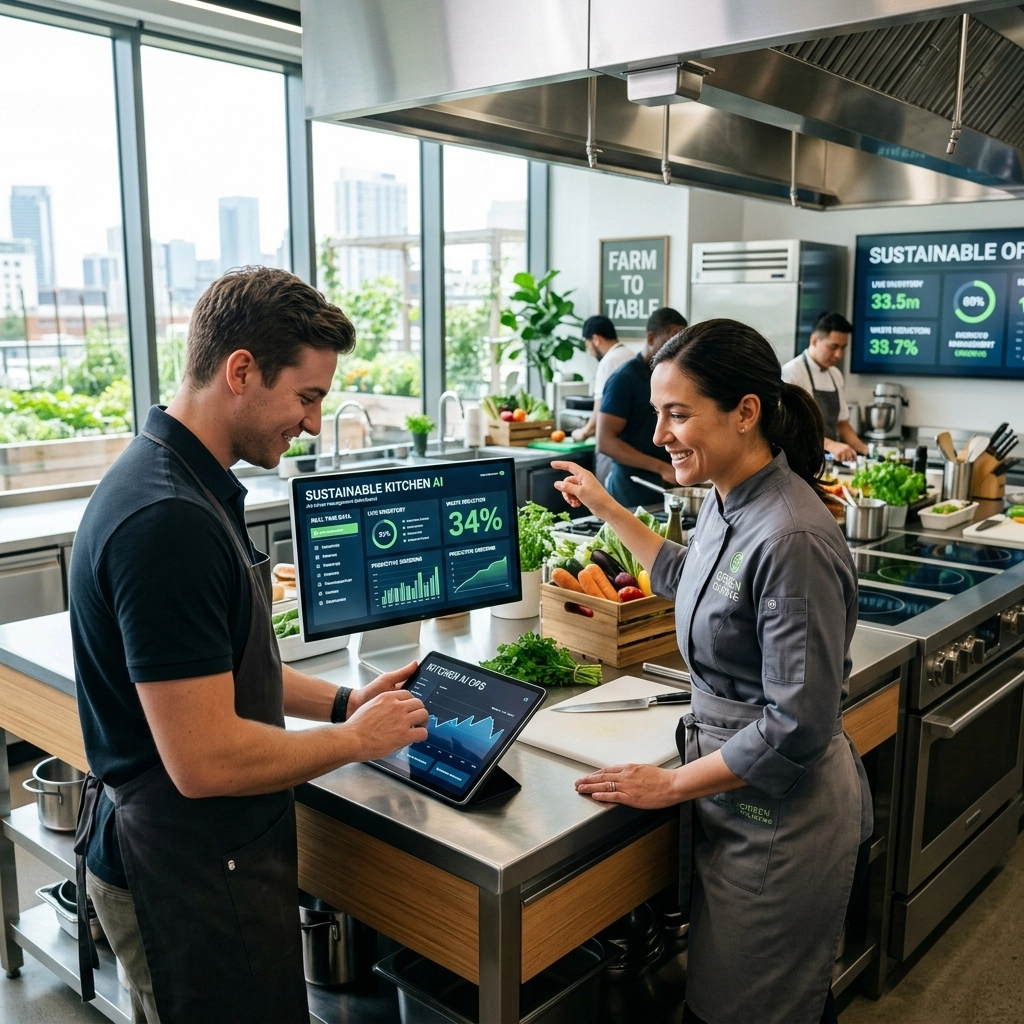
Let’s be honest: the traditional professional kitchen is a high-octane environment that is often, by design, incredibly wasteful. Between the "just in case" prep lists and the walk-in cooler that eats energy like a hungry teenager, being "green" has historically felt like a luxury that most margins simply couldn't afford.
But the landscape is shifting. We aren't just talking about swapping plastic straws for paper ones that disintegrate in ten seconds. We’re talking about the Triple Bottom Line: People, Planet, and Profit. In the modern era, sustainability isn't just a moral imperative; it’s a financial survival strategy.
At Restaurant Revenue Incubator, we specialize in scaling concepts through efficiency. And right now, the most powerful tool in our arsenal is the integration of Artificial Intelligence (AI) with sustainable kitchen operations. The best part? When done correctly, this doesn't have to be a massive capital expenditure. Through our "No Upfront Cost" turnaround services, we help operators fund their future through the waste they stop throwing in the dumpster today.
Why Sustainability is the New Secret Sauce
Before we dive into the "how," let’s talk about the "why." If you’re a restaurant owner, your ears likely perk up at the word "savings." Sustainability, when viewed through the lens of AI, is essentially the ultimate cost-cutting exercise.
- Profit: Reducing food waste by 30% can immediately add points back to your bottom line.
- Planet: A leaner kitchen uses less energy, less water, and produces less methane-generating landfill waste.
- People: AI-driven systems reduce the mental load on your staff, leading to less burnout and better retention. Happy staff = better service = more revenue.

1. Demand Forecasting: Stopping the "Guessing Game"
The most common source of kitchen waste is overproduction. Your head chef looks at the calendar, sees it’s a Friday, remembers last year’s Friday was busy, and orders enough protein to feed a small army. Then, a surprise rainstorm hits, the patio closes, and you’re left with $800 worth of halibut that’s going to be "slightly questionable" by Sunday.
How AI Solves This:
AI-powered demand forecasting doesn't just look at last week’s sales. It ingests historical data, local weather patterns, neighborhood events (like that 5k run you forgot about), and even social media trends.
- The Result: The system tells you exactly how many portions of halibut you’re likely to sell.
- The Impact: Kitchens using AI forecasting often see a 50-70% reduction in food waste. That is pure profit being rescued from the trash.
2. Smart Inventory & Purchasing
Your walk-in shouldn't be a mystery novel. If your team is still doing inventory with a clipboard and a prayer, you’re losing money.
AI-integrated inventory systems connect your POS (Point of Sale) directly to your ordering platform. They learn your "par" levels dynamically. If the AI notices you’re burning through cilantro faster than usual but your avocado sales are sagging, it adjusts the suggested order in real-time.
For the modern operator, this means fewer ingredients expiring on the shelf and less capital tied up in "just in case" inventory. Plus, when your team isn't stressed about running out of supplies, they can focus on what they do best: cooking. Maybe even while wearing some of our branded gear to keep the team spirit high.
3. Energy & Equipment Optimization: The Silent Profit Killers
Did you know that a single commercial fryer can cost as much to run as a small house? Or that a walk-in freezer with a leaking seal is basically a vacuum sucking cash out of your bank account?
What AI Does:
By installing simple IoT (Internet of Things) sensors, AI can monitor the energy draw of every piece of equipment in your kitchen.
- Predictive Maintenance: The AI can detect if a compressor is vibrating abnormally before it fails on a Saturday night.
- Automated Scheduling: AI can suggest staggered startup times for your ovens and fryers to avoid peak-demand energy surcharges from the utility company.

4. Food Waste Tracking & Analytics
You can’t manage what you don’t measure. Standard waste logs are often ignored during a rush. AI-enabled waste tracking uses smart scales and cameras (think "computer vision") to identify what is being thrown away and why.
If the system notices that 20% of your "Signature Kale Salad" is coming back on the plate, the AI identifies a pattern. Is the portion too big? Is the dressing too acidic? This data allows you to engineer your menu for maximum sustainability and maximum satisfaction.
A Phased Roadmap to Implementation
We get it. You can’t overhaul a kitchen overnight while trying to serve 200 covers. Here is a pragmatic, phased approach to integrating AI:
Phase 1: The "Low Hanging Fruit" (0-3 Months)
- Install Wireless Temp Sensors: Stop losing thousands in product because a fridge door stayed open overnight.
- Baseline Your Waste: Use a simple digital log to see where the biggest leaks are.
- Get the Team Onboard: Explain that this isn't "Big Brother": it's a tool to make their jobs easier.
Phase 2: Optimization (3-9 Months)
- AI Demand Forecasting: Start with your top 5 high-cost or high-waste items.
- Smart Ordering: Connect your inventory to your purchasing platform.
- Menu Engineering: Use the data from Phase 1 to tweak portion sizes and ingredient cross-utilization.
Phase 3: Total Automation (9+ Months)
- Energy Management: Implement AI-driven schedules for HVAC and heavy appliances.
- AI Kitchen Display Systems (KDS): Optimize ticket sequencing to reduce cook times and energy use per dish.

The "No Upfront Cost" Advantage
The biggest hurdle for most operators is the "price tag" of technology. At Restaurant Revenue Incubator, we take a different approach. We believe in our ability to find hidden revenue so much that we offer No Upfront Cost turnaround services.
We look at your current operations, identify where the AI-driven sustainability leaks are, and implement the solutions. We grow your revenue and shrink your costs, taking a piece of the "new" money we find for you. It’s a partnership where we only win when you win.
Whether you're looking to scale a single unit or optimize a multi-state franchise, the data is clear: AI and sustainability are no longer optional. They are the keys to a resilient, high-margin future.
Change Management: The Human Element
AI can predict the future, but it can’t sauté a scallop. The most successful integrations focus on the "People" part of the Triple Bottom Line.
Position the AI as a "Sous Chef for the Brain." It handles the boring stuff: counting boxes, checking temperatures, and calculating math: so your human chefs can focus on flavor and plating. To keep morale high during the transition, consider small perks like comfortable branded hoodies for the team. A comfortable crew is a productive crew.

Conclusion: The Future is Green (and Profitable)
Integrating AI into your kitchen operations isn't about replacing the "soul" of your restaurant with a computer. It’s about using technology to protect the environment and your bank account simultaneously.
By focusing on demand forecasting, energy optimization, and waste reduction, you aren't just being a "modern operator": you’re being a smart one. The data-driven kitchen is leaner, faster, and significantly more profitable.
Are you ready to see how much money you’re currently leaving in your grease trap? Let’s talk about a "No Upfront Cost" assessment. Your planet, your people, and your profit margin will thank you.
Want to dive deeper into restaurant tech or leadership? Check out our other guides or browse the Restaurant Revenue Incubator shop for the latest in operator gear.