Restaurant Technology · Uncategorized
Eco-Friendly Restaurant Profit: How to Integrate Sustainability With Your Tech Stack (At No Upfront Cost)
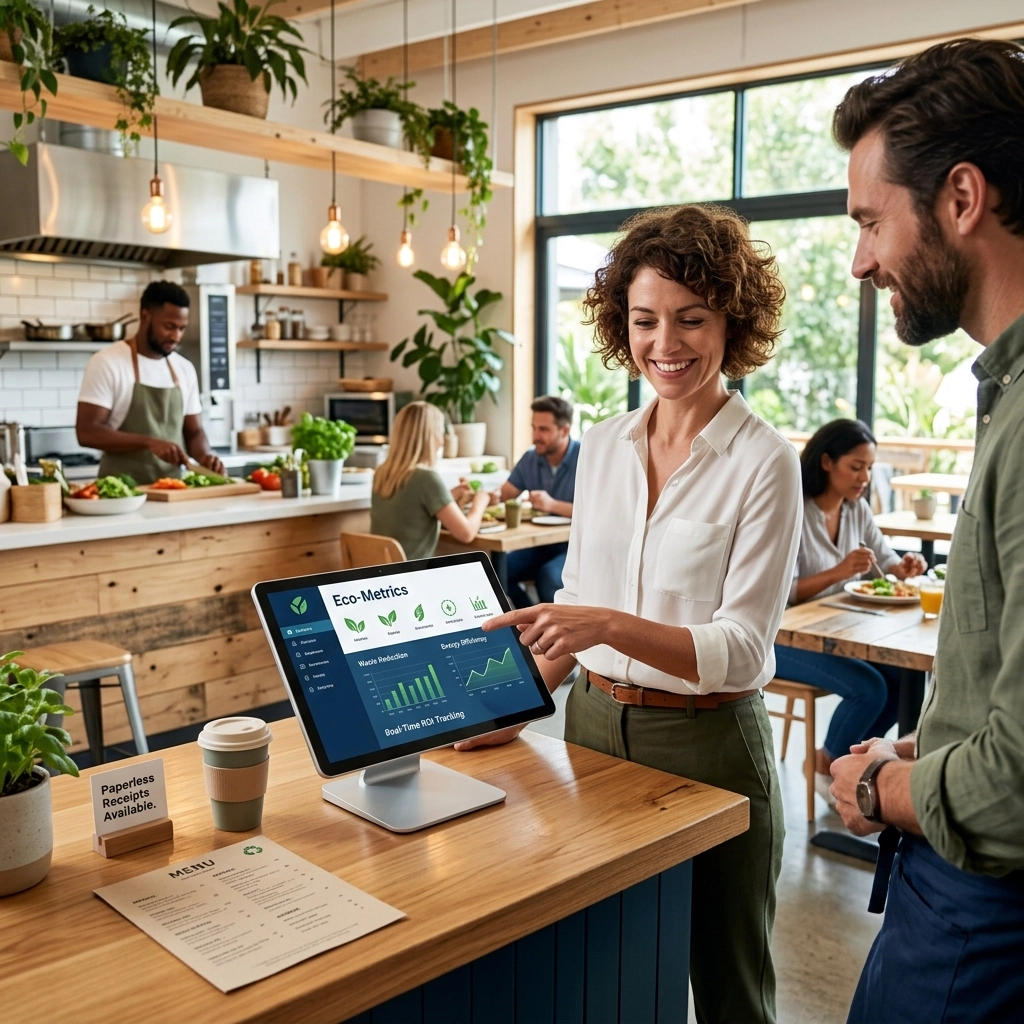
Let’s be honest: when most restaurant owners hear the word “sustainability,” they don’t see green leaves and chirping birds. They see dollar signs flying out of their bank accounts. They think of expensive solar panels, $14-per-box compostable straws that turn into mush in five minutes, and specialized organic suppliers that charge double for a head of lettuce.
But here’s the secret the "big guys" don’t want you to know: Sustainability isn’t just a PR stunt to make Gen Z feel better about their brunch choices. It is a mathematical blueprint for higher margins.
At Restaurant Revenue Incubator, we focus on the Triple Bottom Line: People, Planet, and Profit. If a "green" initiative doesn’t eventually lead to more green in your register, it’s not sustainable for your business. The best part? You can integrate these eco-friendly shifts into your existing tech stack with exactly zero dollars in upfront costs.
Here is how you turn your restaurant into a lean, mean, green machine while keeping your capital exactly where it belongs, in your pocket.
The Myth of the "Expensive" Green Transition
The traditional restaurant model is inherently wasteful. We over-order ingredients, over-print menus, and over-use energy. According to recent data, restaurants that pivot to tech-enabled sustainability see an average profit increase of 10% to 15%. This isn't magic; it’s the elimination of waste.
When we talk about our "No Upfront Cost" turnaround services, this is exactly what we mean. We look at your current tech stack, your POS, your inventory software, your scheduling tools, and we optimize them to stop the bleeding.
1. The Death of the Paper Trail (And the Birth of Profit)
If you are still printing paper receipts and physical menus for every guest, you aren’t just killing trees; you’re burning cash. Thermal paper is expensive, and those giant physical menus cost a fortune to update every time the price of avocados fluctuates.
The Tech Move: Most modern POS systems (think Clover, Toast, or Square) have digital features built-in that you’re likely already paying for but not using.
- Digital Receipts: By switching to "email or text" receipts, you save thousands annually on thermal rolls.
- QR Menus: Even in a post-pandemic world, QR codes are a godsend for menu engineering. You can update a price in three seconds without a trip to the local print shop.
- Mobile Ordering: Letting customers order from their own devices reduces the need for printed "check-off" slips in the kitchen.
Every piece of paper you don't print is a direct contribution to your bottom line and a reduction in your landfill footprint. It’s the easiest win in the book.

2. Inventory Tech: Your Secret Weapon Against Food Waste
Food waste is the silent killer of restaurant margins. Estimates suggest that 4% to 10% of food purchased by restaurants is wasted before it ever reaches a guest's plate. In a $2 million-a-year operation, that’s $200,000 going into the dumpster.
The Tech Move: Cloud-based inventory management.
You don't need to buy new hardware. You need to use the data-tracking features in your existing software to identify "the mystery box" in the back of the walk-in.
- Real-Time Tracking: By integrating your inventory with your POS, your system knows exactly how much chicken should be left based on how many sandwiches you sold.
- Demand Forecasting: Use your tech stack’s historical data to predict slow Tuesdays. Don't order like it's a Saturday if the data says you'll be empty.
- Spoilage Logs: Tracking why food is being tossed (over-prepped, expired, dropped) allows you to train staff specifically on those pain points.
Reducing food waste is the ultimate "Triple Bottom Line" victory: it lowers food costs (Profit), reduces methane emissions from landfills (Planet), and encourages a culture of mindfulness among your team (People).
3. Menu Engineering: Data-Driven Sustainability
Sustainability doesn't always mean "vegan." It means "efficient."
The Tech Move: Use your POS analytics to perform a menu engineering audit.
Identify your "Plowhorses" (high popularity, low margin) and your "Dogs" (low popularity, low margin).
- Ingredient Cross-Pollination: Look for items that use unique, perishable ingredients. If that one garnish is only used on a dish that sells once a week, it’s a sustainability nightmare. Use your tech to find ingredients that can work across five different menu items.
- Digital Upselling: Program your digital menu or kiosk to prompt guests to "opt-out" of plastic cutlery or extra napkins for delivery orders. You’d be shocked at how many people don't want the plastic spork. Every "no" is a few cents back in your pocket.
If you’re looking to boost your brand’s "Green Cred" while your team works on these optimizations, check out our Logo Collection. Wearing your commitment to the brand is part of the "People" pillar of the Triple Bottom Line.

4. Energy Automation: Stop Lighting an Empty Room
The second-largest expense for most restaurants (after labor and COGS) is utilities. We leave ovens on when they aren't in use, keep the AC at 68 degrees in an empty dining room, and leave the lights blazing during prep.
The Tech Move: Simple automation.
While high-end "Smart Building" systems can be pricey, many utility companies offer free energy audits and rebates for smart thermostats.
- Smart Thermostats: Program your HVAC to ramp down during non-service hours.
- LED Transition: If you haven’t switched every bulb to LED yet, you are essentially throwing five-dollar bills out the window.
At Restaurant Revenue Incubator, we often find that simply tweaking the "tech" of the building’s operations can shave 5-10% off the monthly electric bill without spending a dime on new equipment.
5. The "People" Element: Sustainability and Culture
A sustainable restaurant is one where people actually want to work. High turnover is the least "sustainable" thing in the industry. It costs thousands to train a new line cook.
The Tech Move: Scheduling and Communication apps.
By using tech to give employees more control over their schedules and better visibility into their earnings, you create a sustainable work environment. When staff see that you care about waste, whether it’s wasting their time or wasting a steak, they take more pride in their work.
Want to give your team a unified look while they save the planet? Our Long Sleeve Tee or Polo are perfect for a professional, cohesive staff presence that says "we mean business."

Why "No Upfront Cost" Matters
We know the restaurant world is volatile. You don't have $50,000 to drop on a "Green Initiative" consultant. That’s why our model at Restaurant Revenue Incubator is built on results, not retainers. We identify the inefficiencies in your current tech stack, implement the sustainability measures that actually drive profit, and we grow together.
We don't just tell you to "be more eco-friendly." We show you how to use your existing POS data to cut COGS by 3%. We show you how to digitize your workflow to save 15 hours of labor a week. We show you how the Planet and your Profit are on the same team.
The Bottom Line
The future of the restaurant industry isn't just about who has the best food; it's about who has the best systems. Integrating sustainability into your tech stack is the most effective way to future-proof your business.
You don't need a massive budget. You don't need to change your entire brand identity. You just need to look at your data, turn off the printer, and start treating every wasted gram of food like the lost profit it truly is.
Ready to see how your current tech stack can start paying for its own "green" upgrade? Explore our Shop for more resources, or contact us to learn more about our turnaround services.
And hey, if you're going to lead the revolution, you might as well look good doing it. Grab a Cap or some Sunglasses and get to work. Your margins: and the planet: will thank you.

Quick Wins Checklist for This Week:
- Audit your POS: Turn on digital receipts by default.
- Check your Waste: Spend 10 minutes looking at what’s in your dumpster. If it’s prep waste, adjust your par levels in your inventory software.
- The "Opt-Out" Feature: Add a toggle to your online ordering for "No Plastic Utensils."
- The Thermostat: Check the schedule on your HVAC. If it’s cooling the building at 3 AM, you’re losing money.
Sustainability is a marathon, not a sprint. But with the right tech, you can start winning the race today.