Restaurant Technology · Uncategorized
Why Triple Bottom Line Restaurants Will Change the Way You Scale
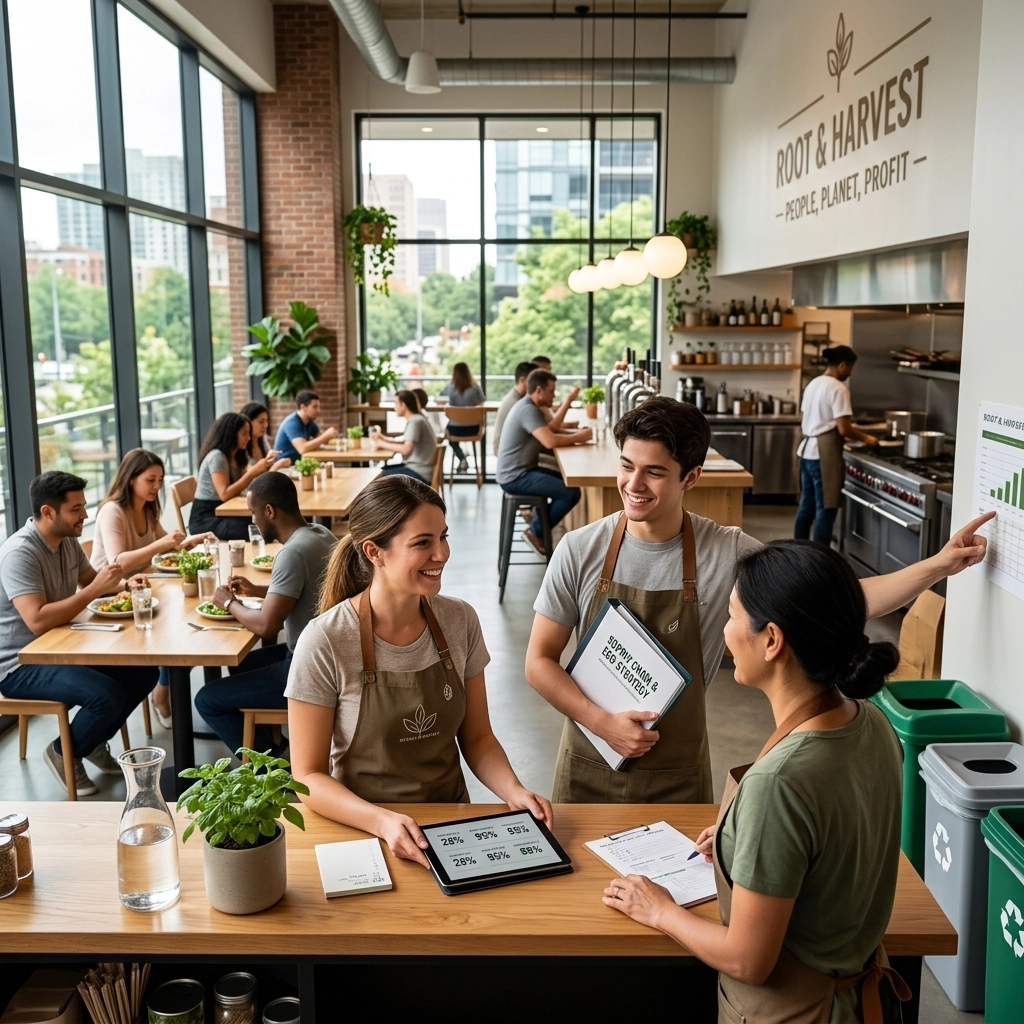
For decades, the standard operating procedure for scaling a restaurant was simple: find a high-traffic corner, squeeze the labor costs until they squeak, and buy the cheapest ingredients that won’t cause a health department intervention. It was the "Profit at All Costs" era. But if you’ve looked at the industry lately, you’ll notice that those old-school tactics are hitting a brick wall. High turnover, rising utility costs, and a consumer base that actually cares where their steak came from are making traditional scaling models obsolete.
Enter the Triple Bottom Line (TBL).
If you’re a restaurant owner or a CEO looking to move from three locations to thirty, the TBL framework isn’t just a "nice-to-have" sustainability badge for your website; it’s the blueprint for operational longevity. By focusing on People, Planet, and Profit, you aren't just saving the world, you’re building a more resilient, more profitable, and infinitely more scalable business.
At Restaurant Revenue Incubator, we specialize in taking underperforming concepts and turning them into powerhouses. The secret? We often look through the TBL lens to find the hidden "leakage" in your P&L. Best of all, our turnaround services come with no upfront cost. We win when you win.
Let’s dive into why the Triple Bottom Line is the ultimate growth hack for 2026.
1. Profit: The "Green" You Can Actually Spend
Let’s be honest: you can’t pay your rent with "good vibes." Profit is the engine that allows you to scale. However, the TBL approach argues that long-term profit is actually driven by social and environmental efficiency.
In a traditional model, scaling often means multiplying waste. If Location A is losing 4% of its revenue to food waste, and you scale to 10 locations, you haven’t just grown your brand, you’ve decupled your waste.
Efficiency is the Ultimate Margin Booster
When we audit a restaurant for a turnaround, we look at resource conservation as a direct line item for profit.
- Energy Audits: Smart HVAC systems and energy-efficient appliances aren't just eco-friendly; they slash utility bills by 15-25%.
- Waste Reduction: Implementing AI-driven inventory tracking (which we love at Restaurant Revenue Incubator) can cut food waste by nearly 30%. That’s pure profit returning to your pocket.
When you scale a "lean and green" model, your margins actually improve as you grow, rather than being eaten alive by the complexities of a multi-unit operation.

2. People: Solving the Labor Crisis Once and For All
The "People" pillar of the Triple Bottom Line is often the most overlooked by aggressive "growth-at-all-costs" operators. But here’s a data point that should keep every CEO up at night: the cost of replacing a single front-line restaurant employee is roughly $5,864. For a manager? You’re looking at $15,000+.
If your scaling strategy involves "churning and burning" through staff, you’re essentially lighting suitcases of cash on fire in the parking lot.
The Retention Advantage
Triple Bottom Line restaurants focus on:
- Fair Wages and Benefits: It sounds more expensive on paper, but when your turnover drops by 50%, the savings in training costs and operational consistency far outweigh the higher hourly rate.
- Community Integration: Hiring locally and supporting community events builds a "moat" around your brand. When you open your fifth location, you want a community that already loves you, not a neighborhood that views you as a corporate invader.
A happy team provides better service, which leads to better reviews, which leads to more customers. It’s a virtuous cycle that makes scaling much smoother. Our team at Restaurant Revenue Incubator often wears our branded gear while on-site because we believe in building a culture people actually want to be a part of, from the dish pit to the C-suite.
3. Planet: Future-Proofing Against the "Sustainability Tax"
Regulatory bodies are increasingly looking at the hospitality industry’s environmental impact. From plastic straw bans to mandatory composting and carbon reporting, the "Sustainability Tax" is coming.
Restaurants that wait until these things are mandatory to change their ways will face massive capital expenditures and operational whiplash. Triple Bottom Line restaurants, however, are already ahead of the curve.
Sourcing and Supply Chain
Scaling a restaurant means scaling your supply chain. By focusing on regenerative sourcing and local partnerships:
- You reduce logistics costs: Shipping a tomato 1,000 miles is expensive. Buying from a farm 20 miles away is efficient.
- You build brand loyalty: Modern diners (especially Gen Z and Millennials) are willing to pay a premium for transparency.

Tech-Driven Sustainability
This is where Restaurant Tech meets the Planet. Using AI to optimize delivery routes or sensors to monitor walk-in cooler health isn't just about "being techy." It’s about ensuring that your environmental footprint is as small as possible while your profit footprint is as large as possible.
4. How TBL Changes the Way You Scale
If you scale a broken model, you just get a bigger version of a broken business. If you scale a Triple Bottom Line model, you are scaling a system designed for efficiency and resilience.
Lower Cost of Capital
Investors and lenders are increasingly moving toward ESG (Environmental, Social, and Governance) criteria. If you can prove your restaurant group is a TBL leader, you’re likely to secure better interest rates and attract higher-quality equity partners. They see a TBL business as "de-risked." You aren't going to get shut down by a labor strike or a sudden shift in environmental law.
Brand Equity
In a crowded market, "we have good burgers" is not a strategy. "We have the best burgers in town, we pay our staff a living wage, and we compost 90% of our waste" is a story. Stories scale. People want to support businesses that align with their values. When you scale a TBL restaurant, you aren't just opening doors; you’re building a movement.

5. The Restaurant Revenue Incubator Edge: No Upfront Cost
We know what you’re thinking: "This sounds great, Robert, but I’m currently struggling with food costs and my GM just quit. I don’t have the budget to overhaul my entire sustainability strategy."
That’s where we come in. At Restaurant Revenue Incubator, we don’t believe in charging struggling operators massive consulting fees just to tell them what they’re doing wrong. We are "Affiliate Boosters" and turnaround specialists.
We offer No Upfront Cost services. We come in, implement these Triple Bottom Line efficiencies, optimize your tech stack, and fix your leadership culture. We take our payment as a percentage of the growth we create. If we don’t make you more money, we don’t get paid.
Whether you’re looking to fix one location or you’re ready to scale your concept across the country, we have the tools to make it happen. And hey, while we're fixing your margins, you might want to pick up a new beanie or some fresh gear for your crew to start building that new culture today.
Conclusion: The Choice is Yours
The old way of scaling is dying. It’s too expensive, too risky, and quite frankly, it’s a headache. The Triple Bottom Line offers a path to growth that is sustainable in every sense of the word.
By focusing on Profit, People, and Planet, you aren't just checking boxes; you’re building a machine that is designed to last. You’re reducing waste, lowering turnover, and creating a brand that customers are proud to support.
Ready to see how the Triple Bottom Line can transform your P&L? Let’s talk. At Restaurant Revenue Incubator, we’re ready to help you scale: sustainably, profitably, and with zero upfront risk to you.

Summary of TBL Benefits for Scaling:
| Pillar | Scaling Benefit | Financial Impact |
|---|---|---|
| Profit | Reduced operational waste per unit. | Higher EBITDA margins. |
| People | Lower turnover and better "bench strength" for new locations. | Reduced HR and training costs. |
| Planet | Future-proofed against regulations and supply shocks. | Lower utility costs and higher brand loyalty. |
Stop scaling your problems. Start scaling your solutions. Visit our shop to see how we’re rebranding the future of food, or contact us today to learn more about our turnaround services.