Restaurant Technology · Uncategorized
10 Reasons Your Restaurant Sustainability Isn’t Saving You Money (And How to Fix It)
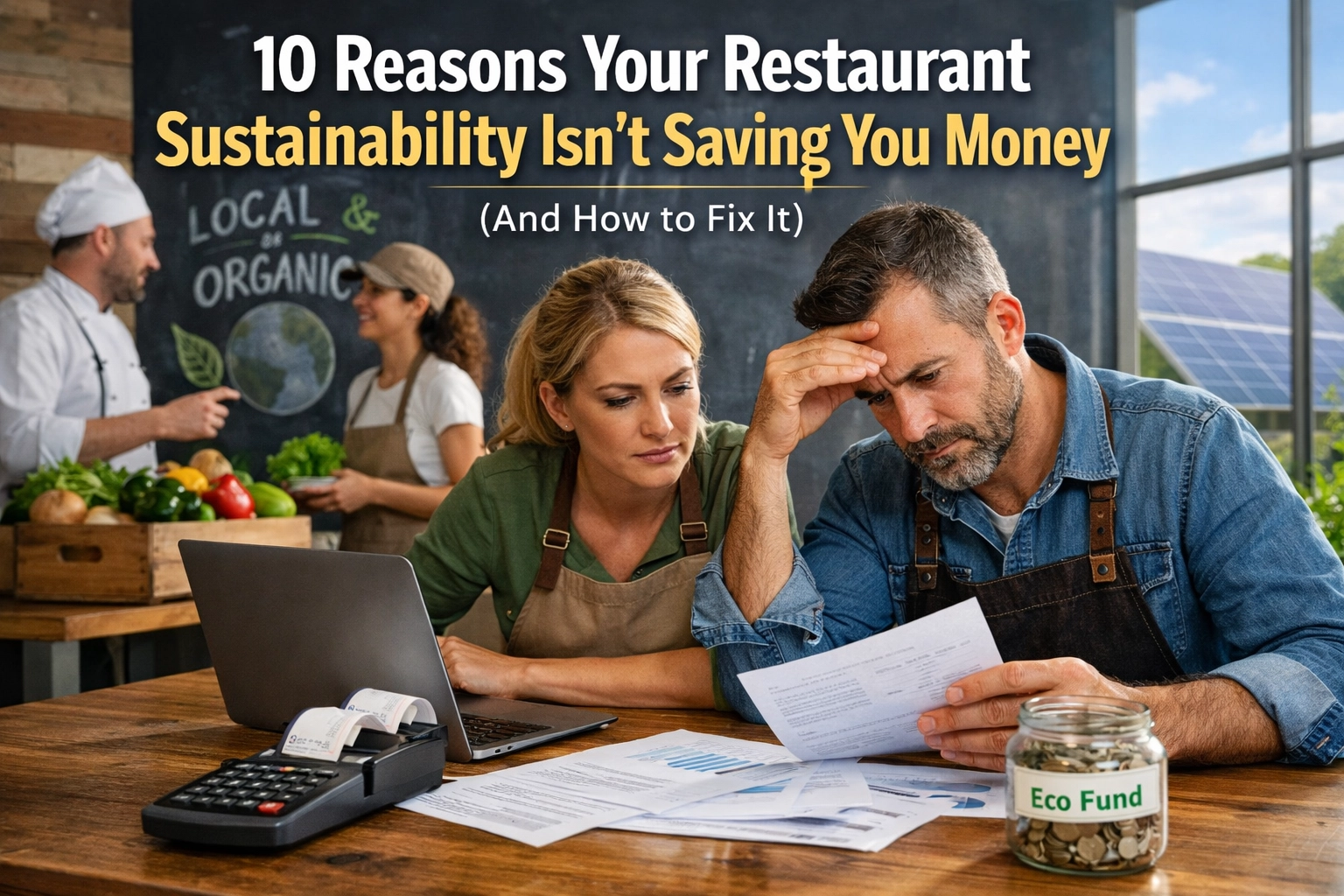
Let’s be honest: for a long time, "sustainability" in the restaurant world was treated like that one obscure vegan dish on the menu: everyone said they liked the idea of it, but nobody actually wanted to pay for it.
But times have changed. We’re now living in an era where the "Triple Bottom Line": People, Planet, and Profit: isn't just a buzzword; it’s a survival strategy. Research shows that restaurants can save an average of $7 in operating costs for every $1 invested in food waste reduction. That’s a 600% ROI. If a stock gave you those returns, you’d sell your car to buy more of it.
So, why are you still staring at a P&L statement that looks like it went through a paper shredder? If your "green" initiatives are bleeding red, you’re likely falling into one of these ten traps. Here is why your sustainability efforts aren't saving you money: and how we at Restaurant Revenue Incubator help operators fix it.
1. You’re Suffering from "Shiny Object" Syndrome
Many owners think sustainability means buying a $15,000 high-tech aerobic digester on day one. While that tech is cool, it’s a massive upfront cost that kills your cash flow. If you haven't done the basic math on your revenue optimization, you’re essentially buying a Ferrari to drive through a school zone.
The Fix: Start with low-capital, high-impact changes. Before you buy the fancy digester, look at your light bulbs. Swapping to LEDs uses 90% less energy and has a payback period of months, not years.
2. Your Staff Thinks "Compost" is a Suggestion
You can buy all the color-coded bins in the world, but if your line cook is in the weeds during a Friday night rush, that expensive compostable packaging is going right into the general waste. Sustainability is a leadership challenge, not just a procurement one. Without proper training and cultural buy-in, your investment is literally trashed.
The Fix: Incorporate sustainability into your onboarding. Make it part of the "People" pillar of your Triple Bottom Line. When the team understands that reducing waste leads to better margins: and potentially better bonuses: the behavior shifts.
3. You Aren’t Measuring the Right Data
If you can’t measure it, you can’t manage it. Many restaurants "feel" like they are being sustainable because they stopped using plastic straws, but they have no idea what their actual food waste weight is or how much energy their walk-in cooler is sucking up because of a leaky gasket.

The Fix: Use restaurant tech to track metrics. AI-driven waste tracking and smart thermostats provide the data needed to see where the money is leaking. At Restaurant Revenue Incubator, we specialize in identifying these "hidden" costs through our cost reduction audits.
4. The "Local" Trap
Sourcing locally is great for the "Planet" and "People" parts of the equation, but it can be a "Profit" killer if handled poorly. If you’re paying a 40% premium for heirloom tomatoes that have a three-day shelf life, your COGS (Cost of Goods Sold) will skyrocket.
The Fix: Balance your menu. Use local for high-impact "hero" ingredients where the quality difference justifies a price premium, but stick to reliable, sustainable bulk distributors for your staples. You can’t build a profitable scale on $9-a-pound kale unless you’re charging $30 for a salad.
5. You’re Thinking in Silos, Not Systems
Sustainability isn't a "department"; it’s an operational philosophy. If you invest in energy-efficient ovens but don't change your menu to optimize oven space, you’re missing the point. Successful programs combine food waste monitoring, staff training, and menu redesign simultaneously.
The Fix: Look at your operations holistically. A growth and scaling strategy must account for how every "green" choice affects the speed of service and labor costs.
6. You’re Ignoring the "Boring" ROI
Everyone wants to talk about solar panels, but nobody wants to talk about low-flow faucet aerators or occupancy sensors. These "boring" fixes can reduce lighting consumption by 60% and water heating costs significantly with almost zero effort.

The Fix: Conduct a "low-hanging fruit" audit. Check the seals on your refrigeration, install strip curtains on the walk-in, and put the dining room lights on a timer. These are the boring wins that fund your more exciting initiatives.
7. You’re Keeping Your Green Efforts a Secret
Sustainability has a "Premium" value. Data suggests consumers are willing to pay up to a 20% premium for meals from environmentally responsible brands. If you’re doing the work but not telling the story, you’re leaving money on the table.
The Fix: Market your efforts! Update your "About Us" page and use social media to show your composting program or your partnership with local farms. This helps in driving new customers who prioritize values-based spending.
8. You’re Buying "Eco-Luxury"
There is a massive market for "sustainable" products that are overpriced simply because of the branding. Buying the most expensive bamboo forks on the market just to look green might hurt your bottom line more than it helps the planet.
The Fix: Procurement is key. Sustainable products should, in theory, be resource-efficient. Shop around and look for the most cost-effective eco-friendly alternatives. Sometimes, the most sustainable option is simply less: like moving to a straw-on-request policy rather than buying expensive paper ones for everyone.
9. You’re Too Impatient for the ROI
Sustainability is a marathon, not a sprint. If you’re evaluating the success of a new energy-efficient HVAC system after three months, you’re going to be disappointed. Most substantial sustainability investments have a 12-to-24-month payback period.

The Fix: View these as capital investments, not just monthly expenses. If your cash flow is too tight to wait for that ROI, that’s where we come in. Our turnaround services are designed to find immediate cash flow improvements that can then be reinvested into long-term sustainability.
10. You Lack Systematic Financial Monitoring
Most restaurant owners are too busy running the floor to deep-dive into their utility bills or waste disposal fees. Without a professional eye on the P&L, you won't notice that your waste hauler is overcharging you or that your water bill doubled due to a silent leak.
The Fix: Get professional financial eyes on your business. You need a systematic way to audit your resource consumption and compare it against industry benchmarks.
How to Fix Your Bottom Line (Without the Upfront Cost)
If you’ve read this far, you’re likely realized that sustainability should be saving you money, but you might not have the capital or the time to implement these fixes yourself.
This is exactly why Restaurant Revenue Incubator exists. We don't just give you a "to-do" list and wish you luck. We offer a No Upfront Cost turnaround service.
We take a deep dive into your leadership, your tech stack, and your operational efficiency. We identify the waste (both physical and financial) and implement the systems to fix it. We only get paid when you see a measurable increase in your revenue and a decrease in your costs.
Sustainability isn't about being a martyr for the environment; it's about building a resilient, profitable, and scalable business that can thrive for decades.
Ready to stop bleeding cash?
Contact us today for a consultation, or explore our cost reduction services to see how we can turn your "green" initiatives into actual "green" in your bank account.

By Robert, Sales Director at Restaurant Revenue Incubator
Helping restaurants grow, scale, and stay profitable: one LED bulb and optimized menu at a time.