Restaurant Technology · Uncategorized
Are High Food Costs Dead? How to Integrate Sustainable Kitchen Operations With Better Tech
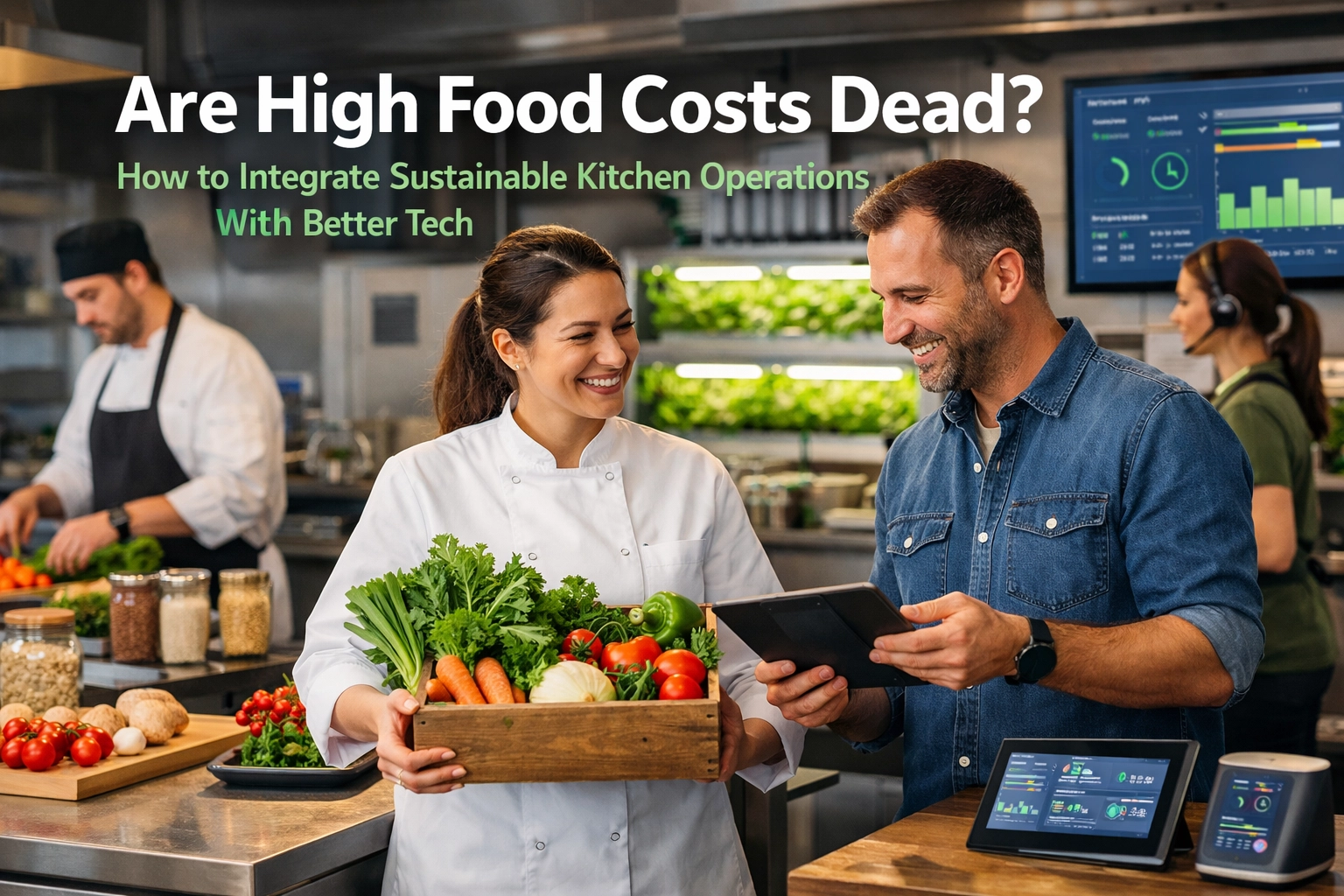
If you’ve walked into a walk-in freezer lately and felt a chill that wasn't just from the compressor, you’re not alone. For the last few years, restaurant owners have been staring at invoices like they’re horror movie scripts. But as we sit here in February 2026, the narrative is shifting. The question on everyone’s lips: from the line cook to the CEO: is simple: Are high food costs finally dead?
The short answer? Not exactly. They’ve just stopped sprinting and started a brisk, annoying walk.
While the hyper-inflationary "dumpster fire" of the early 2020s has cooled, we are entering a new era of "The Long Squeeze." Grocery prices are projected to rise a modest 1.7% to 2.5% this year, but restaurant prices (food-away-from-home) are still climbing at a clip of 3.7% to 4.6%.
At Restaurant Revenue Incubator, we don't believe in waiting for the markets to behave. We believe in building kitchens that are immune to market volatility. The secret weapon? Integrating sustainable operations with high-level tech. It’s the Triple Bottom Line: People, Planet, and Profit: and it’s the only way to scale in 2026.
The 2026 Reality Check: Cooling Inflation vs. Structural Costs
Let’s look at the data. If you’re heavy on eggs, you’re laughing: prices are expected to drop nearly 27% as the avian flu recovery stabilizes. But if your menu relies on beef, veal, or sugar, you’re still looking at 5% to 7% increases.
The volatility hasn't disappeared; it’s just become more specific. This "whack-a-mole" economy makes traditional inventory management about as effective as using a sieve to catch rain. To survive, operators need to move beyond reacting to invoices and start predicting them.

Sustainability: The Profit Margin’s Best Friend
When people hear "sustainability," they often think of expensive compostable straws that turn into mush in five minutes. But in a professional kitchen, sustainability is actually the ultimate cost-cutting tool. We look at this through the lens of the Triple Bottom Line.
1. Planet: Waste is Just Profit in the Wrong Bin
Did you know the average restaurant loses 4% to 10% of its food inventory to "pre-consumer waste" before it even reaches a plate? In the old days, we called that the cost of doing business. In 2026, we call that a failure of systems.
Sustainable kitchen operations focus on:
- Root-to-Stem Cooking: Using every part of the ingredient isn't just a culinary trend; it's a financial necessity. That broccoli stalk you’re throwing away? That’s a slaw. Those beef trimmings? That’s the base for a high-margin tallow or jus.
- Energy Efficiency: A fridge with a leaky gasket is essentially a vacuum sucking cash out of your bank account. Tech-enabled sensors can now alert your phone the second a compressor starts to struggle, saving you thousands in spoiled product.
2. People: Retention is Cheaper Than Recruitment
Sustainability isn't just about the environment; it’s about the human ecosystem. The cost of replacing a single manager can exceed $15,000. By integrating tech that simplifies the "grind," you create a sustainable workplace. When your staff isn't spending three hours a night on manual inventory counts because an AI system did it in ten minutes, they stay longer. Happy people produce less waste and provide better service.
3. Profit: The "No Upfront Cost" Turnaround
This is where the rubber meets the road. Most operators want the latest tech, but they don't have the $50k sitting around to overhaul their stack. At Restaurant Revenue Incubator, we specialize in "No Upfront Cost" turnaround services. We implement the systems, find the savings, and grow your revenue, taking our piece from the new profit we create for you. If you don't win, we don't get paid.
The Tech Stack of 2026: Automation vs. Human Touch
If your tech stack still feels like a collection of disjointed apps that don't talk to each other, you’re leaving 5-8% of your margin on the table. Here is how modern tech is killing high food costs:
AI-Driven Inventory Forecasting
Stop ordering based on "gut feeling." Modern AI integrations analyze your POS data against local weather patterns, city events, and historical trends. If there’s a rainstorm coming next Tuesday, the system knows you’ll sell 30% more soup and 50% fewer salads. It adjusts your prep lists and ordering suggestions automatically.

Automated Waste Tracking
Smart scales and cameras positioned over prep stations and trash cans can now identify exactly what is being thrown away. If the system sees $200 worth of wilted kale hitting the bin every Thursday, it doesn't just tell you: it flags the ordering manager to cut the par.
Smart Kitchen Displays (KDS)
The paper ticket is officially a relic. A modern KDS doesn't just show orders; it sequences them for maximum efficiency, reducing the "re-fire" rate. Every meal sent back because it was cold or wrong is a hit to your food cost. Tech minimizes human error.
Case Study: From "Red" to "Green"
We recently worked with a multi-unit concept that was struggling with a 34% food cost. They were "sustainable" in name: buying local, organic produce: but their trash cans were full and their labor was disorganized.
We implemented a three-pillar strategy:
- Tech Overhaul: Integrated their inventory with their vendors via API for real-time pricing updates.
- Waste Audit: Installed AI-assisted waste tracking.
- The Pivot: We moved them to a "No Upfront Cost" model where we optimized their supply chain.
Within six months, food costs dropped to 28.5%. That 5.5% difference represented nearly $200,000 in found profit across their locations. They didn't have to raise prices on their customers; they just had to stop wasting money.

Scaling: How to Expand Without Breaking the System
When you scale a restaurant, your inefficiencies scale with you. If you have a "leaky bucket" at one location, you'll have a waterfall of lost cash at ten locations.
The goal of integrating tech and sustainability is to create a "Plug and Play" model. When every location uses the same AI-driven ordering and the same waste-reduction protocols, your Growth & Scaling becomes predictable. You’re no longer a chef-owner fighting fires; you’re a CEO managing a system.
The Leadership Shift
To make this work, the leadership tone has to change. The "Gordon Ramsay" style of screaming about food costs is dead. It doesn't work on Gen Z, and it doesn't solve the underlying problem.
Modern leadership is about Transparency and Data. Show your kitchen team the waste reports. Gamify the reduction of food waste. Reward the sous chef who finds a way to use the most "scraps." When the team understands that sustainability equals a more stable, profitable company (and potentially better bonuses), they buy in.

Is Your Restaurant Ready for the Future?
High food costs aren't "dead": they’ve just become a test of intelligence. The restaurants that will thrive in the late 2020s are those that stop treating "Eco-friendly" as a marketing buzzword and start treating it as a financial strategy.
At Restaurant Revenue Incubator, we help you navigate this transition. Whether you’re looking to optimize a single location or scale a national brand, our team provides the tech stack, the operational expertise, and the "No Upfront Cost" partnership you need to succeed.
Don't let your margins vanish into the trash can. Let's build something sustainable.
Ready to see how much you could be saving? Check out our post-sitemap.xml for more deep dives or reach out to us directly at restaurantrevenueincubator.com.
Key Takeaways for the Week:
- Check your Beef/Sugar contracts: Prices are still volatile there.
- Audit your trash: Spend one hour watching what goes into the bin. It’s eye-opening.
- Invest in APIs: Ensure your POS and Inventory systems are talking to each other.
The era of high food costs might not be over, but the era of excuses for high food costs certainly is. Integrated tech is the vaccine for inflation. It’s time to get your shot.