Restaurant Technology · Uncategorized
How to Choose the Best Sustainable Kitchen Operations Tech to Slash Food Waste (Compared)
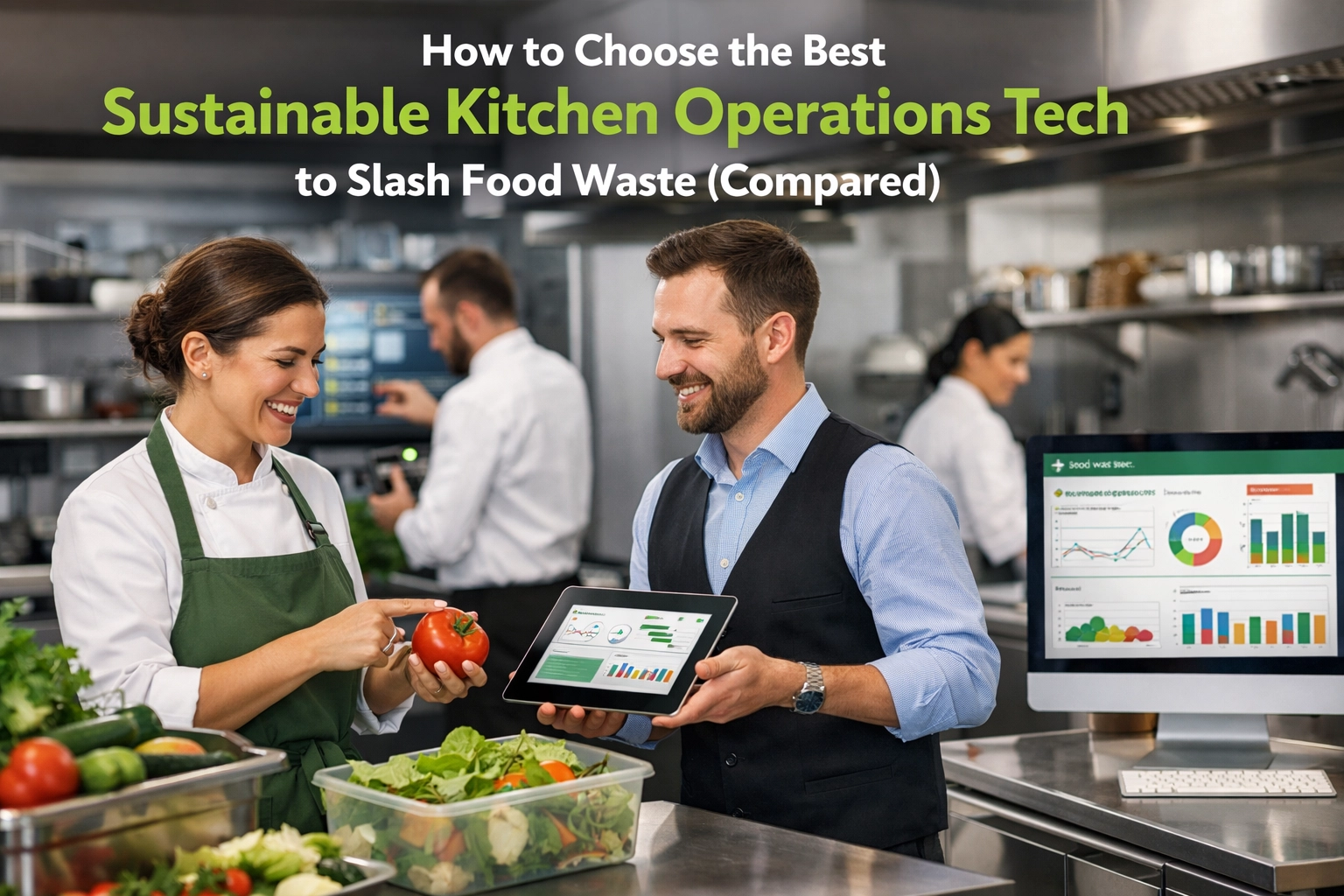
If you’ve ever walked past your restaurant's dumpster at 11:00 PM and felt a physical pang in your chest, you’re not alone. That’s not just old lettuce and prep-scraps you’re looking at; it’s literally cold, hard cash that you’ve paid for, processed, and are now paying someone else to haul away.
In the restaurant industry, we often treat food waste as an "unavoidable cost of doing business." But here’s the reality: food waste is a $160 billion problem globally. For the average operator, food waste represents about 4% to 10% of total food purchased. When margins are already razor-thin, that’s the difference between a profitable quarter and a "let’s call the bank" phone call.
At Restaurant Revenue Incubator, we focus on the Triple Bottom Line: People, Planet, and Profit. Sustainable kitchen tech isn't just about being a "green" hero; it’s about plugging the leaks in your bucket. Today, we’re doing a deep dive into the tech stack that turns your trash into treasure.
Why "Going Green" is Actually "Going Gold"
Before we look at the gadgets, let’s talk about the why. The Triple Bottom Line suggests that a company’s success should be measured by its social, environmental, and financial impact.
- Profit: Reducing food waste by 50% can increase a restaurant’s profit margin by 2% to 6%. In our world, that’s a massive win.
- Planet: If food waste were a country, it would be the third-largest emitter of greenhouse gases.
- People: Staff burnout is real. Waste-tracking tech often simplifies prep-lists and inventory, making life easier for your BOH team.
If you’re worried about the cost of implementation, remember that we specialize in "No Upfront Cost" turnaround services. We find the waste, fix the systems, and share in the growth. Now, let's look at the tech.

1. AI-Powered Waste Tracking: The Heavy Hitters
If you want to move the needle fast, AI-powered systems are the Ferraris of the kitchen tech world. These systems use computer vision (a fancy way of saying a smart camera over your bin) to recognize exactly what is being thrown away.
How it works: A camera and a scale are installed above your waste bins. When a chef scrapes a tray, the AI identifies the item (e.g., "Mashed Potatoes – Overproduction") and logs the weight and cost in real-time.
The Data: Research shows that these systems can reduce food waste by up to 70%. Take the Raffles Singapore as an example; they slashed food waste by 29% in just six weeks using AI tracking, saving over a ton of food.
Best for: Large-scale operations, hotels, and high-volume buffet concepts where overproduction is the primary villain.
2. Digital Food Waste Logs: The "Entry-Level" Professional
Maybe you aren’t ready for a camera-monitored bin just yet. Digital waste logs are the next step up from the "clipboard and a prayer" method. These are tablet-based systems where staff manually (or semi-automatically) log waste.
The Advantage: It forces a culture of accountability. When a line cook has to tap "Burnt Steak" on a screen, they become hyper-aware of their mistakes.
The ROI: One mid-sized restaurant saw a 15% reduction in waste simply by realizing that 30% of their waste came from over-preparing one specific garnish. They adjusted the prep-par, and the savings went straight to the bottom line.
Best for: Independent restaurants and small chains looking for high visibility without a massive tech investment.

3. Smart Inventory Management: The Predictive Brain
You can’t manage what you don’t measure, but you also can’t manage what you don’t order correctly. Smart inventory systems link your POS (Point of Sale) to your purchasing.
The Magic: These systems use historical data to predict exactly how much sourdough you’ll need for a rainy Tuesday in March. They adjust your purchase orders automatically, ensuring you aren't overstocking perishables that will just end up in the bin by Friday.
Sustainability Angle: By optimizing delivery schedules, these systems also reduce the carbon footprint of your supply chain. Fewer trucks coming to your back door means a happier planet and fewer delivery fees for you.
Best for: Any operator tired of "emergency" grocery store runs or seeing expensive proteins hit their expiration date.
4. Energy-Efficient Equipment: The Passive Savers
Sustainability isn't just about what's in the bin; it's about what's on the utility bill. Energy-efficient equipment (ENERGY STAR-rated ovens, fridges, and dishwashers) works in the background to save you money without your staff having to change a single habit.
- Demand-Controlled Ventilation (DCV): Most kitchen hoods run at 100% all day. DCV uses sensors to detect heat and smoke, ramping up the fans only when needed. It’s like a smart thermostat for your whole kitchen.
- Induction Cooktops: They are 90% efficient compared to 40% for gas. Plus, they keep the kitchen cooler, reducing your AC costs (and keeping your chefs from melting).

Tech Comparison: Which One Should You Choose?
| Technology Type | Primary Goal | Waste Reduction Potential | Complexity | Best For |
|---|---|---|---|---|
| AI Waste Tracking | Identifying overproduction | 30% – 70% | High | High-volume / Buffets |
| Digital Waste Logs | Staff accountability | 10% – 20% | Medium | Mid-sized Independents |
| Smart Inventory | Reducing spoilage | 15% – 25% | High | Multi-unit operations |
| Energy-Efficient Gear | Reducing utility spend | N/A (Cost focus) | Low | Everyone |
How to Implement Without the "Sticker Shock"
We get it. You're looking at the price tags of AI cameras and smart ovens and thinking, "Robert, I’m trying to save money, not spend my retirement fund on a smart trash can."
This is where Restaurant Revenue Incubator steps in. Our model is built on the idea that you shouldn't have to pay upfront for the tech that saves your business. We offer a "No Upfront Cost" turnaround service. We analyze your waste, identify the tech that will yield the highest ROI, and implement it. We win when you win.
If you’re curious about how we can help you scale while staying green, check out our full sitemap for more resources or visit our shop if you want to look the part of a modern operator. (Seriously, our hoodies are much more comfortable than a chef’s coat when you’re doing inventory at 2 AM).
The Human Element: Training Your "Green Team"
Tech is only as good as the people using it. If your BOH team views waste tracking as "Big Brother" watching them, they’ll find ways to bypass the system.
The Solution: Gamify it. Use the data from your new tech to reward the shift with the lowest waste percentage. When the "People" part of the Triple Bottom Line feels included in the "Profit" part, the "Planet" wins by default.

Final Thoughts: Don't Let Your Profits Rot
Choosing the right sustainable kitchen tech isn't about jumping on a trend. It's about data-driven decision-making. Whether you start with a simple digital log or go full "Minority Report" with AI cameras, the goal is the same: stop throwing money away.
If you’re ready to slash your waste and boost your margins without the headache of doing it alone, let’s talk. We’ve helped countless operators turn their kitchens into high-efficiency, sustainable machines.
Your dumpster has had a good run. It’s time to put it on a diet.
Want to learn more about how we optimize restaurant tech stacks? Explore our product categories or read our latest deep-dive on Growth & Scaling.