Restaurant Technology · Uncategorized
Restaurant News Roundup: McDonald's Goes Playful, Franchises Pivot, Twin Peaks Shakeup, and 2026's Industry Forecast
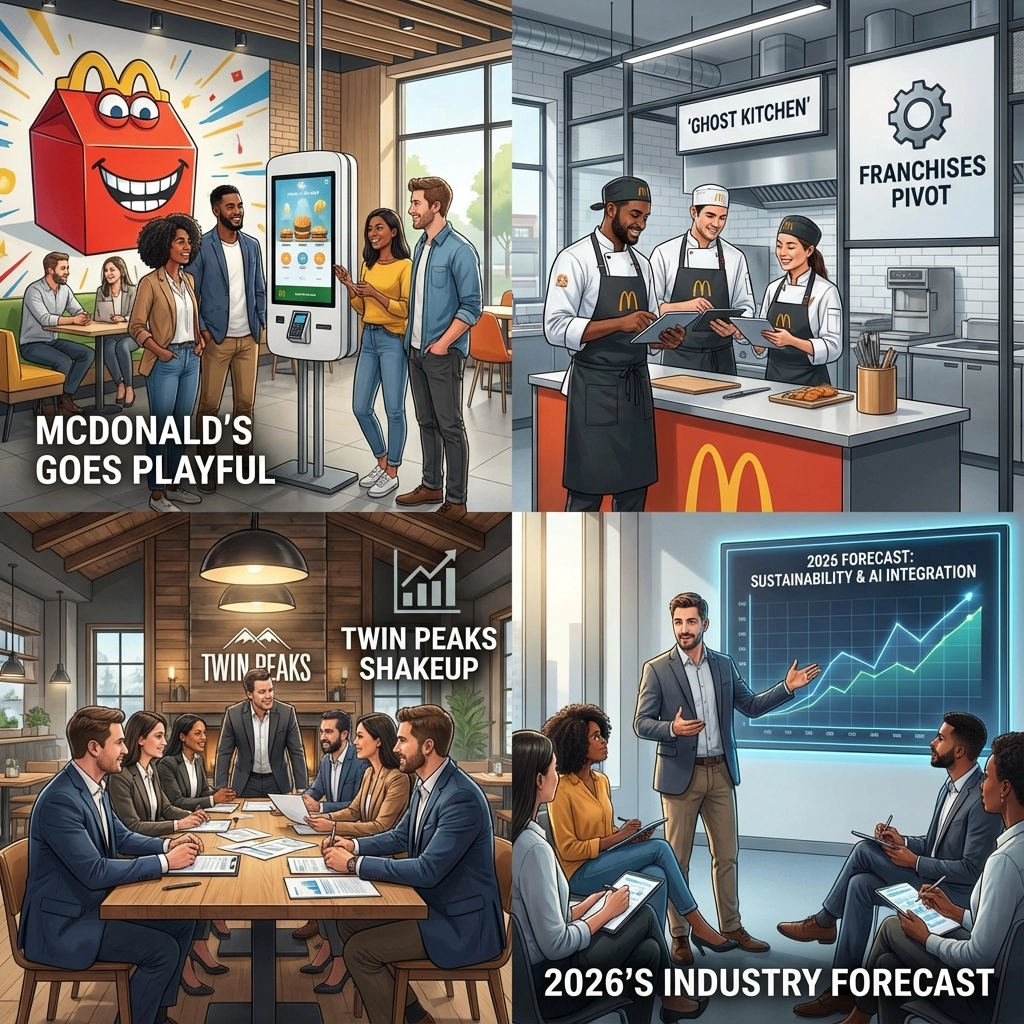
The restaurant industry is kicking off 2026 with a fascinating mix of playful innovation, executive shake-ups, and cautious optimism. From McDonald's worldwide creativity campaign to franchise model pivots and leadership changes, here's what's shaping the industry landscape this January.
McDonald's Teams Up with Crayola for Global Creative Experience
In a move that signals McDonald's commitment to family engagement and creative play, the golden arches has launched a McDonald's global Happy Meal x Crayola launch that's rolling out worldwide. The McDonald's Happy Meal Crayola campaign 2026 blends traditional toys with interactive activities and digital components, creating what the company calls a "creativity-first" dining experience for kids.
The collaboration features specially designed Crayola products, interactive coloring experiences, and digital engagement tools that extend the Happy Meal experience beyond the restaurant visit. While U.S. participation details remain under wraps, international markets are already seeing the rollout of enhanced packaging, custom crayon sets, and restaurant-based creative stations.

This strategic partnership represents McDonald's broader push toward experience-driven dining, particularly as competition for family dollars intensifies. The campaign aligns with research showing parents increasingly value brands that combine entertainment with educational elements, making meals feel less transactional and more memorable.
Industry analysts see this as McDonald's response to changing family dining patterns, where quick-service restaurants must work harder to create destination experiences rather than just convenient meal stops.
Leadership Turbulence at Twin Peaks
The casual dining sector continues to experience executive volatility, with Twin Peaks appoints new CEO Andy Wiederhorn stepping in to replace Kim Boerema amid ongoing brand struggles. The Twin Peaks CEO replaced 2026 situation comes as the sports-lodge concept grapples with a 50% drop in brand value and declining same-store sales.
Wiederhorn, who brings extensive hospitality industry experience, faces the challenging task of revitalizing a brand that has struggled to differentiate itself in the crowded sports bar and casual dining space. The leadership change reflects broader challenges within the casual dining segment, where operators are battling elevated labor costs, shifting consumer preferences, and increased competition from fast-casual alternatives.
The Twin Peaks shakeup highlights a common theme across restaurant leadership in 2026: boards are increasingly willing to make swift executive changes when performance lags, particularly as investor patience wears thin after several challenging years for the industry.
Chick-fil-A Revolutionizes Its Licensing Model
In a significant operational shift, Chick-fil-A licensing shift is moving campus, hospital, and other non-traditional locations from licensing agreements to its proven owner-operator model. This Chick-fil-A campus licensing explained move affects college campuses, healthcare facilities, and theme park locations nationwide.
The transition represents Chick-fil-A's belief that tighter local control and the owner-operator investment model produces superior operational results and customer experiences. Licensed locations, while easier to scale rapidly, often lack the hands-on management and community connection that characterize traditional Chick-fil-A restaurants.

This change signals the brand's confidence in its operational model and willingness to potentially sacrifice some expansion speed for consistency and quality. It also reflects the company's long-term view that sustainable growth requires maintaining its distinctive culture and operational standards across all locations.
The move could influence how other major chains approach non-traditional location development, particularly as brands grapple with maintaining consistency across diverse operating environments.
KFC's Saucy Concept Gains Momentum
Kentucky Fried Chicken is betting big on flavor differentiation with its KFC Saucy concept opening three new Orlando locations. The KFC Saucy concept Orlando features 11 housemade signature sauces, live entertainment programming, and what the company describes as a "flavor-forward" chicken experience.
This concept represents KFC's attempt to create a more premium, experiential dining option within the competitive chicken segment. The sauce-centric approach allows for menu customization and repeat visits as customers explore different flavor combinations.
The Saucy locations also incorporate live events and community programming, positioning them as entertainment destinations rather than traditional quick-service stops. This aligns with broader industry trends toward "eatertainment" concepts that combine dining with social experiences.
If successful, the Saucy model could provide KFC with a differentiated growth platform and help the brand capture customers seeking more adventurous flavor profiles and dining experiences.
Industry Forecast: Cautious Optimism for 2026
According to Technomic 2026 industry forecast, the restaurant franchise outlook for 2026 shows cautious optimism with projected real growth of 1-2% after a challenging 2025. This restaurant franchise outlook 2026 prediction comes as food costs show signs of stabilizing and economic conditions gradually improve.

The forecast reflects several key factors driving modest recovery:
Cost Stabilization: Food and labor cost inflation appears to be moderating after years of significant increases, giving operators more predictable expense structures.
Consumer Adaptation: Diners have adjusted to higher menu prices, with demand patterns stabilizing around new price points.
Operational Efficiency: Restaurants have implemented technology and process improvements that are beginning to show measurable productivity gains.
Market Maturation: After rapid expansion in some segments, brands are focusing on optimizing existing locations rather than aggressive growth.
However, challenges remain significant. The International Franchise Association describes the outlook as "optimistic but complex," noting that many operators missed growth targets in 2025 and are approaching 2026 expansion with increased caution.
Menu Innovation and Legal Developments
The industry's focus on health and customization continues with Shake Shack's launch of its "Good Fit Menu," targeting health-conscious consumers with lower-calorie, nutrient-focused options. This menu development reflects growing demand for transparency and healthier choices within the fast-casual segment.
Meanwhile, Chipotle secured a significant legal victory in a class-action lawsuit over portion sizes, maintaining customer goodwill while defending its operational practices. The win reinforces Chipotle's position that its customizable format provides fair value and appropriate portions.

These developments highlight two critical industry themes: the ongoing importance of menu innovation to meet evolving consumer demands, and the increasing legal scrutiny around operational practices and customer promises.
Strategic Implications for Restaurant Operators
The current landscape presents both opportunities and challenges for restaurant operators. Successful brands are those adapting quickly to changing consumer expectations while maintaining operational discipline.
Key strategic considerations include:
Experience Differentiation: Brands like McDonald's and KFC are investing heavily in creating memorable, differentiated experiences beyond basic food service.
Operational Consistency: Chick-fil-A's licensing pivot demonstrates the value of maintaining consistent standards across all locations.
Leadership Agility: The Twin Peaks situation shows how quickly leadership changes can occur when performance lags.
Cautious Growth: The 2026 forecast suggests sustainable, measured expansion rather than aggressive scaling.
As we progress through 2026, restaurant operators who balance innovation with operational excellence, while remaining responsive to consumer trends and economic conditions, are most likely to thrive in this evolving landscape.
The industry's current trajectory suggests a year of steady, if unspectacular, progress as operators focus on building sustainable business models rather than chasing rapid growth at any cost.