Restaurant Technology · Uncategorized
January 3, 2026 Restaurant News Roundup: Closures Intensify, Franchise Fights, Tech Races, and Viral Menu Moves
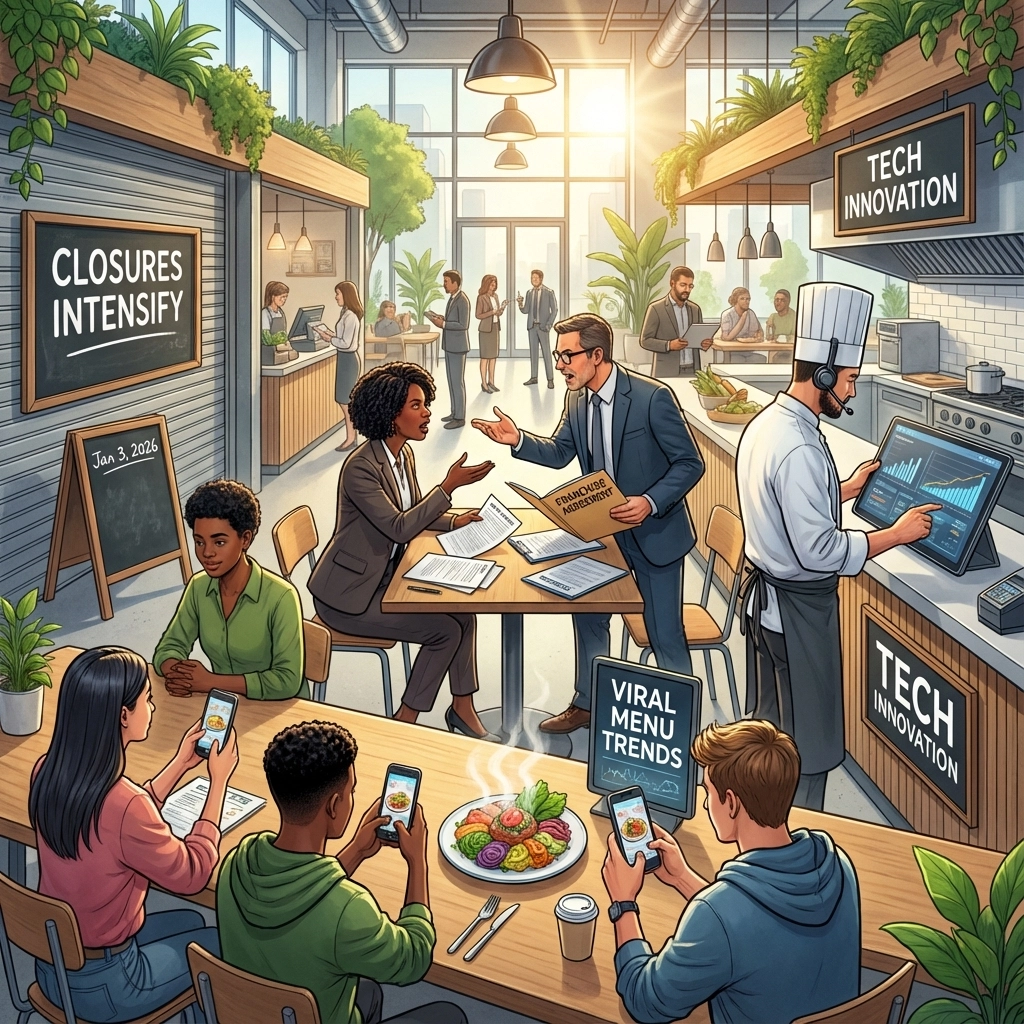
The restaurant industry kicks off 2026 with a whirlwind of contradictory forces reshaping the landscape. While some chains accelerate closures amid mounting pressures, others double down on aggressive expansion strategies. From franchise fee wars to robotic kitchen arms races, here's everything operators need to know about this week's biggest industry developments.
Closures & Franchise Turmoil Reach Critical Mass
The closure tsunami that dominated 2025 shows no signs of slowing down. Wendy's Project Fresh initiative continues its nationwide restructuring, with up to 350 locations expected to shutter as the brand focuses on optimizing its footprint and improving unit economics. Franchisees report mixed reactions: while some welcome the elimination of underperforming competition, others worry about territorial impacts and reduced brand visibility in key markets.
Jack in the Box joins the closure parade, announcing plans to close 80-120 additional diners as part of ongoing portfolio optimization. The closures represent a continuation of broader industry trends that saw major players like Bar Louie, Planta, and Abuelo's file Chapter 11 bankruptcy throughout 2025, with dramatic location reductions becoming the norm rather than the exception.

But perhaps no story is more dramatic than Boston Market's near-extinction event. The rotisserie chicken chain has collapsed to just 27 remaining stores, representing a staggering 90% reduction in footprint over 15 months. The company's desperation is evident in its new "Boston Market Connect" program: a zero-franchise-fee initiative targeting gas stations and delis for rapid expansion.
Industry insiders remain skeptical of the Connect program's viability. "When a brand starts giving away franchise rights for free, that's usually a red flag, not a green light," notes one franchise consultant who requested anonymity. The company faces mounting lawsuits from unpaid wages and vendor bills, casting doubt on its ability to support new franchisees even without upfront fees.
Expansion Watch: International Players Make Bold U.S. Moves
While legacy brands retreat, international powerhouses are seizing market opportunities. Mixue, the world's largest restaurant chain by location count, officially launched its U.S. expansion with its first Los Angeles location. The Chinese ice cream and tea franchise is turning heads with aggressive pricing: signature items starting at just $1.19: that could disrupt the entire QSR value equation.
Early customer reactions to Mixue's Hollywood debut suggest strong appetite for ultra-affordable treats, particularly among Gen Z consumers who've been priced out of traditional QSR options due to inflation. The brand's proven ability to operate profitably at razor-thin margins could force competitors to reconsider their pricing strategies.
Chipotle reaches another milestone, opening its 4,000th restaurant while maintaining aggressive expansion plans targeting 7,000+ North American locations. The fast-casual leader's growth trajectory stands in stark contrast to struggling competitors, driven by successful digital integration and operational efficiency improvements.
McDonald's is rolling out stricter franchise standards for 2026, focusing on value menu compliance and enhanced consulting support. The corporate moves signal increased quality control as the brand seeks to maintain consistency across its vast network while supporting franchisee profitability.
Tech Race: Automation Investment Accelerates
Restaurant technology investments are reaching fever pitch as operators seek solutions to persistent labor challenges. Sweetgreen and Chipotle are leading the charge with major robotic kitchen deployments, sparking what industry observers are calling an "automation arms race."

Chipotle's robotic systems now handle ingredient prep and assembly tasks across select locations, with plans for broader rollout based on performance metrics and customer acceptance. Early data suggests improved speed and consistency, though human oversight remains critical for quality control and customer interaction.
Sweetgreen's automation investments focus on salad assembly and customization, addressing the brand's labor-intensive preparation model. The technology promises to reduce wait times during peak periods while maintaining the chain's emphasis on fresh, customized meals.
Digital loyalty programs are driving significant app-based sales growth. Chipotle, Wingstop, and Panera report double-digit increases in digital engagement following program relaunches, with mobile ordering becoming the preferred channel for frequent customers.
Labor & Compensation Dynamics Shift
Minimum wage increases took effect January 1 in 19+ states, creating immediate cost pressures for restaurant operators. Some chains are responding with menu price adjustments, while others are reducing operating hours or accelerating automation adoption to offset increased labor costs.
The wage increases come at a challenging time for the industry. Customer traffic has declined for nine consecutive months, even as same-store sales show modest positive growth for approximately half of operators. This disconnect suggests customers are spending more per visit but visiting less frequently: a trend that could accelerate if menu prices continue rising.
Franchisees report mixed impacts from wage increases. While higher wages can improve recruitment and retention in tight labor markets, the immediate cost impact forces difficult operational decisions. "We're caught between the need to attract quality staff and maintaining profitability," explains one multi-unit operator.
Industry Outlook: Cautious Optimism with Strategic Focus
Industry forecasts for 2026 suggest slow but steady recovery, with Technomic and Nation's Restaurant News projecting 1-2% sector growth. However, this modest expansion masks significant variation between segments and operators.
Limited-service concepts and scaled QSR brands are expected to outperform full-service restaurants, continuing a trend that accelerated during the pandemic. Private equity firms are actively shopping for distressed assets, viewing current market conditions as opportunities to acquire well-positioned brands at attractive valuations.
The M&A environment favors cash-heavy operators with strong unit economics and growth potential. Struggling brands face increasing pressure to either transform their business models or exit the market entirely.
Viral Menu Moves & LTO Innovation
Menu innovation remains a bright spot for creative operators. McDonald's and Taco Bell are rolling out new value menu items and desserts designed to recapture price-conscious consumers. The focus on value reflects broader industry recognition that affordability has become a primary purchase driver.
Boston Market is attempting a culinary pivot with rotating global flavors, including Chicken Tikka and Biryani options. While the international menu expansion represents creative thinking, its success depends on the brand's ability to execute consistently across its dramatically reduced footprint.
Red Lobster joins the value menu trend with new limited-time offers designed to drive traffic during typically slower periods. The seafood chain's promotional calendar reflects industry-wide efforts to smooth demand fluctuations and improve operational efficiency.
Looking Ahead: Survival of the Adaptable
As the restaurant industry navigates 2026's challenging landscape, successful operators are those willing to embrace change. Whether through strategic closures, aggressive expansion, technology adoption, or menu innovation, brands that adapt quickly to evolving consumer preferences and operational realities position themselves for long-term success.
The industry's dual nature: closures alongside expansion, automation alongside human connection: reflects a sector in transition. Winners will be determined not by size alone, but by operational excellence, financial discipline, and the ability to deliver consistent value to increasingly discerning consumers.
For restaurant operators tracking these developments, the message is clear: 2026 rewards strategic thinking, operational flexibility, and unwavering focus on customer satisfaction. Those who master these fundamentals while others struggle with basic viability will emerge stronger as market conditions eventually stabilize.