Restaurant Technology · Uncategorized
January 1, 2026 Restaurant Industry News Roundup: Closures, Wage Hikes, Menu Shakeups & Expansion Frenzy
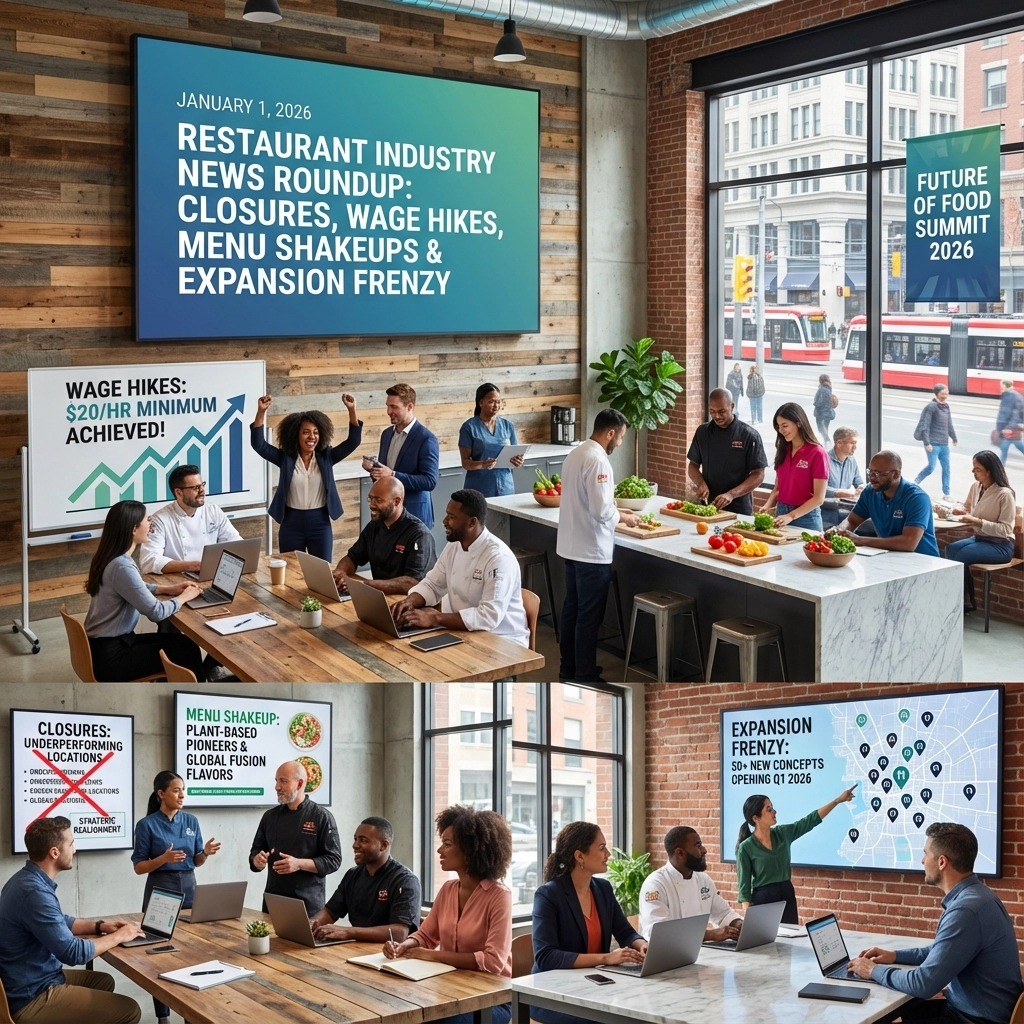
Welcome to 2026, restaurant operators! While most of America was nursing New Year's hangovers, the restaurant industry was already making headlines. From massive chain closures to ambitious expansion plans, minimum wage hikes hitting 19 states, and a flurry of menu innovations designed to win back value-conscious customers: 2026 is starting with a bang.
Let's dive into the biggest stories shaking up the industry as we kick off the new year.
Major Chain Closures Accelerate
The restaurant closure trend that dominated 2025 shows no signs of slowing down. Several major chains announced significant downsizing plans or complete shutdowns as we entered 2026.
Wendy's continues its aggressive "Project Fresh" closure strategy, with the burger chain planning to shutter hundreds of underperforming locations throughout the first quarter. The company cited persistent same-store sales weakness and the need to "right-size" its footprint in oversaturated markets. CEO Kirk Tanner emphasized that while painful, these closures are necessary to improve overall system profitability.
Even more dramatic was the complete collapse of Melt Bar & Grilled, which officially closed all remaining locations after filing for bankruptcy in late 2025. The Cleveland-based chain, known for its massive grilled cheese sandwiches and local sports bar atmosphere, couldn't recover from mounting debt and declining foot traffic post-pandemic.
Wahlburgers also made headlines by shuttering 79 locations inside Hy-Vee grocery stores, representing a significant portion of its footprint. The celebrity-backed burger chain is refocusing on standalone locations and high-traffic areas rather than the grocery store model that proved challenging to execute profitably.

Labor Market Shakeup: Minimum Wage Increases Hit 19 States
The new year brought immediate financial pressure for restaurant operators as 19 states implemented minimum wage increases effective January 1st. Several states including California, Washington, and Washington D.C. now mandate wages at or near $17 per hour: nearly double the federal minimum.
The most significant increases hit:
- California: $17.00/hour (up from $16.00)
- Washington: $16.99/hour (up from $16.28)
- Connecticut: $16.35/hour (up from $15.69)
- Hawaii: $12.75/hour (up from $12.00) – the largest percentage increase
Restaurant operators are responding with a mix of strategies: accelerated automation adoption, revised staffing models, and unfortunately, additional price increases. Many QSR brands are fast-tracking AI-powered drive-thru systems and kitchen automation to offset rising labor costs.
"We're seeing operators get creative with labor scheduling and technology integration like never before," said Sarah Martinez, restaurant industry analyst at Technomic. "The wage increases are forcing innovation, but it's a delicate balance between efficiency and customer experience."
Menu Innovation Wars: Value Meets Premium
Restaurants kicked off 2026 with a barrage of new menu items designed to attract budget-conscious consumers while maintaining margin integrity.
McDonald's launched its highly anticipated $5 McValue Menu, featuring mix-and-match options including a McDouble, four-piece McNuggets, small fries, and a small soft drink. The move directly challenges competitors' value offerings and represents McDonald's most aggressive pricing strategy since the original Dollar Menu.
Taco Bell countered with new premium dipping sauces and limited-time wraps, while Jack in the Box introduced gourmet burger variations targeting the "better burger" segment. Chipotle launched its High Protein Bowl, capitalizing on the continued health and fitness trend among younger consumers.
The strategy is clear: offer compelling value at the low end while introducing premium options for customers willing to spend more. It's a bifurcated approach that requires sophisticated menu engineering and cost management.

Tech Investments and M&A Surge
The restaurant technology sector saw massive consolidation activity as 2026 began. The biggest bombshell was Wonder's acquisition of Grubhub for $650 million, a deal that significantly undervalues the once-mighty delivery platform but provides Wonder with instant scale and logistics capabilities.
Olo acquired Omnivore, strengthening its POS integration capabilities, while Yum! Brands announced major investments in AI-powered kitchen technology across its KFC, Taco Bell, and Pizza Hut systems. The technology push isn't just about efficiency: it's about survival in an increasingly competitive landscape where customer expectations for speed and accuracy continue rising.
Private equity firms are also aggressively targeting scalable restaurant chains. The consolidation trend reflects both distressed opportunities and the recognition that restaurant technology platforms with strong unit economics can scale rapidly.
Franchise Expansion Boom Despite Economic Headwinds
Surprisingly, several restaurant brands announced ambitious expansion plans for 2026, bucking the trend of closures dominating headlines.
Shake Shack tripled its new store development plans, targeting 300 new locations over the next 18 months. The burger chain is betting on its premium positioning and strong unit economics to weather economic uncertainty while competitors retreat.
Dutch Bros announced plans for 200+ new drive-thru locations, primarily in Texas and the Southeast. The Oregon-based coffee chain continues its aggressive expansion strategy, capitalizing on strong brand loyalty and efficient operational models.
PopUp Bagels is planning hundreds of new units as the New York-style bagel concept gains traction nationwide. Even Mixue, the Chinese ice cream and tea chain, announced its official U.S. debut with plans for 50 locations across major metropolitan areas.
The expansion paradox reflects a classic market dynamic: strong operators with solid unit economics are using the downturn to secure prime real estate at attractive rates while weaker competitors exit the market.

Boston Market Watch: Turnaround or Final Chapter?
Boston Market remains the industry's most-watched turnaround story. Recent updates show the rotisserie chicken chain down to just 27 locations: a stunning fall from its peak of over 1,000 restaurants.
New ownership has implemented a complete menu overhaul, focusing on healthier options and family meal bundles. The C-suite shakeup brought in experienced operators with turnaround expertise, but questions remain about whether the brand can rebuild consumer relevance after years of operational struggles.
The Boston Market saga serves as a cautionary tale about the importance of maintaining operational excellence and adapting to changing consumer preferences. Industry watchers are divided on whether this represents a genuine turnaround opportunity or the final chapter for a once-dominant brand.
Quick-Fire Industry Opinions
On the closure wave: "The market is finally correcting from years of over-expansion. Surviving operators will emerge stronger with better locations and improved unit economics." – Restaurant industry consultant
On wage increases: "Automation isn't replacing humans: it's augmenting them. Smart operators are using technology to help their teams be more productive, not eliminate jobs." – QSR technology executive
On expansion plans: "Brands expanding now are either very confident in their model or taking calculated risks on discounted real estate. Time will tell which strategy pays off." – Franchise development expert

Looking Ahead: What This Means for Restaurant Operators
The first day of 2026 perfectly encapsulates the industry's current paradox: unprecedented challenges alongside significant opportunities. Successful operators are focusing on:
- Technology integration to offset rising labor costs
- Menu optimization that delivers value without sacrificing margins
- Real estate strategy that takes advantage of market conditions
- Brand differentiation in an increasingly crowded marketplace
The restaurants surviving and thriving in this environment share common characteristics: strong unit economics, clear brand positioning, operational excellence, and the ability to adapt quickly to changing market conditions.
For restaurant operators, 2026 demands strategic thinking, operational discipline, and the courage to make difficult decisions. The industry's transformation is accelerating, and those who adapt fastest will claim market share from those who don't.
The year is just getting started, but the message is already clear: in 2026's restaurant industry, evolution isn't optional: it's essential for survival.
Stay ahead of restaurant industry trends and strategies with Restaurant Revenue Incubator. Our team helps restaurant operators navigate challenging markets and identify growth opportunities.