Restaurant Technology · Uncategorized
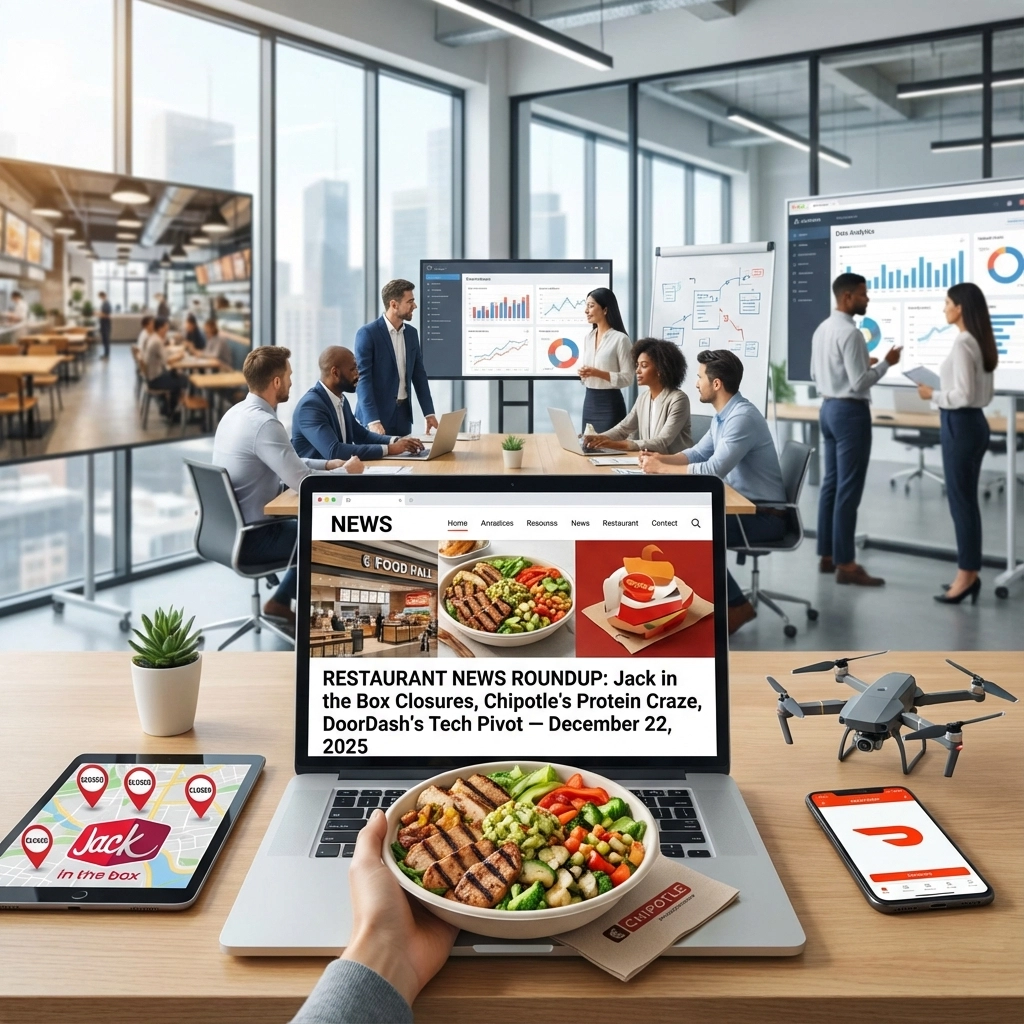
December 22, 2025 : The restaurant industry is ending the year with major strategic pivots that could reshape the competitive landscape heading into 2026. From significant closures at legacy brands to bold menu innovations and tech consolidation, today's news reveals how operators are adapting to persistent economic pressures and evolving consumer demands.
Three stories dominate this week's headlines: Jack in the Box's aggressive turnaround strategy involving 150-200 store closures, Chipotle's surprising entry into the high-protein snack market, and DoorDash's ambitious expansion into comprehensive restaurant technology solutions. Each represents a different approach to surviving: and thriving: in an increasingly challenging operating environment.
Jack in the Box Implements Massive Closure Plan as "Jack on Track" Initiative Gains Momentum
Jack in the Box is moving forward with one of the most aggressive restructuring plans in recent QSR history, announcing the closure of approximately 200 locations nationwide as part of CEO Lance Tucker's "Jack on Track" turnaround initiative. The closures, which began in September 2025, are designed to address the company's mounting debt load and declining same-store sales performance.

According to Inc.com's coverage, between 80-120 locations have already shuttered by the end of 2025, with additional underperforming stores slated for closure throughout 2026. The closures are targeting legacy markets primarily on the West Coast, particularly in California and Texas, where aging infrastructure and expired franchise agreements have created operational challenges.
"We're making the hard decisions necessary to position Jack in the Box for long-term success," Tucker explained in a recent analyst call. "These closures, while difficult, will allow us to reduce our debt by $300 million within two years and reinvest in markets where we can achieve sustainable growth."
The financial pressures driving these decisions are stark. Jack in the Box reported a 7.4% decline in same-store sales, significantly underperforming category leaders like McDonald's and Burger King. Rising labor costs, particularly in California where the minimum wage for fast-food workers reached $20 per hour, have compressed margins at older locations with outdated operational models.
Industry analysts from Restaurant Business note that Jack in the Box's situation reflects broader challenges facing second-tier QSR brands. Unlike category leaders with deep pockets for technology investments and menu innovation, mid-market players like Jack in the Box must make strategic trade-offs between market presence and profitability.
However, the company isn't retreating entirely. Counterbalancing the closures, Jack in the Box is selectively investing in new locations in Michigan, Georgia, and Illinois: markets where the brand has historically performed well and where real estate costs remain manageable. These openings feature updated restaurant designs, enhanced technology platforms, and streamlined menu offerings optimized for digital ordering.
The employee impact has been significant but managed. The initial closures in Washington state affected approximately 26 workers, with the company providing severance packages and transfer opportunities to nearby locations where possible. As the closure plan accelerates, Jack in the Box has committed to similar support measures for affected employees.
Chipotle Doubles Down on Protein with "Meat in a Cup" Innovation
Chipotle Mexican Grill is capitalizing on the high-protein trend with an unconventional new menu addition that's generating significant buzz across social media platforms. The chain's "Protein Cup" offering: essentially a portion-controlled serving of carnitas, chicken, or barbacoa without the traditional rice and beans: represents a strategic pivot toward health-conscious consumers seeking convenient protein sources.

The concept emerged from customer behavior data showing increasing requests for "just meat" orders, particularly among fitness enthusiasts and adherents to ketogenic and high-protein diets. CNBC's restaurant coverage reports that early test markets in Denver, Austin, and Phoenix showed 23% higher attachment rates when the Protein Cup was offered as an add-on to traditional bowl orders.
"We're seeing a fundamental shift in how customers think about fast-casual dining," explained Chipotle's Chief Marketing Officer, who noted that protein-focused menu items align with the brand's "Food with Integrity" positioning. "The Protein Cup isn't just a menu hack: it's a recognition that modern consumers want more control over their nutritional choices."
The timing couldn't be better for Chipotle, which has struggled with portion consistency complaints throughout 2025. The pre-portioned Protein Cup addresses these concerns while commanding a premium price point: $4.95 for a 4-ounce serving compared to the incremental protein costs in traditional bowls.
Consumer response has been enthusiastic but divided. Social media reactions range from praise for the innovation to criticism about "paying for what used to be free." TikTok videos showing customers combining Protein Cups with homemade ingredients have generated millions of views, effectively creating free marketing for the concept.
The broader implications extend beyond Chipotle. Menu innovation focused on specific dietary trends represents a new competitive front in fast-casual dining, where brands must balance broad appeal with niche customization. Other chains are reportedly developing similar offerings, suggesting that protein-forward menu items could become standard across the category.
Industry nutritionist Dr. Sarah Martinez, who consults for several major restaurant chains, notes that the Protein Cup trend reflects "micro-targeting" in menu development. "Restaurants are moving beyond broad demographic appeal to serve specific lifestyle and dietary choices. It's a more sophisticated approach to menu innovation that acknowledges the diversity of modern consumer needs."
DoorDash Expands Restaurant Technology Footprint Through Strategic Acquisitions
DoorDash is making bold moves to transform from a delivery platform into a comprehensive restaurant technology ecosystem, with recent acquisitions of UK-based Deliveroo assets and reservation platform SevenRooms signaling ambitious expansion plans for 2026.

The acquisitions, valued at an estimated $2.3 billion combined, position DoorDash to offer end-to-end restaurant management solutions including point-of-sale systems, inventory management, reservation handling, and customer relationship management. According to Restaurant Business coverage, the moves represent the largest technology consolidation in the restaurant industry since Toast's IPO in 2021.
"We're not just delivering food: we're delivering comprehensive solutions that help restaurants operate more efficiently and profitably," announced DoorDash CEO Tony Xu during a virtual press conference. "These acquisitions allow us to serve restaurants throughout the entire customer journey, from reservation to delivery to loyalty management."
The SevenRooms acquisition is particularly strategic, bringing sophisticated reservation and customer data management capabilities that complement DoorDash's existing delivery infrastructure. The platform, used by over 10,000 restaurants globally, provides detailed customer analytics, automated marketing tools, and integrated payment processing that many independent operators previously couldn't afford.
For restaurant operators, the implications are significant but complex. While integrated technology platforms promise operational efficiencies and reduced vendor management overhead, they also increase dependence on a single technology provider. Several restaurant groups have expressed concerns about platform concentration and pricing power.
"Having everything in one place sounds great until that one place controls your entire operation," noted Maria Rodriguez, owner of a 12-location Mexican restaurant group in Texas. "We're interested in the efficiency gains, but we need to maintain some independence in our technology stack."
DoorDash's strategy reflects broader industry trends toward vertical integration in restaurant technology. The company's data advantages: derived from millions of delivery orders: provide unique insights into consumer preferences, ordering patterns, and market trends that standalone technology providers can't match.
The competitive response from other technology providers has been swift. Toast, Square, and others are developing enhanced integration capabilities and exploring their own acquisition strategies to compete with DoorDash's expanded offering. Industry observers expect significant consolidation in restaurant technology over the next 18 months as platforms compete for comprehensive market coverage.
Early adoption has been strongest among restaurant groups with 5-50 locations: large enough to benefit from integrated analytics but small enough to value simplified vendor management. Enterprise chains are proceeding more cautiously, preferring best-of-breed solutions over integrated platforms for now.
Industry Implications and Looking Ahead
These three developments: strategic closures, menu innovation, and technology consolidation: illustrate the restaurant industry's ongoing evolution as operators adapt to persistent economic pressures and changing consumer expectations.
The Jack in the Box closures represent a sobering reality for mid-tier restaurant brands caught between rising operational costs and limited pricing power. As labor costs continue rising and consumer spending remains cautious, expect similar rightsizing initiatives across the industry. The key will be whether brands can execute strategic closures while maintaining sufficient market presence to drive customer engagement and operational leverage.
Chipotle's protein innovation demonstrates the importance of menu agility in capturing emerging consumer trends. As health and wellness priorities reshape dining choices, restaurants must balance broad appeal with targeted offerings that serve specific dietary preferences. The success of protein-focused items could influence menu development across multiple categories, from QSR to fast-casual to casual dining.
DoorDash's technology expansion reflects the increasing sophistication required for restaurant operations in a digital-first environment. As margins remain compressed, restaurants need technology platforms that drive efficiency gains and provide actionable customer insights. The question is whether integrated platforms will deliver promised benefits or create new dependencies that limit operational flexibility.
For restaurant operators navigating these trends, the lessons are clear: strategic focus, operational efficiency, and customer data utilization have become essential survival skills. Brands that can execute disciplined growth strategies while maintaining menu relevance and technology sophistication are best positioned for success in 2026 and beyond.
The restaurant industry's ability to adapt to these challenges will ultimately determine which brands emerge stronger from the current economic environment. As we head into 2026, expect continued consolidation, increased technology adoption, and more aggressive menu innovation as operators compete for market share in an increasingly competitive landscape.
For more insights on restaurant industry trends and revenue optimization strategies, visit Restaurant Revenue Incubator for comprehensive analysis and actionable guidance.