Restaurant Technology · Uncategorized
Value Dining Is King: Chili's, Texas Roadhouse & Raising Cane's Set the Pace for 2026
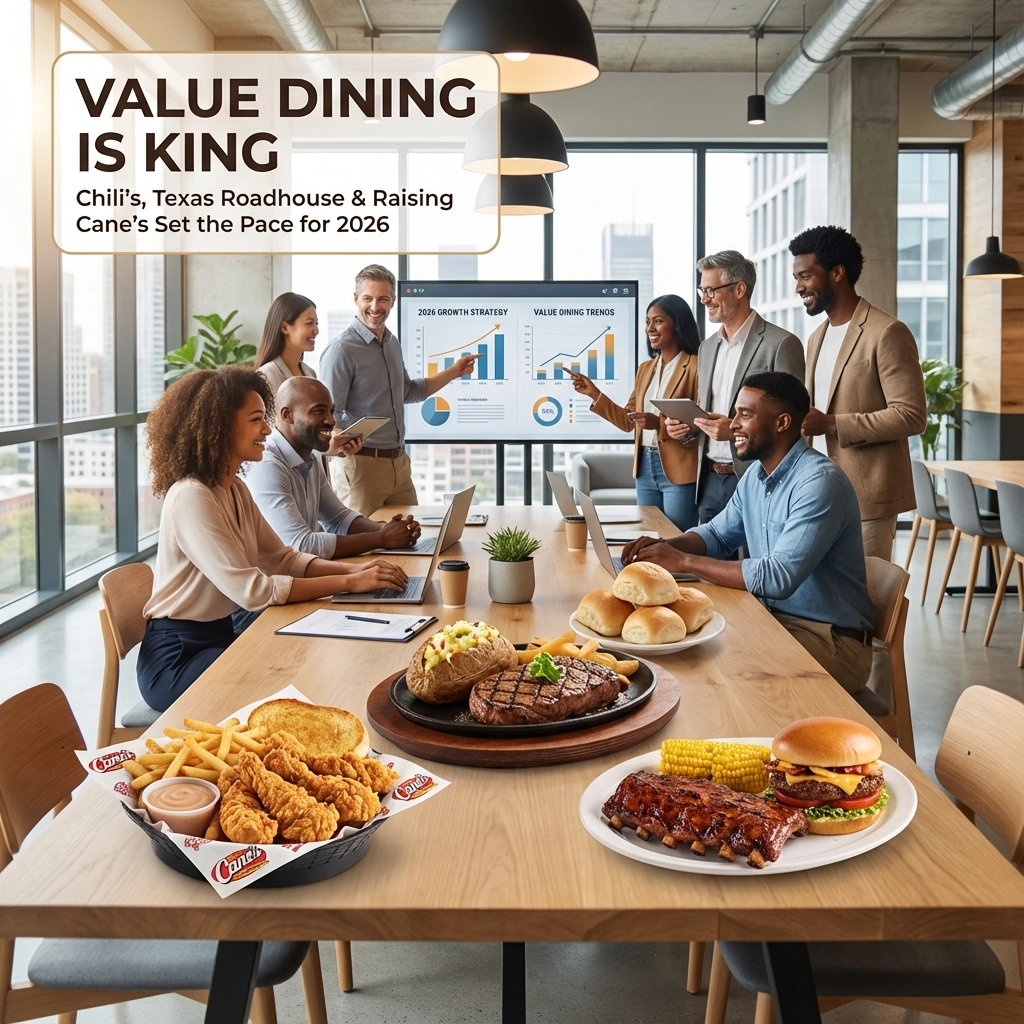
As we head into 2026, the restaurant industry is witnessing a fundamental shift that's reshaping dining habits across America. Value dining trends are dominating the competitive landscape, with established players like Chili's, Texas Roadhouse, and Raising Cane's outperforming flashier, trend-driven concepts by focusing on what consumers want most: quality food at fair prices.
According to the latest Consumer Edge research, this isn't just a temporary blip: it's the new normal. The data reveals that over half of consumers (54%) have fundamentally changed their consumption habits to save money, creating a massive opportunity for brands that can deliver authentic value.
The Economics Behind the Value Dining Surge
The numbers tell a compelling story. Restaurant prices rose 3.7% year-over-year through September 2025, while household budgets remained largely stagnant. This price pressure has created what industry analysts call "inflation fatigue": consumers are still dining out, but they're becoming laser-focused on getting maximum value for their dollar.
"We're seeing a clear bifurcation in consumer behavior," explains one restaurant analyst. "Higher-income consumers are trading down to save money, while middle-income diners are becoming extremely selective about where they spend their dining dollars."
This shift has created a challenging environment for fast-casual brands, which find themselves caught in a pricing no-man's land. Priced near casual dining but lacking the full-service experience and atmosphere, many fast-casual concepts are struggling to justify their value proposition in 2026.

Chili's: The Viral Value Champion
Chili's has emerged as perhaps the biggest winner in the value dining wars, combining strategic pricing with operational excellence. The chain's "3 For Me" promotion and viral social media marketing have reinforced its value perception among price-sensitive diners.
But Chili's success goes beyond promotions. The brand has invested heavily in simplifying its menu and modernizing both kitchen and dining-room technology. These improvements enhance the guest experience while boosting operational efficiency: a critical combination for maintaining margins while offering competitive prices.
The results speak for themselves. In Q3 2025, Chili's reported strong year-over-year growth in both overall and same-store visits. Perhaps most impressively, the brand has captured significant market share among higher-income households earning between $100K and $150K annually, proving that value dining appeals across income segments.
"Our barbell pricing strategy allows us to keep certain menu items at accessible price points while offering premium options for guests who want to trade up," notes a Chili's spokesperson. This approach has helped the brand avoid the trap of being pigeonholed as a low-income option.
Texas Roadhouse: Everyday Value Without Gimmicks
While Chili's leverages promotions and viral marketing, Texas Roadhouse has taken a different path to value dining success. The chain emphasizes everyday fair pricing and refuses to run promotions, instead building customer loyalty through consistent quality and value.
This strategy is paying dividends. Texas Roadhouse reported growth metrics similar to Chili's in Q3 2025, with particular strength in same-store sales. The brand's focus on unit expansion, coupled with its rollout of digital kitchen formats, positions it well for continued growth in the value-conscious 2026 market.
The chain's approach demonstrates that value dining success doesn't require constant discounting. By treating fair pricing as a core brand value rather than a promotional tactic, Texas Roadhouse has built sustainable competitive advantages that are difficult for competitors to replicate.
Raising Cane's and the Chicken Segment Explosion
The chicken segment represents one of the fastest-growing areas within value dining, with Raising Cane's leading the charge. The brand's focused menu and commitment to quality at reasonable prices has driven impressive market share gains throughout 2025.
Chicken chains market share 2026 projections show continued growth, driven by several factors. Chicken remains one of the most affordable protein options, making it attractive to budget-conscious consumers. Additionally, the versatility of chicken allows chains to offer variety while maintaining operational simplicity.

Raising Cane's success stems from its unwavering focus on doing one thing exceptionally well. By limiting its menu to chicken fingers, fries, toast, and signature sauce, the chain achieves operational efficiency that translates into better value for customers and higher margins for operators.
The Regional Chain Renaissance
While national chains grab headlines, the value dining trend has also sparked a renaissance among regional players. Chains like Freebirds World Burrito and Biscuitville are capitalizing on their local knowledge and authentic offerings to compete effectively against larger rivals.
Freebirds World Burrito, primarily concentrated in the Southwest, has gained traction by offering customizable, high-quality Mexican food at prices that undercut fast-casual competitors. The brand's "fresh ingredients, fair prices" positioning resonates strongly with value-conscious consumers who still want customization and quality.
Similarly, Biscuitville has expanded its footprint across the Southeast by focusing on breakfast and lunch offerings that deliver genuine Southern comfort food at accessible prices. The chain's success demonstrates that regional authenticity can be a powerful differentiator in the value dining space.
These regional success stories highlight an important trend: consumers in 2026 are increasingly skeptical of "hype" concepts that prioritize Instagram-ability over value. Authentic, locally-relevant brands that focus on food quality and fair pricing are often outperforming venture-backed concepts with flashier marketing.
Fast-Casual Under Pressure
The rise of value dining has put significant pressure on the fast-casual segment, which faces challenges from both directions. Premium fast-casual brands find themselves competing with full-service restaurants that offer better ambiance and service at similar price points, while value-oriented fast-casual concepts struggle against quick-service restaurants that offer lower prices.
QSR Magazine research indicates that many fast-casual brands are reconsidering their positioning as consumer behavior shifts. Some are pivoting toward genuine premium experiences to justify higher prices, while others are streamlining operations to compete more effectively on value.
The fast-casual segment's struggles illustrate a broader truth about the 2026 restaurant landscape: concepts that don't clearly deliver superior value in either price or experience are finding themselves squeezed out of the market.
What This Means for Restaurant Operators
For restaurant operators planning for 2026, the value dining trend offers both opportunities and challenges. Success requires more than simply cutting prices: it demands a holistic approach to delivering genuine value.
Key strategies for thriving in the value dining era include:
Menu Engineering: Simplifying menus to improve operational efficiency while maintaining quality. Both Chili's and Raising Cane's have demonstrated the power of focused offerings.
Technology Investment: Modernizing operations to reduce costs and improve consistency. Digital kitchen formats and streamlined ordering systems help maintain margins while offering competitive prices.
Authentic Positioning: Building genuine value propositions rather than relying solely on promotional pricing. Texas Roadhouse's everyday value approach offers a sustainable model.
Local Relevance: Understanding and serving local tastes and preferences. Regional chains like Biscuitville show how authentic local appeal can compete with national marketing budgets.

The restaurant operators who will thrive in 2026 are those who recognize that value dining represents a fundamental shift in consumer expectations, not a temporary trend. Building sustainable competitive advantages around value requires long-term thinking and operational excellence: but for those who execute well, the rewards are substantial.
The success of Chili's, Texas Roadhouse, and Raising Cane's demonstrates that consumers are willing to reward brands that consistently deliver quality food at fair prices. As we move deeper into 2026, this formula for success shows no signs of changing.
For restaurant consulting support in navigating these value dining trends, operators can explore strategic guidance at Restaurant Revenue Incubator to develop sustainable competitive advantages in the evolving marketplace.