Restaurant Technology · Uncategorized
Restaurant Chains Sound the Alarm: Chipotle, Sweetgreen, and the Trouble with Spending in 2025
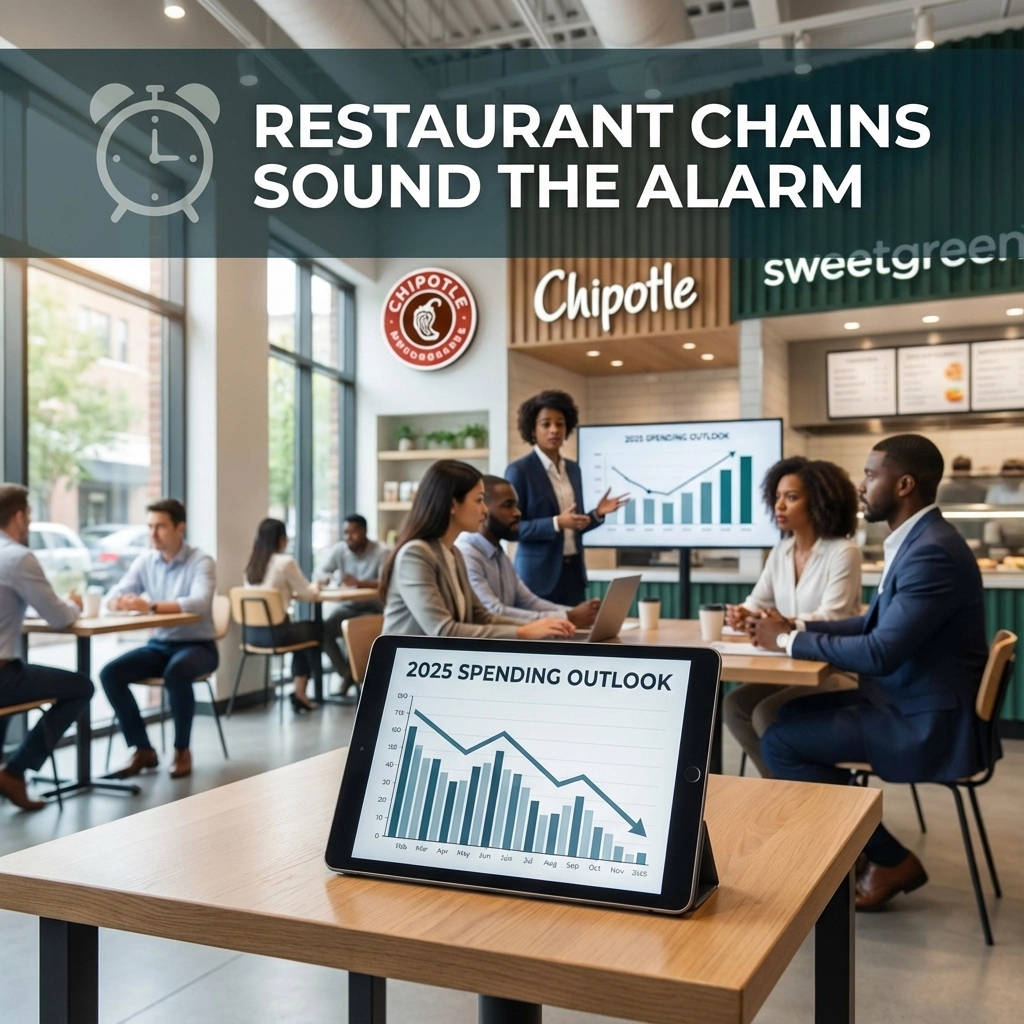
Meta Description: Chipotle and Sweetgreen report declining consumer spending as younger adults and lower-income diners pull back. Restaurant chains face traffic drops and revenue challenges in 2025.
Tags: restaurant industry, consumer spending, Chipotle, Sweetgreen, economic trends, restaurant revenue
The restaurant industry is facing a harsh reality check as 2025 winds down, with major chains sounding alarm bells about declining consumer spending. Leading the charge of concerning reports are fast-casual giants Chipotle and Sweetgreen, both revealing troubling patterns in customer behavior that signal broader economic headwinds affecting the entire restaurant sector.
Sweetgreen's Dramatic Decline Tells a Troubling Story
Sweetgreen's 2025 performance reads like a cautionary tale for the entire industry. The fast-casual salad chain reported a devastating 9.6% decline in same-store sales, accompanied by an even more alarming 11.7% decrease in customer traffic. These numbers represent the first same-store sales drop since the company went public in 2021, marking a significant turning point for what was once considered a growth darling.

The financial carnage extends far beyond sales figures. Sweetgreen's stock has plummeted nearly 90% from its initial public offering value, with the company losing 81% of its value over the year alone. Following the disappointing sales report, shares dropped an additional 13%, cementing Sweetgreen's position as one of 2025's most spectacular corporate collapses.
CEO Jonathan Neman didn't mince words about the challenges, stating that sales trends have remained "below expectations into April," particularly in the company's core urban markets of Los Angeles, New York City, and Boston. For the first time, April failed to deliver the typical seasonal performance boost that restaurants usually experience during spring months.
The "$20 Salad" Problem
Central to Sweetgreen's struggles is what industry observers have dubbed "the $20 salad problem." With average menu prices around $16 and many items pushing closer to $20, the chain has effectively priced itself out of reach for a growing segment of consumers grappling with persistent inflation and economic uncertainty.
CFO Mitch Reback pointed to a broader pattern, noting that consumer hesitancy has hit frequency across all discretionary spending categories. This isn't just about salads: it's about fundamental shifts in how Americans approach dining out when every dollar counts.
The company is scrambling to address pricing concerns by working to "fill in price gaps at the lower and middle end of its menu" while simultaneously rolling out a new points-based loyalty program that's attracting about 20,000 new members weekly.
Chipotle's Mixed Signals
While Chipotle appears to be weathering the storm better than Sweetgreen, the Mexican chain isn't immune to the broader spending pullback. Despite reporting $3.0 billion in total revenue for Q3 2025: a 7.5% increase from the previous year: Chipotle joins the growing list of restaurant brands reporting same-store sales declines this quarter.
The key difference lies in strategy. Where Sweetgreen built its model around premium pricing in urban centers, Chipotle has maintained better price accessibility while exploring new revenue streams. The chain recently launched a catering pilot program, recognizing that business dining represents an underexplored opportunity. CEO Scott Boatwright noted that catering currently accounts for only 1-2% of Chipotle's sales, significantly below the 5-10% industry average among competitors.

Economic Headwinds Hit Younger Demographics Hardest
The consumer spending decline isn't affecting all demographics equally. Restaurant industry analysts point to younger adults and lower-income brackets as the segments pulling back most dramatically on dining frequency. This demographic shift presents particular challenges for chains like Sweetgreen and Chipotle, which built their brands around appealing to millennial and Gen Z consumers.
Several economic factors are converging to create this perfect storm:
Tariff Impact and Policy Uncertainty: Sweetgreen specifically cited the Trump administration's tariff policies as contributing to eroding consumer confidence. The chain is actively diversifying its supply base and seeking multi-year pricing agreements to avoid passing additional costs to already price-sensitive customers.
Urban Market Weakness: The core urban markets that once drove explosive growth for fast-casual chains are now seeing pronounced consumer pullbacks. Cities like New York, Los Angeles, and Boston: traditional strongholds for brands like Sweetgreen: are experiencing the most significant traffic declines.
Persistent Inflation Pressure: Even as headline inflation numbers moderate, food costs remain elevated, forcing consumers to make increasingly difficult choices about discretionary dining purchases.
Industry-Wide Revenue Challenges
The struggles extend far beyond individual brands. Technomic has downgraded its forecast for limited-service restaurants to 4.3% nominal sales growth, down from an initial 5.1% prediction. Full-service restaurants face even steeper challenges, with projected growth of just 2.1%. Perhaps most concerning, real growth: adjusted for inflation: is expected to remain flat.
According to Nation's Restaurant News, the industry is grappling with "slower check growth, lower frequency, and negative traffic." Consumer sentiment has plummeted to near-historic lows amid uncertainty over immigration policies, layoffs, and the persistent effects of inflation on household budgets.

Strategic Pivots and Survival Tactics
Restaurant chains are deploying various strategies to navigate these challenging waters:
Loyalty Program Overhauls: Sweetgreen replaced its tiered subscription system with a more traditional points-based program, aiming to rebuild customer relationships while providing better value perception.
Menu Engineering: Brands are carefully examining their pricing architecture, with many working to add lower-price-point options without compromising brand positioning.
B2B Focus: Catering and corporate accounts have emerged as crucial growth channels, offering higher-margin sales that don't depend on individual consumer discretionary spending.
Supply Chain Innovation: Companies are investing heavily in supply chain diversification and automation to control costs without raising menu prices.
The Road Ahead for Restaurant Revenue
For restaurant operators watching these developments, the message is clear: the easy growth of the pandemic recovery period has ended. Consumer behavior has fundamentally shifted, requiring more sophisticated approaches to revenue optimization and customer acquisition.
The industry's current challenges reveal the importance of building resilient business models that can withstand economic volatility. Restaurants that focused solely on premium positioning without considering value perception are finding themselves particularly vulnerable.
As we move toward 2026, successful restaurants will likely be those that can balance quality with accessibility, leverage technology for operational efficiency, and develop diverse revenue streams that don't rely solely on traditional dine-in traffic.
The warning signs from Chipotle and Sweetgreen should serve as a wake-up call for the entire industry. Consumer spending patterns have shifted permanently, and restaurant operators must adapt their strategies accordingly. Those who recognize and respond to these changes quickly will be best positioned to thrive in the new economic landscape, while those who ignore the warning signs may find themselves joining the growing list of casualties in what's shaping up to be a defining year for the restaurant industry.
For restaurant owners and operators looking to navigate these challenges, focusing on driving new customers while retaining existing ones through value-driven strategies will be essential for survival and growth in 2026 and beyond.