Restaurant Technology · Uncategorized
Hot Take: Are Food Halls the Next Restaurant Graveyards?
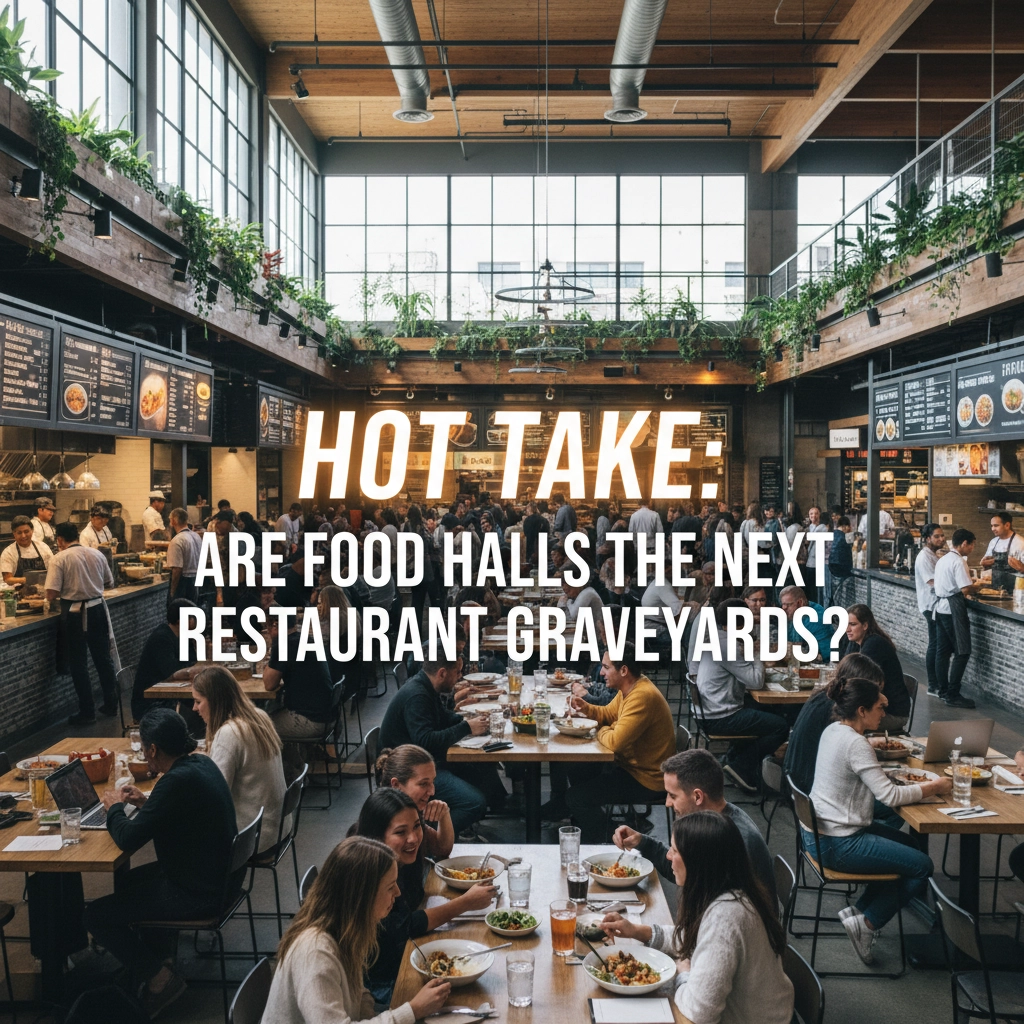
Spoiler alert: They're not.
While everyone's been wringing their hands about the "death of food halls," the numbers tell a completely different story. And frankly, if you're still thinking food halls are headed for the graveyard, you're looking at the wrong metrics, or you're stuck in 2019 thinking.
Let me be brutally clear: Food halls aren't dying. They're just getting smarter.
The "Graveyard" Narrative Falls Apart Under Scrutiny
The doom-and-gloom crowd loves pointing to a few high-profile food hall closures as proof that the concept is fundamentally flawed. But here's what they're missing: food court and food hall revenue in the U.S. has grown by 8.7% annually, reaching an estimated $574 million in 2024.
That's not graveyard territory. That's expansion territory.

The real issue isn't that food halls are failing, it's that bad food halls are failing, just like bad restaurants always have. The difference is now we're seeing rapid evolution in the sector, with operators learning what works and what doesn't at breakneck speed.
According to recent industry analysis, new food halls are emerging most often in once-abandoned urban spaces, with local governments and neighborhood groups bending over backwards to pave the way for development. This isn't the behavior you see around a dying concept, this is what happens when municipalities recognize a proven economic driver.
The Mall Death Trap Was Never the Real Story
Here's where the graveyard theorists got it wrong: they conflated the decline of mall-based food courts with the failure of food halls as a concept. Classic correlation-causation error.
Yes, traditional mall food courts are struggling. But that's because malls are struggling, not because the food hall concept is broken. Smart operators figured this out years ago and started expanding into airports, downtown districts, and mixed-use developments where foot traffic actually exists.
The numbers back this up: food courts and halls are thriving in high-traffic locations like airports and urban centers, while simultaneously moving away from struggling retail environments. It's not rocket science, it's just good real estate strategy.
Innovation Hubs, Not Graveyards
What the critics miss entirely is that modern food halls have become innovation laboratories for the restaurant industry. Ghost kitchens and virtual brand concepts are being integrated into food halls at unprecedented rates, allowing operators to maximize kitchen efficiency while expanding menu diversity without the traditional overhead.

Quick-service and fast-casual brands are flocking to food halls for lower-risk expansion opportunities. The shared infrastructure model reduces operational costs while providing built-in customer traffic, a win-win that traditional standalone locations can't match.
And the technology integration happening in food halls right now? It's actually ahead of where most traditional restaurants are operating. Self-order kiosks, AI-powered demand prediction, and app-based ordering systems are reducing wait times and improving customer satisfaction at rates that would make most restaurant owners jealous.
The Peer Reality Check
I've been watching industry leaders closely, and their actions speak louder than any pundit's predictions. The smart money is still flowing into food halls, they're just being more strategic about location and concept.
Take what Danny Meyer said recently about the evolution of hospitality concepts: the future belongs to operators who can adapt quickly and reduce friction for customers. Food halls, when done right, accomplish both of these goals better than traditional restaurants.
Meanwhile, José Andrés has been expanding his food hall presence, not retreating from it. When one of the most respected names in the industry is doubling down on a concept, maybe it's time to question the "graveyard" narrative.

The Sustainability and Diversity Advantage
Here's another angle the critics completely ignore: food halls are responding to consumer demands for sustainability, health-conscious options, and diverse international cuisines better than traditional restaurant models.
The shared kitchen infrastructure allows for more efficient resource utilization and waste reduction. The variety model means customers with different dietary restrictions and preferences can all eat together, something that's increasingly important in our diverse dining landscape.
This isn't just feel-good marketing speak. These are competitive advantages that matter to today's consumers, and food halls are positioned to deliver on them in ways that single-concept restaurants struggle to match.
What the Data Actually Shows
Let's talk real numbers for a minute. The food hall segment has been adapting and growing even through challenging economic conditions. While some operators have struggled, others have thrived by focusing on:
- Strategic location selection (goodbye dying malls, hello transit hubs)
- Technology integration that improves operational efficiency
- Flexible vendor models that allow for rapid concept testing and iteration
- Community engagement that builds loyal customer bases
The operators who treated food halls like just another real estate play? Yeah, some of them failed. But the ones who understood the model as a platform for culinary innovation and community building? They're printing money.

The Revenue Optimization Opportunity
For restaurant operators still on the fence about food halls, you're missing a massive revenue optimization opportunity. The shared infrastructure model allows for lower initial investment while maintaining higher profit margins than traditional locations.
More importantly, food halls provide built-in market testing capabilities. Want to test a new concept before committing to a full restaurant build-out? Food halls offer the perfect laboratory environment with real customer feedback and lower downside risk.
At Restaurant Revenue Incubator, we've seen operators increase their revenue per square foot by 40-60% by leveraging food hall opportunities strategically.
The Real Graveyard? Inflexible Thinking
The actual graveyard isn't food halls: it's outdated thinking about how food service should operate. The restaurant operators still convinced that only standalone locations can build "real" brands are the ones headed for trouble.
Food halls represent everything the modern restaurant industry needs: flexibility, lower risk, technology integration, and customer convenience. The question isn't whether food halls will survive: it's whether traditional restaurant operators will adapt quickly enough to take advantage of the opportunities they represent.
The Bottom Line
Are some food halls failing? Absolutely. Are food halls as a concept headed for the graveyard? Not even close.
The smart operators are using food halls as stepping stones to larger success, testing grounds for new concepts, and revenue diversification strategies. The ones still viewing them as competitors to "real" restaurants are missing the point entirely.
The food hall evolution is just getting started. And if you're not paying attention to where it's headed, you might find yourself in the actual graveyard: while the innovative operators are building the future of food service.
Want to explore how food hall opportunities might fit into your revenue optimization strategy? Let's talk about turning industry evolution into competitive advantage.